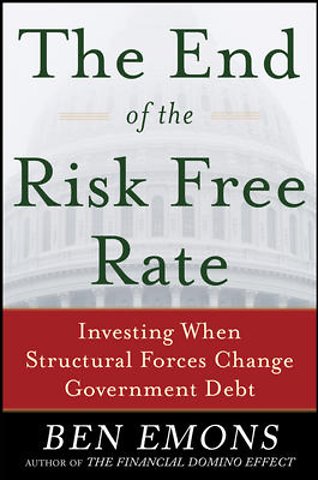
The End of the Risk-Free Rate: Investing When Structural Forces Change Government Debt
Gebonden Engels 2013 9780071819527Samenvatting
A NEW FINANCIAL STRATEGY FOR A NEW FINANCIAL WORLD
As an investor, you've probably taken advantage of the risk-free rates in the postcrash economy by putting your money into bonds, stocks, commodities, and currencies. With the rise of government debt across the globe, you can no longer rely on the notion of "safe" to perform asexpected. You need to adapt your investing strategy to a new financial reality.
Filled with expert tips, this step-by-step guide walks you through all of your investment options, showing you how each will be affected by the end of the risk-freerate. You'll learn:What you should know before buying bonds and Treasury billsHow to recognize and invest in the strongest emerging marketsHow to choose between government and corporate optionsWhat the debt-to-GDP ratio means for you and your investmentsHow to evaluate foreign markets in the rapidly changing global economy
With the author's guidance, you'll discover that you don't need to stop investing in government bonds and otherpopular options--you just need to invest differently. You'll learn about combining liquid means, ETFs, mutual funds, and individual securities. You'll gain insights into market depth, liquidity, and capital flows--and how they change depending on regulations, costs, and other factors. You'll see how the debt situations in countries like Mexico and Italy can have an immediate impact on investors around the world. You’ll find new ways to thinkabout investing in a changing economic landscape. Most importantly, you'll learn how to assess risk in different markets.
An essential guide in these fascinating times, The End of the Risk-Free Rate marks a new beginning for today's investor.
Specificaties
Lezersrecensies
Inhoudsopgave
Part I: End of the Risk-Free Rate 1
Chapter 1: The End of the Risk-Free Rate 3
Chapter 2: Puzzles 33
Chapter 3: A Way of Life 61
Part II: Investment Implications 97
Chapter 4: Some Quantifi cation 99
Chapter 5: Where and What to Invest In: The “Alternatives” 135
Chapter 6: Bubble Management 183
References 217
Index 223
Rubrieken
- advisering
- algemeen management
- coaching en trainen
- communicatie en media
- economie
- financieel management
- inkoop en logistiek
- internet en social media
- it-management / ict
- juridisch
- leiderschap
- marketing
- mens en maatschappij
- non-profit
- ondernemen
- organisatiekunde
- personal finance
- personeelsmanagement
- persoonlijke effectiviteit
- projectmanagement
- psychologie
- reclame en verkoop
- strategisch management
- verandermanagement
- werk en loopbaan