, ,

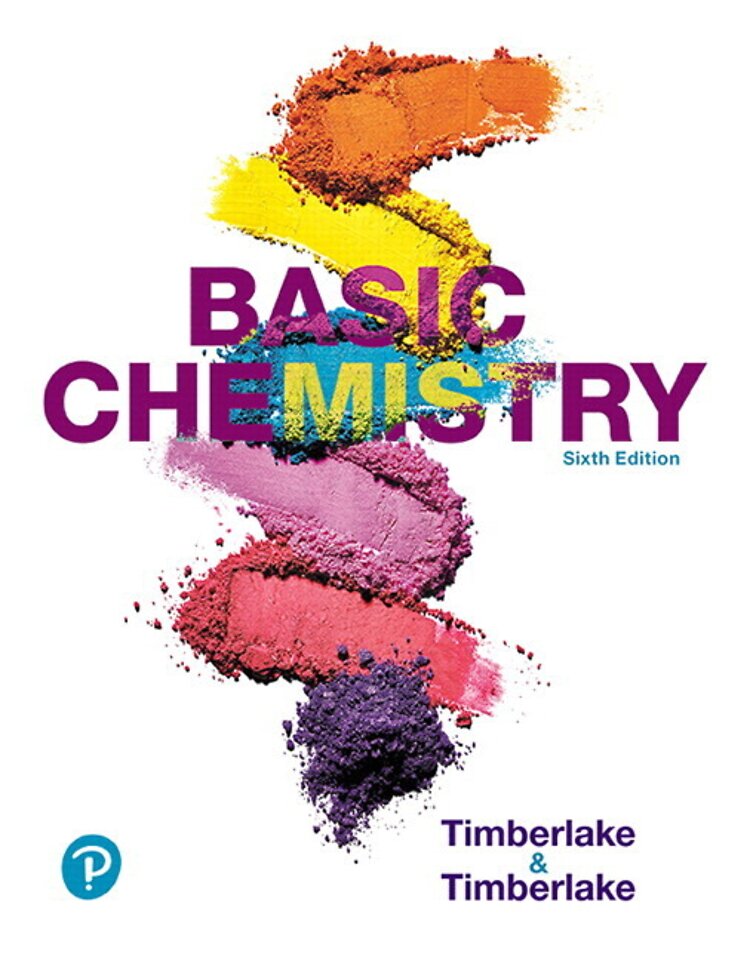
Basic Chemistry

Paperback Engels 2019 9780134878119
€ 243,34
Levertijd ongeveer 9 werkdagen
Gratis verzonden

Samenvatting

For courses in introductory, preparatory, and basic chemistry.


Help students master math and problem solving they will use in their future chemistry classes

Basic Chemistry introduces Introductory Chemistry students to the essential scientific and mathematical concepts of general chemistry while providing the scaffolded support they need. The text uses accessible language and a moderate pace to provide an  easy-to-follow approach for first-time chemistry students and those hoping to renew their study of chemistry. With Basic Chemistry, Bill and Karen Timberlake make the study of chemistry an engaging and positive experience for today’s students by relating the structure and behavior of matter to real life.


The 6th Edition presents a new visual  program that incorporates sound pedagogical principles from educational research on the way today’s students learn and retain knowledge. The text’s applied focus helps students connect chemistry with their interests and potential careers through applications tied to real-life topics in health, the environment, and medicine. The new edition strengthens its emphasis on problem solving with additional end-of-chapter Challenge problems and new assignable practice problems that ensure students master the basic quantitative skills and conceptual understanding needed to succeed in this course and to continue their studies in the field.


Also available as a Pearson eText or packaged with Mastering Chemistry

Pearson eText is a simple-to-use, mobile-optimized, personalized reading experience available within Mastering. It lets students highlight, take notes, and review key vocabulary all in one place — even when offline. Seamlessly integrated videos and other rich media engage students and give them access to the help they need, when they need it. Educators can easily share their own notes with students so they see the connection between their eText and what they learn in class.

Mastering™ is the teaching and learning platform that empowers you to reach every student. By combining trusted author content with digital tools developed to engage students and emulate the office-hour experience, Mastering personalizes learning and improves results for each student. The fully integrated and complete media package allows instructors to engage students before they come to class, hold them accountable for learning during class, and then confirm that learning after class. Learn more about Mastering Chemistry.

Specificaties

ISBN13:9780134878119
Taal:Engels
Bindwijze:Paperback

Lezersrecensies

Wees de eerste die een lezersrecensie schrijft!

Inhoudsopgave

<ol> <li><strong>Chemistry in Our Lives</strong>&nbsp; <ul> <li>1.1 Chemistry and Chemicals</li> <li>1.2 Scientific Method: Thinking Like a Scientist</li> <li>1.3 Studying and Learning Chemistry</li> <li>1.4 Key Math Skills for Chemistry</li> <li>1.5 Writing Numbers in Scientific Notation</li> </ul></li> <li><strong>Chemistry and Measurements</strong>&nbsp; <ul> <li>2.1 Units of Measurement</li> <li>2.2 Measured Numbers and Significant Figures</li> <li>2.3 Significant Figures in Calculations</li> <li>2.4 Prefixes and Equalities</li> <li>2.5 Writing Conversion Factors</li> <li>2.6 Problem Solving Using Unit Conversion</li> <li>2.7 Density</li> </ul></li> <li><strong>Matter and Energy</strong>&nbsp; <ul> <li>3.1 Classification of Matter</li> <li>3.2 States and Properties of Matter</li> <li>3.3 Temperature</li> <li>3.4 Energy</li> <li>3.5 Specific Heat</li> <li>3.6 Energy and Nutrition</li> </ul></li> <li><strong>Atoms and Elements</strong>&nbsp; <ul> <li>4.1 Elements and Symbols</li> <li>4.2 The Periodic Table</li> <li>4.3 The Atom</li> <li>4.4 Atomic Number and Mass Number</li> <li>4.5 Isotopes and Atomic Mass</li> </ul></li> <li><strong>Electronic Structure of Atoms and Periodic Trends</strong>&nbsp; <ul> <li>5.1 Electromagnetic Radiation</li> <li>5.2 Atomic Spectra and Energy Levels</li> <li>5.3 Sublevels and Orbitals</li> <li>5.4 Orbital Diagrams and Electron Configurations</li> <li>5.5 Electron Configurations and the Periodic Table</li> <li>5.6 Trends in Periodic Properties</li> </ul></li> <li><strong>Ionic and Molecular Compounds</strong>&nbsp; <ul> <li>6.1 Ions: Transfer of Electrons</li> <li>6.2 Ionic Compounds</li> <li>6.3 Naming and Writing Ionic Formulas</li> <li>6.4 Polyatomic Ions</li> <li>6.5 Molecular Compounds: Sharing Electrons</li> </ul></li> <li><strong>Chemical Quantities</strong>&nbsp; <ul> <li>7.1 The Mole</li> <li>7.2 Molar Mass</li> <li>7.3 Calculations Using Molar Mass</li> <li>7.4 Mass Percent Composition</li> <li>7.5 Empirical Formulas</li> <li>7.6 Molecular Formulas</li> </ul></li> <li><strong>Chemical Reactions</strong>&nbsp; <ul> <li>8.1 Equations for Chemical Reactions</li> <li>8.2 Balancing a Chemical Equation</li> <li>8.3 Types of Chemical Reactions</li> <li>8.4 Oxidation—Reduction Reactions</li> </ul></li> <li><strong>Chemical Quantities in Reactions</strong>&nbsp; <ul> <li>9.1 Conservation of Mass</li> <li>9.2 Mole Relationships in Chemical Equations</li> <li>9.3 Mass Calculations for Chemical Reactions</li> <li>9.4 Limiting Reactants</li> <li>9.5 Percent Yield</li> <li>9.6 Energy in Chemical Reactions</li> </ul></li> <li><strong>Bonding and Properties of Solids and Liquids</strong>&nbsp; <ul> <li>10.1 Lewis Structures for Molecules and Polyatomic Ions</li> <li>10.2 Resonance Structures</li> <li>10.3 Shapes of Molecules and Polyatomic Ions (VSEPR Theory)</li> <li>10.4 Electronegativity and Bond Polarity</li> <li>10.5 Polarity of Molecules</li> <li>10.6 Intermolecular Forces Between Atoms or Molecules</li> <li>10.7 Changes of State</li> </ul></li> <li><strong>Gases</strong>&nbsp; <ul> <li>11.1 Properties of Gases</li> <li>11.2 Pressure and Volume (Boyle’s Law)</li> <li>11.3 Temperature and Volume (Charles’s Law)</li> <li>11.4 Temperature and Pressure (Gay-Lussac’s Law)</li> <li>11.5 The Combined Gas Law</li> <li>11.6 Volume and Moles (Avogadro’s Law)</li> <li>11.7 The Ideal Gas Law</li> <li>11.8 Gas Laws and Chemical Reactions</li> <li>11.9 Partial Pressures (Dalton’s Law)</li> </ul></li> <li><strong>Solutions</strong>&nbsp; <ul> <li>12.1 Solutions</li> <li>12.2 Electrolytes and Nonelectrolytes</li> <li>12.3 Solubility</li> <li>12.4 Solution Concentrations</li> <li>12.5 Dilution of Solutions</li> <li>12.6 Chemical Reactions in Solution</li> <li>12.7 Molality and Freezing Point Lowering/Boiling Point Elevation</li> <li>12.8 Properties of Solutions: Osmosis</li> </ul></li> <li><strong>Reaction Rates and Chemical Equilibrium</strong>&nbsp; <ul> <li>13.1 Rates of Reactions</li> <li>13.2 Chemical Equilibrium</li> <li>13.3 Equilibrium Constants</li> <li>13.4 Using Equilibrium Constants</li> <li>13.5 Changing Equilibrium Conditions: Le Châtelier’s Principle</li> </ul></li> <li><strong>Acids and Bases</strong>&nbsp; <ul> <li>14.1 Acids and Bases</li> <li>14.2 Brønsted—Lowry Acids and Bases</li> <li>14.3 Strengths of Acids and Bases</li> <li>14.4 Dissociation Constants of Weak Acids and Bases</li> <li>14.5 Dissociation of Water</li> <li>14.6 The pH Scale</li> <li>14.7 Reactions of Acids and Bases</li> <li>14.8 Acid—Base Titration</li> <li>14.9 Buffers</li> </ul></li> <li><strong>Oxidation and Reduction</strong>&nbsp; <ul> <li>15.1 Oxidation and Reduction</li> <li>15.2 Balancing Oxidation—Reduction Equations Using Half-Reactions</li> <li>15.3 Electrical Energy from Oxidation—Reduction Reactions</li> <li>15.4 Oxidation—Reduction Reactions That Require Electrical Energy</li> </ul></li> <li><strong>Nuclear Chemistry</strong>&nbsp; <ul> <li>16.1 Natural Radioactivity</li> <li>16.2 Nuclear Reactions</li> <li>16.3 Radiation Measurement</li> <li>16.4 Half-Life of a Radioisotope</li> <li>16.5 Medical Applications Using Radioactivity</li> <li>16.6 Nuclear Fission and Fusion</li> </ul></li> <li><strong>Organic Chemistry</strong>&nbsp; <ul> <li>17.1 Alkanes</li> <li>17.2 Alkenes, Alkynes, and Polymers</li> <li>17.3 Aromatic Compounds</li> <li>17.4 Alcohols and Ethers</li> <li>17.5 Aldehydes and Ketones</li> <li>17.6 Carboxylic Acids and Esters</li> <li>17.7 Amines and Amides</li> </ul></li> <li><strong>Biochemistry</strong>&nbsp; <ul> <li>18.1 Carbohydrates</li> <li>18.2 Disaccharides and Polysaccharides</li> <li>18.3 Lipids</li> <li>18.4 Amino Acids and Proteins</li> <li>18.5 Protein Structure</li> <li>18.6 Proteins as Enzymes</li> <li>18.7 Nucleic Acids</li> <li>18.8 Protein Synthesis</li> </ul></li> </ol>

Managementboek Top 100

€ 243,34
Levertijd ongeveer 9 werkdagen
Gratis verzonden

Rubrieken

    Personen

      Trefwoorden

        Basic Chemistry