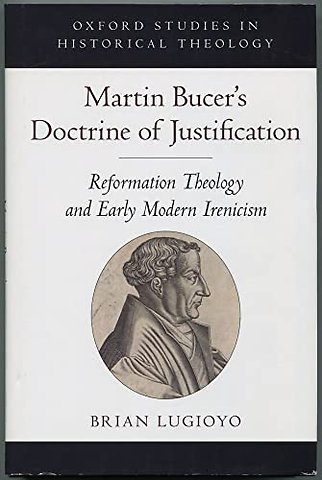
Martin Bucer's Doctrine of Justification
Reformation Theology and Early Modern Irenicism
Gebonden Engels 2010 9780195387360Samenvatting
Martin Bucer has been predominantly portrayed as a diplomat who attempted to reconcile divergent theological views, sometimes at any cost, or as a pragmatic pastor who was more concerned with ethics than theology. These representations have led to the view that Bucer was a theological light-weight, rightly placed in the shadow of Luther and Calvin. This book makes a different argument. Bucer was an ecclesial diplomat and he was a pragmatic pastor, yet his ecclesial and practical approaches to reforming the Church were guided by coherent theological convictions. Central to his theology was his understanding of the doctrine of justification, an understanding that Lugioyo argues has an integrity of its own and has been imprecisely represented as intentionally conciliatory. It was this solid doctrine that guided Bucer's irenicism and acted as a foundation for his entrance into discussions with Catholics between 1539 and 1541. He was consistent in his approach and did not sacrifice his theological convictions for ecclesial expediency. His understanding was an accepted evangelical perspective on justification, one to be commended along with those of Luther and Calvin.
Specificaties
Lezersrecensies
Rubrieken
- advisering
- algemeen management
- coaching en trainen
- communicatie en media
- economie
- financieel management
- inkoop en logistiek
- internet en social media
- it-management / ict
- juridisch
- leiderschap
- marketing
- mens en maatschappij
- non-profit
- ondernemen
- organisatiekunde
- personal finance
- personeelsmanagement
- persoonlijke effectiviteit
- projectmanagement
- psychologie
- reclame en verkoop
- strategisch management
- verandermanagement
- werk en loopbaan