Customs and Excise
Trade, Production, and Consumption in England 1640-1845
Gebonden Engels 2003 9780199259212Samenvatting
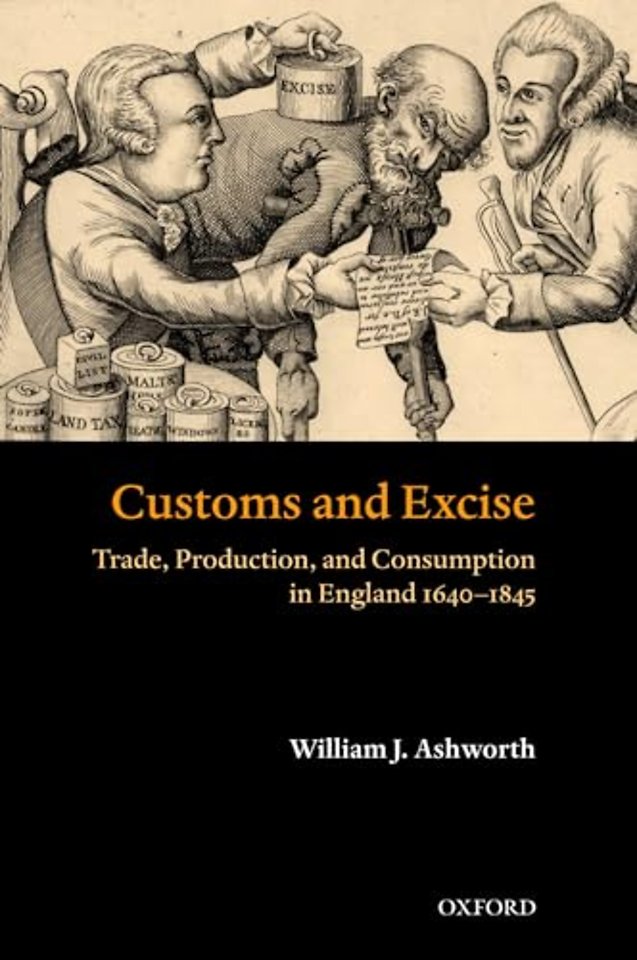
Asis book traces the growth of customs and excise, and their integral role in shaping the framework of industrial England; including state power, technical advance, and the evolution of a consumer society. Central to this structure was the development of two economies - one legal and one illicit. If there was a unique English pathway of industrialization, it was less a distinct entrepreneurial and techno-centric culture, than one predominantly defined within an institutional framework spearheaded by the excise and a wall of tariffs. This process reached its peak by the end of the 1770s. The structure then quickly started to crumble under the weight of the fiscal-military state, and Pitt's calculated policy of concentrating industrial policy around cotton, potteries, and iron - at the expense of other taxed industries. The breakthrough of the new political economy was the erosion of the illicit economy; the smugglers' free trade now became the state's most powerful weapon in the war against non-legal trade. If at the beginning of the period covered by this book state administration was predominantly deregulated and industry regulated, by the close the reverse was the case.
Specificaties
Lezersrecensies
Rubrieken
- advisering
- algemeen management
- coaching en trainen
- communicatie en media
- economie
- financieel management
- inkoop en logistiek
- internet en social media
- it-management / ict
- juridisch
- leiderschap
- marketing
- mens en maatschappij
- non-profit
- ondernemen
- organisatiekunde
- personal finance
- personeelsmanagement
- persoonlijke effectiviteit
- projectmanagement
- psychologie
- reclame en verkoop
- strategisch management
- verandermanagement
- werk en loopbaan