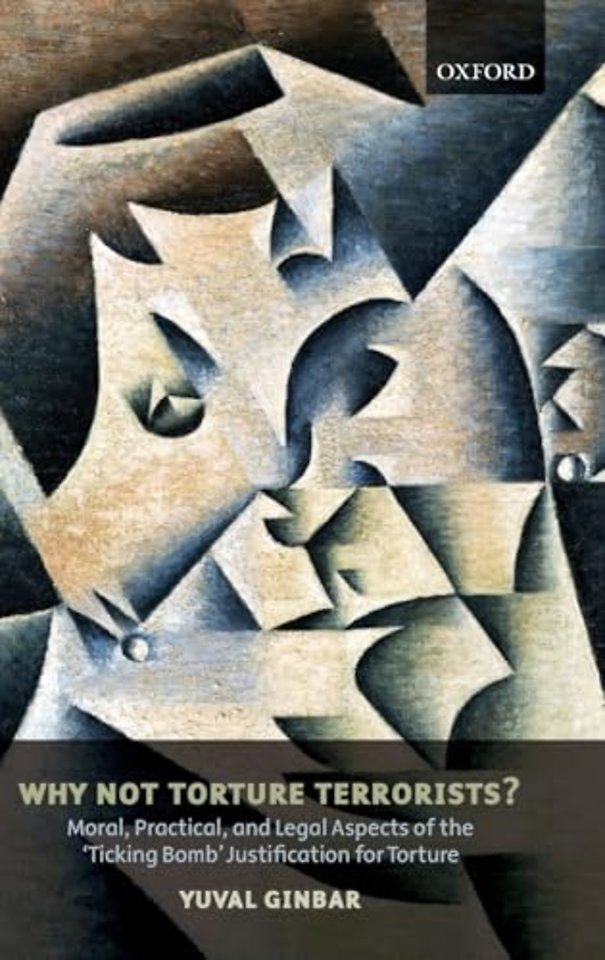
Why Not Torture Terrorists?
Moral, Practical and Legal Aspects of the "Ticking Bomb" Justification for Torture
Gebonden Engels 2008 9780199540914Samenvatting
The book addresses a dilemma at the heart of the 'War on Terror': is it ever justifiable to torture terrorists in order to save the lives of innocent civilians; the so-called 'ticking bomb' scenario?
The book first analyzes the ticking bomb dilemma as a pure moral one, facing the individual would-be torturer. A 'never-say-never' utilitarian position is pitted against a 'minimal absolutist' view that some acts are never justifiable, and that torture is one such act.
It then looks at the issues that arise once a state has decided to sanction torture in extreme situations: when, how, and whom to torture; the institutionalization of torture; its effects on society; and its efficacy in combatting terrorism in the shorter and longer runs.
Four models of legalized torture are next examined-including current ones in Israel and the USA and the idea of torture warrants.
Finally, related legal issues are analyzed; among them the lawfulness of coercive interrogation under international law and attempts to allow torture 'only' after the fact, for instance by applying the criminal law defence of necessity.
A 'minimal absolutist' view - under which torture, whether by private individuals or by state officials, must be prohibited absolutely in law, policy and practice, and allowing no exceptions for ticking bomb situations - is defended throughout.
Specificaties
Lezersrecensies




Rubrieken
- advisering
- algemeen management
- coaching en trainen
- communicatie en media
- economie
- financieel management
- inkoop en logistiek
- internet en social media
- it-management / ict
- juridisch
- leiderschap
- marketing
- mens en maatschappij
- non-profit
- ondernemen
- organisatiekunde
- personal finance
- personeelsmanagement
- persoonlijke effectiviteit
- projectmanagement
- psychologie
- reclame en verkoop
- strategisch management
- verandermanagement
- werk en loopbaan