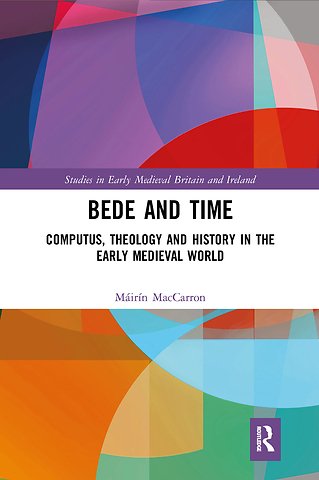
Bede and Time
Computus, Theology and History in the Early Medieval World
Paperback Engels 2021 1e druk 9781032088945Samenvatting
Awarded the Irish Historical Research Prize 2021
The Venerable Bede (c. 673–735) was the leading intellectual figure of the early Anglo-Saxon Church, and his extensive corpus of writings encompassed themes of exegesis, computus (dating of Easter and construction of calendars), history and hagiography. Rather than look at these works in isolation, Máirín MacCarron argues that Bede’s work in different genres needs to be read together to be properly understood. This book provides the first integrated analysis of Bede’s thought on time, and demonstrates that such a comprehensive examination allows a greater understanding of Bede’s writings on time, and illuminates the place of time and chronology in his other works. Bede was an outstanding intellect whose creativity and ingenuity were apparent in various genres of writing. This book argues that in innovatively combining computus, theology and history, Bede transformed his contemporaries’ understanding of time and chronology.
Specificaties
Lezersrecensies
Inhoudsopgave
Abbreviations
Introduction: Computus, Contexts and Controversies
Chapter 1: De temporibus
- Transmission and Terminology of Bede’s works on Time
- Insular computistica
- Structure and content of computistical textbooks
- De temporibus and Insular computus tradition
- Why did Bede write De temporibus?
Chapter 2: The De temporibus chronicle
- Structure of the De temporibus chronicle
- Purpose of the De temporibus chronicle
- Terminology and titles for Bede’s chronicles
Chapter 3: Bede’s Anno Mundi chronology and the ‘Chronicle of 703’
- Chronography in Late Antiquity and the early Middle Ages
- Chronology in the Insular World
- Why did Bede use Vulgate chronology?
- Conclusion
Chapter 4: Bede’s chronicles: contents and sources
- First to Fifth World Ages
- Sixth World Age
- Conclusion
Chapter 5: Nativity and Incarnation in Bede’s Theology of Time
- Baptism, Passion and Nativity in World Chronicle Tradition
- Bede and counting time from the coming of Christ
- Nativity and Incarnation in Bede’s thought
- Nativity and Incarnation in early medieval theology
Chapter 6: Bede, Dionysius Exiguus and Anno Domini chronology
- Annus Domini prior to the seventh century
- Anglo-Saxon England
- Willibrord and Francia
- Bede and Annus Domini in the Historia Ecclesiastica
Afterword
Appendix 1: Table of chapter headings in Bede’s De temporibus and his principal sources
Appendix 2: Table of key chronological events in the Chronicle of Eusebius and Jerome
Appendix 3: Chronological comparison of Bede’s chronicles
Appendix 4: Table of Popes in the Liber Pontificalis, De temporibus 22 and De temporum ratione 66
Appendix 5: Incarnation dating clauses in the Historia Ecclesiastica
Appendix 6: Comparison of Bede’s AD-years in the Historia Ecclesiastica with AD-years calculated from his chronicles
Glossary
Bibliography
Index
Rubrieken
- advisering
- algemeen management
- coaching en trainen
- communicatie en media
- economie
- financieel management
- inkoop en logistiek
- internet en social media
- it-management / ict
- juridisch
- leiderschap
- marketing
- mens en maatschappij
- non-profit
- ondernemen
- organisatiekunde
- personal finance
- personeelsmanagement
- persoonlijke effectiviteit
- projectmanagement
- psychologie
- reclame en verkoop
- strategisch management
- verandermanagement
- werk en loopbaan