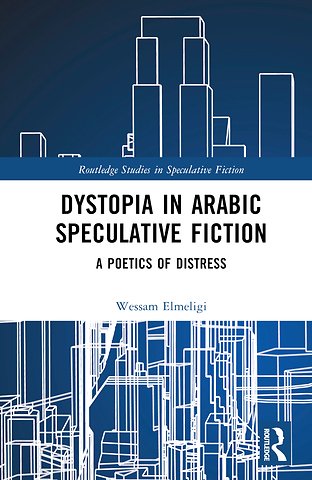
Dystopia in Arabic Speculative Fiction
A Poetics of Distress
Gebonden Engels 2023 9781032303857Samenvatting
Dystopia in Arabic Speculative Fiction: A Poetics of Distress unpacks the nuanced Arabic contribution to speculative fiction. Part of a larger project by Elmeligi to formulate a poetics of literary theory to read Arabic literature, this book examines Arabic dystopian fiction from the lens of social causes of psychological distress. The selected novels combine works by authors already established in studies by Western scholars and many that have not been translated before or have not received enough scholarly attention, yet. The novels represent an array of Arab countries, including Algerian, Egyptian, Jordanian, Kuwaiti, Mauritanian, Syrian, and Tunisian authors. It also highlights the contribution of women authors to Arabic speculative fiction. This book enriches the conversation about what is quite possibly a significant speculative fiction turn in the Arabic novel, as well as provides a new theoretical approach to read such complex and innovative literature.
Specificaties
Lezersrecensies
Inhoudsopgave
Introduction: Reading Distress as a Narrative of Arabic Speculative Fiction.
Part One: Authoritarianism and Distress in Arabic Speculative Fiction
- Isolation and the Dystopia of Place
- 1. Mistrust in Quest Dystopia: Naguib Mahfouz’s The Journey of Ibn Fattouma and Ezzedin Eassa’s The Façade.
2. Inflexibility in Parallel Dystopia:
Ahmed Khaled Towfik’s Utopia and Nihād Shārīf’s Residents of the Second World.
- Self-Estrangement and the Dystopia of Time
- 3. Mistrust in Cyberpunk Dystopia:
Aḥmad Wild Islim’s The Outsider and Mahmoud Othman’s Revolution 2053: The Beginning.
4. Inflexibility in Cultural Dystopia:
al-Hādī Thābit’s What if Hannibal Returns and Līna Kīlānī’s The Seeds of the Devil
Part Two: Inequity and Distress in Arabic Speculative Fiction
- Meaninglessness and the Dystopia of the Mind
- 5. Mistrust in Psychological Dystopia:
Ṭība ʾaḥmad al- ʾIbrāhīm’s The Pale Human and ʿumar Ḥāziq’s The First Novelist of the City
6. Inflexibility in Intellectual Dystopia:
Mohammad Rabie’s Planet Amber and Buthayna Al-Essa’s The Guardian of the Surface of the World.
- Normlessness and the Dystopia of the Apocalypse
7. Mistrust in Post-Revolt Dystopia: Basma Abdel Aziz’s The Queue and Mohammad Rabie’s Otared.
8. Inflexibility in Post-War Dystopia: Wāsīnī al-Aʿraj’s 2084: The Tale of the Last Arab and Aḥmad al- Zaʿtarī’s Bending Over the Corpse of Amman
Conclusion: Distress, Dystopia, and a Speculative Fiction Turn in Arabic Literature
References
Index
Rubrieken
- advisering
- algemeen management
- coaching en trainen
- communicatie en media
- economie
- financieel management
- inkoop en logistiek
- internet en social media
- it-management / ict
- juridisch
- leiderschap
- marketing
- mens en maatschappij
- non-profit
- ondernemen
- organisatiekunde
- personal finance
- personeelsmanagement
- persoonlijke effectiviteit
- projectmanagement
- psychologie
- reclame en verkoop
- strategisch management
- verandermanagement
- werk en loopbaan