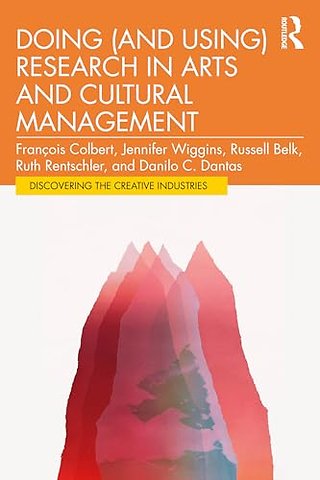
Doing (and Using) Research in Arts and Cultural Management
Paperback Engels 2025 1e druk 9781032784496Samenvatting
This book offers a rich, critical, and engaging exploration of cutting-edge methods for studying arts and cultural management in a digital age. The content will appeal to those who seek to study these topics by employing the latest data gathering and analytical methods. It is an informative resource for academics, including advanced masters’ and PhD candidates, as well as professional arts managers seeking to understand the changing landscape. This book is relevant to arts and cultural management, creative industries, cultural policy, festivals and events, heritage, museum studies, arts consumption and marketing, and cultural tourism. It will also appeal to consultants, evaluators, and fundraisers who do research on a regular basis. The chapters engage with both traditional and contemporary research topics, including providing examples of high-quality research from national, regional, and local settings in various parts of the world. The co-authors are five diverse scholars who are experienced not only in standard qualitative and quantitative methods but also emerging techniques such as netnography and digital analysis. This book provides real-world, empirical, and theoretical insights on how to navigate the complexities of research methods in a creative context.
Specificaties
Lezersrecensies
Inhoudsopgave
Chapter 1 Foundations of arts and cultural research
What is research?
Academic research
Information search from the manager's point of view
Qualitative Research
Quantitative research
The importance of writing clearly
How to use this Book
References
Chapter 2: Research Questions and Research Designs
Introduction
Step 1: Identify Your Potential Contribution
Step 2: Clarify Your Research Goal
Step 3: Specify Your Research Question
Step 4: Select Your Research Design
Conclusion
References
Chapter 3: Doing ethics in arts and cultural management research
Introduction
Ethical dilemmas
Types of ethical dilemmas
Types of ethical breaches
A research ethics framework
Steps in the research ethics process
Gaining Respect
Building Trust
Being responsible and accountable
Individual
Community
Institutional
Conclusion
References
Chapter 4 What, Why and How: Writing a Literature Review
Introduction
What is a literature Review
Steps in a Literature Review
1. Define the boundaries/gaps of your subject.
2. Define the constructs or concepts you are going to use.
3. Explain your contribution to knowledge.
4. Address Your Audience
Types of Literature Review
- Thematic literature review
- Systematic Literature review
- Annotated bibliographic analysis
- Netnography
- Meta-analysis
- Spectroscopy
Conclusion
References
Chapter 5: Survey Research
Introduction
Step 1: Selecting and Sampling Participants
Step 2: Measuring the Variables
Step 3: Designing and Distributing the Survey Questionnaire
Step 5: Analyzing and Presenting the Data
Conclusion
References
Chapter 6: Depth Interview Research
Introduction
Step 1: Literature Review and Research Question
Step 2: Locating Participants and Preparing for Interviews
Step 3: Conducting the Interview
Step 4: Transcribe, Code, Analyze
Step 5: Write-up or Edit your Findings
Conclusion
References
Chapter 7: Experimental Research
Introduction
Step 1: Selecting the Type of Experiment
Step 2: Determining the Factorial Design
Step 3: Designing and Pretesting the Manipulations
Step 4: Designing and Distributing the Questionnaire
Step 5: Analyzing and Presenting the Data
Conclusion
References
Chapter 8: Case Studies
Introduction
What is Case Study?
When to Use Case Studies as a Research Method?
3.0 Key stages in case study research
Step 1: Define a research question
Step 2: Determine the subject and set the boundaries
Step 3: Craft and test the tools
Step 4: Collect data
Principle 1: use multiple sources of evidence
Principle 2: create a case study database
Step 5: Analyze the data
Conclusion
References
Chapter 9: Ethnography, Netnography, and Observation
Introduction
Ethnography
Netnography
Step 1: Locate Data
Step 2: Data Analysis
Step 3: Data Interpretation
Step 4. Publishing your Netnography
Observation
Autoethnography
Mechanical Observation
Non-Participant and Unobtrusive Observation
Conclusion
References
Chapter 10: Effective Writing and Presentations
Introduction
Step 1: Preparing to Communicate Your Research
Step 2: Framing the Phenomenon and Research Question
Step 3: Writing a Literature Review and Theoretical Foundation
Step 4: Writing Methods Sections and Findings
Step 5: Writing Discussion and Conclusion Sections
Writing for a Managerial Audience
Conclusion
References
Conclusion
Rubrieken
- advisering
- algemeen management
- coaching en trainen
- communicatie en media
- economie
- financieel management
- inkoop en logistiek
- internet en social media
- it-management / ict
- juridisch
- leiderschap
- marketing
- mens en maatschappij
- non-profit
- ondernemen
- organisatiekunde
- personal finance
- personeelsmanagement
- persoonlijke effectiviteit
- projectmanagement
- psychologie
- reclame en verkoop
- strategisch management
- verandermanagement
- werk en loopbaan