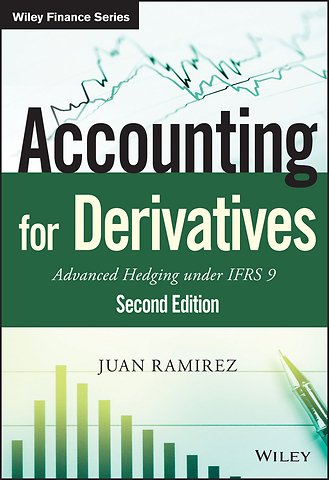
Accounting for Derivatives – Advanced Hedging under IFRS 9 2e
Advanced Hedging under IFRS 9
Gebonden Engels 2015 2e druk 9781118817971Samenvatting
The derivative practitioner s expert guide to IFRS 9 application
Accounting for Derivatives explains the likely accounting implications of a proposed transaction on derivatives strategy, in alignment with the IFRS 9 standards. Written by a Big Four advisor, this book shares the author s insights from working with companies to minimise the earnings volatility impact of hedging with derivatives. This second edition includes new chapters on hedging inflation risk and stock options, with new cases on special hedging situations including hedging components of commodity risk. This new edition also covers the accounting treatment of special derivatives situations, such as raising financing through commodity–linked loans, derivatives on own shares and convertible bonds. Cases are used extensively throughout the book, simulating a specific hedging strategy from its inception to maturity following a common pattern. Coverage includes instruments such as forwards, swaps, cross–currency swaps, and combinations of standard options, plus more complex derivatives like knock–in forwards, KIKO forwards, range accruals, and swaps in arrears.
Under IFRS, derivatives that do not qualify for hedge accounting may significantly increase earnings volatility. Compliant application of hedge accounting requires expertise across both the standards and markets, with an appropriate balance between derivatives expertise and accounting knowledge. This book helps bridge the divide, providing comprehensive IFRS coverage from a practical perspective.
-Become familiar with the most common hedging instruments from an IFRS 9 perspective
-Examine FX risk and hedging of dividends, earnings, and net assets of foreign subsidies
-Learn new standards surrounding the hedge of commodities, equity, inflation, and foreign and domestic liabilities
-Challenge the qualification for hedge accounting as the ultimate objective
IFRS 9 is set to replace IAS 39, and many practitioners will need to adjust their accounting policies and hedging strategies to conform to the new standard.
Accounting for Derivatives is the only book to cover IFRS 9 specifically for the derivatives practitioner, with expert guidance and practical advice.
Specificaties
Lezersrecensies
Inhoudsopgave
Chapter 1 The Theoretical Framework Recognition of Financial Instruments 1
1.1 Accounting Categories for Financial Assets 2
1.2 The Amortised Cost Calculation: Effective Interest Rate 11
1.3 Examples of Accounting for Fixed Rate Bonds 14
1.4 Accounting Categories For Financial Liabilities 16
1.5 The Fair Value Option 19
1.6 Hybrid And Compound Contracts 19
Chapter 2 The Theoretical Framework Hedge Accounting 23
2.1 Hedge Accounting Types of Hedges 23
2.2 Types of Hedges 25
2.3 Hedged Item Candidates 30
2.4 Hedging Instrument Candidates 36
2.5 Hedging Relationship Documentation 37
2.6 Hedge Effectiveness Assessment 39
2.7 The Hypothetical Derivative Simplification 48
2.8 Rebalancing 49
2.9 Discontinuation of Hedge Accounting 53
2.10 Options And Hedge Accounting 57
2.11 Forwards and Hedge Accounting 70
Chapter 3 Fair Valuation Credit and Debit Valuation Adjustments 71
3.1 Fair Valuation Overview of Ifrs 13 71
3.2 Case Study Credit Valuation Adjustment of an Interest Rate Swap 80
3.3 Overnight Index Swap Discounting 95
Chapter 4 An Introduction to Derivative Instruments 97
4.1 FX Forwards 97
4.2 Interest Rate Swaps 99
4.3 Cross–Currency Swaps 102
4.4 Standard (Vanilla) Options 105
4.5 Exotic Options 118
4.6 Barrier Options 119
4.7 Range Accruals 121
Chapter 5 Hedging Foreign Exchange Risk 123
5.1 Types of Foreign Exchange Exposure 123
5.2 Introductory Definitions 124
5.3 Summary of Ias 21 Translation Rates 125
5.4 Foreign Currency Transactions 126
5.5 Case Study: Hedging A Forecast Sale and Subsequent Receivable with an Fx Forward (Forward Element Included in Hedging Relationship) 128
5.6 Case Study: Hedging a Forecast Sale with an Fx Forward 141
5.7 Case Study: Hedging a Forecast Sale and Subsequent Receivable with a Tunnel 163
5.8 Case Study: Hedging A Forecast Sale and Subsequent Receivable with a Participating Forward 180
5.9 Case Study: Hedging a Highly Expected Foreign Sale with a Knock–In Forward (Introduction) 222
5.10 Case Study: Hedging a Forecast Sale And Subsequent Receivable with a Knock–In Forward (Splitting Alternative) 226
5.11 Case Study: Hedging A Forecast Sale and Subsequent Receivable with a Knock–In Forward (Instrument In Its Entirety) 238
5.12 Case Study: Hedging A Forecast Sale and Subsequent Receivable with a Knock–In Forward (Rebalancing Approach) 246
5.13 Case Study: Hedging A Highly Expected Foreign Sale with a Kiko Forward 257
5.14 Case Study: Hedging A Forecast Sale and Subsequent Receivable with a Range Accrual (Part 1) 270
5.15 Case Study: Hedging A Forecast Sale and Subsequent Receivable with a Range Accrual (Designation In Its Entirety) 272
5.16 Case Study: Hedging Forecast Sale and Subsequent Receivable with a Range Accrual (Splitting Approach) 282
5.17 Hedging On A Group Basis The Treasury Centre Challenge 287
5.18 Hedging Forecast Intragroup Transactions 292
Chapter 6 Hedging Foreign Subsidiaries 295
6.1 Stand–Alone Versus Consolidated Financial Statements 297
6.2 The Translation Process 298
6.4 Special Items That Are Part of a Net Investment 301
6.5 Effect Of Minority Interests on Translation Differences 303
6.6 Hedging Net Investments In Foreign Operations 303
6.7 Case Study: Accounting for Net Investments In Foreign Operations 304
6.8 Case Study: Net Investment Hedge with a Forward 311
6.9 Case Study: Net Investment Hedge Using Foreign Currency Debt 322
6.10 Net Investment Hedging With Cross–Currency Swaps 328
6.11 Case Study: Net Investment Hedge with a Floating–To–Floating Cross–Currency Swap 329
6.12 Case Study: Net Investment Hedge with a Fixed–To–Fixed Cross–Currency Swap 336
6.13 Case Study: Hedging Intragroup Foreign Dividends 344
6.14 Case Study: Hedging Foreign Subsidiary Earnings 353
6.15 Case Study: Integral Hedging of an Investment in a Foreign Operation 364
Chapter 7 Hedging Interest Rate Risk 371
7.1 Common Interest Rate Hedging Strategies 371
7.2 Separation Of Embedded Derivatives in Structured Debt Instruments 373
7.3 Interest Accruals 375
7.4 Most Common Interest Rate Derivative Instruments 376
7.5 Case Study: Hedging a Floating Rate Liability With an Interest Rate Swap 376
7.6 Case Study: Hedging A Floating Rate Liability With a Zero–Cost Collar 385
7.7 Implications of Interest Accruals and Credit Spreads 397
7.8 Case Study: Hedging a Fixed Rate Liability With an Interest Rate Swap 401
7.9 Case Study: Hedging A Future Fixed Rate Issuance with an Interest Rate Swap 416
7.10 Case Study: Hedging A Future Floating Rate Issuance with an Interest Rate Swap 426
7.11 Case Study: Hedging A Fixed Rate Liability with a Swap In Arrears 436
7.12 Case Study: Hedging A Floating Rate Liability with a Kiko Collar 448
Chapter 8 Hedging Foreign Currency Liabilities 469
8.1 Case Study: Hedging a Floating Rate Foreign Currency Liability with a Receive–Floating Pay–Floating Cross–Currency Swap 469
8.2 Case Study: Hedging a Fixed Rate Foreign Currency Liability with a Receive–Fixed Pay–Floating Cross–Currency Swap 493
8.3 Case Study: Hedging A Floating Rate Foreign Currency Liability with a Receive–Floating Pay–Fixed Cross–Currency Swap 515
8.4 Case Study: Hedging A Fixed Rate Foreign Currency Liability with a Receive–Fixed Pay–Fixed Cross–Currency Swap 538
Chapter 9 Hedging Equity Risk 563
9.1 Recognition of Equity Investments In Other Companies 563
9.2 Debt Versus Equity Classification of Own Instruments 565
9.3 Hybrid Securities Preference Shares From an Issuer s Perspective 567
9.4 Convertible Bonds Issuer s Perspective 569
9.5 Convertible Bonds Investor s Perspective 572
9.6 Derivatives on Own Equity Instruments 572
9.7 Case Study: Accounting For A Stock Lending Transaction 573
9.8 Case Study: Accounting for a Mandatory Convertible Bond from an Issuer s Perspective 578
9.9 Case Study: Accounting for a Convertible Bond from an Issuer s Perspective 583
9.10 Case Study: Hedging Step–Up Callable Perpetual Preference Shares 590
9.11 Case Study: Base Instruments Linked To Debt Instruments 596
9.12 Case Study: Parking Shares Through a Total Return Swap 596
9.13 Case Study: Hedging an Equity Investment with a Put Option 601
9.14 Case Study: Selling A Forward on Own Shares 610
Chapter 10 Hedging Stock–Based Compensation Plans 617
10.1 Types And Terminology of Stock–Based Compensation Plans 617
10.2 Accounting for Equity–Based Compensation Plans 619
10.3 Case Study: ABC s Share–Based Plans 624
10.4 Main SOP/SAR Hedging Strategies 632
10.5 Case Study: Hedging a Stock Option Plan with an Equity Swap 641
10.6 Case Study: Hedging an SAR Plan with a Call 647
Chapter 11 Hedging Commodity Risk 655
11.1 Main Commodity Underlyings 655
11.2 Lease, Derivative and Own–Use Contracts 655
11.3 Categorisation According to Settlement Terms 658
11.4 Case Study: Hedging Gold Production with a Forward Own–Use Application 659
11.5 Case Study: Raising Financing Through a Gold Loan 662
11.6 Case Study: Hedging a Silver Purchase Firm Commitment with a Forward Fair Value Hedge 664
11.7 Case Study: Hedging Commodity Inventory with Futures 672
11.8 Case Study: Hedging a Highly Expected Purchase Of Oil With Futures and an FX Forward Cash Flow Hedge 680
11.9 Case Study: Airline Jet Fuel Consumption Hedge With Jet Fuel and Crude Oil Risk Component 691
Chapter 12 Hedging Inflation Risk 709
12.1 Inflation Markets Main Participants and Indices 709
12.2 Inflation–Linked Bonds 714
12.3 Inflation Derivatives 716
12.4 Inflation Risk Under IFRS 9 725
12.5 Case Study: Hedging Revenues Linked To Inflation 727
12.6 Matching An Inflation–Linked Asset with a Floating Rate Liability 738
Chapter 13 Hedge Accounting: A Double–Edged Sword 741
13.1 Positive Influence on The Profit or Loss Statement 742
13.2 Substantial Operational Resources 743
13.3 Limited Access to Hedging Alternatives 744
13.4 Risk of Reassessment of Highly Probable Transactions 744
13.5 Low Compatibility With Portfolio Hedging 745
13.6 Final Remarks 746
Index 749
Rubrieken
- advisering
- algemeen management
- coaching en trainen
- communicatie en media
- economie
- financieel management
- inkoop en logistiek
- internet en social media
- it-management / ict
- juridisch
- leiderschap
- marketing
- mens en maatschappij
- non-profit
- ondernemen
- organisatiekunde
- personal finance
- personeelsmanagement
- persoonlijke effectiviteit
- projectmanagement
- psychologie
- reclame en verkoop
- strategisch management
- verandermanagement
- werk en loopbaan