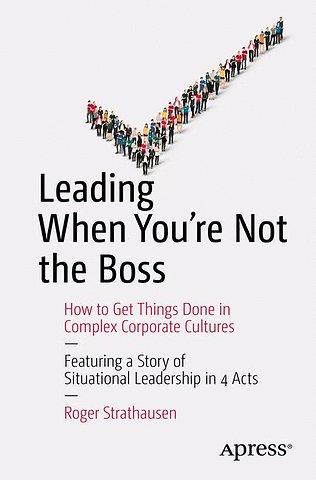
Leading When You're Not the Boss
How to Get Things Done in Complex Corporate Cultures
Paperback Engels 2015 9781484217474Samenvatting
Answer the questions that arise when managers and workers
need to adjust to unfamiliar leadership roles and rules in flattened organizational forms. Leading When You’re
Not the Boss provides a conceptual framework that you can apply when assessing your own organizations and work. The book discusses the underlying ideas necessary for a shift from a culture of hierarchies to one of relationships and the establishment of intrapreneurial and holistic work environments.
This book supports the trend in many corporations toward
flattening parts of their traditional top–down hierarchical management systems into more egalitarian, democratized, and distributed organizational forms. It analyzes the weaknesses of "management" culture at a time of ever more rapid change and complexity in the business world and illustrates how flattened organizational units increase agility, innovation, and efficacy. Moreover, it discusses how individuals can exercise effective leadership despite lacking the command-and-control authority of conventional bosses and ways for organizations to cultivate effective "post-management" cultures.
Especially in the technology sector, large projects have
become too complex to be mastered by any single leader. Drawing on his experience as a senior manager and executive consultant for a number of Fortune Global 500 companies, Roger Strathausen analyzes the situations and benefits that motivate companies to adopt flattened organizational forms. He shows that empowering a multi-talented group to manage itself by horizontal cooperation can deliver products with more speed, efficiency, innovation, and nimbleness than a solo boss could, while yielding higher employee productivity and retention rates.
With an entertaining mix of real-world examples and an
episodic HBR-style fictitious case study, the author illustrates throughout the book how his leadership lessons can be serviceable only when intelligently tailored to the dynamic complexities of specific situations, including the personalities and competencies of the people involved.
What You'll Learn
How to tailor the techniques of shared leadership to specific business situations rather than treating them as iron rules How to flourish in nonhierarchical and
ambiguously-hierarchical organizational contexts that encourage individual initiative for the joint benefit of the enterprise and personal professional growth
How success and fulfillment at work are enhanced by
organizational forms in which participants assess the situational relevance of their respective talents and actively apply them to group objectives in lateral cooperation with peers, as opposed to passively receiving orders from appointed bosses
Who This Book Is For
The primary readerships for this book are business
leaders and managers at all levels in corporations and non-managerial professionals who work in self-directed teams.
The secondary readerships are practitioners,
consultants, and academics interested in the topics of human resources, organizational design, and the future of work.
Specificaties
Lezersrecensies
Rubrieken
- advisering
- algemeen management
- coaching en trainen
- communicatie en media
- economie
- financieel management
- inkoop en logistiek
- internet en social media
- it-management / ict
- juridisch
- leiderschap
- marketing
- mens en maatschappij
- non-profit
- ondernemen
- organisatiekunde
- personal finance
- personeelsmanagement
- persoonlijke effectiviteit
- projectmanagement
- psychologie
- reclame en verkoop
- strategisch management
- verandermanagement
- werk en loopbaan