,

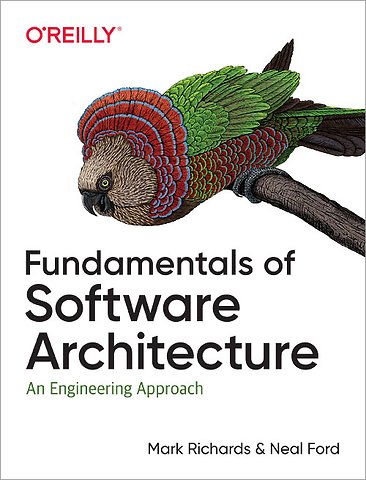
Fundamentals of Software Architecture

An Engineering Approach

Paperback Engels 2020 1e druk 9781492043454
91,59
€ 65,95
Nu besteld, dinsdag in huis
Gratis verzonden
Past door de brievenbus

Samenvatting

Salary surveys worldwide regularly place software architect in the top 10 best jobs, yet no real guide exists to help developers become architects. Until now. This book provides the first comprehensive overview of software architecture’s many aspects. Aspiring and existing architects alike will examine architectural characteristics, architectural patterns, component determination, diagramming and presenting architecture, evolutionary architecture, and many other topics.

Mark Richards and Neal Ford—hands-on practitioners who have taught software architecture classes professionally for years—focus on architecture principles that apply across all technology stacks. You’ll explore software architecture in a modern light, taking into account all the innovations of the past decade.

This book examines:
- Architecture patterns: The technical basis for many architectural decisions
- Components: Identification, coupling, cohesion, partitioning, and granularity
Soft skills: Effective team management, meetings, negotiation, presentations, and more
- Modernity: Engineering practices and operational approaches that have changed radically in the past few years
- Architecture as an engineering discipline: Repeatable results, metrics, and concrete valuations that add rigor to software architecture

Specificaties

ISBN13:9781492043454
Taal:Engels
Bindwijze:paperback
Aantal pagina's:400
Uitgever:O'Reilly
Druk:1
Verschijningsdatum:7-2-2020
Hoofdrubriek:IT-management / ICT

Lezersrecensies

Wees de eerste die een lezersrecensie schrijft!

Over Mark Richards

Mark Richards is a Director and Sr. Technical Architect at Collaborative Consulting, LLC., where he is involved in the architecture and design of Service Oriented Architectures in J2EE and other technologies, primarily in the financial services industry. He has been involved in the software industry since 1984, and has significant experience and expertise in J2EE architecture and development, Object-oriented design and development, and systems integration. Mark served as the President of the Boston Java User Group in 1997 and 1998, and the President of the New England Java Users Group from 1999 thru 2003. Mark is also the author of "Java Transaction Design Strategies" and contributing author of "97 Things Every Software Architect Should Know" (O'Reilly 2009), "NFJS Anthology Volume 1", and "NFJS Anthology Volume 2". Mark is an IBM Certified Application Architect, Certified Master IT Architect (TOG), Sun Certified J2EE Business Component Developer, a Sun Certified J2EE Enterprise Architect, a Sun Certified Java Programmer, a BEA WebLogic Certified Developer, a Certified Java Instructor, and holds a Master's Degree in Computer Science from Boston University. He is a regular conference speaker at the No Fluff Just Stuff Symposium Series and speaks at conferences and user groups around the country. When he is not working Mark can usually be found hiking with his wife and two daughters in the White Mountains or along the Appalachian Trail.

Andere boeken door Mark Richards

Inhoudsopgave

Preface: Invalidating Axioms
Conventions Used in This Book
Using Code Examples
O’Reilly Online Learning
How to Contact Us
Acknowledgments
Acknowledgments from Mark Richards
Acknowledgments from Neal Ford

1. Introduction
Defining Software Architecture
Expectations of an Architect
Make Architecture Decisions
Continually Analyze the Architecture
Keep Current with Latest Trends
Ensure Compliance with Decisions
Diverse Exposure and Experience
Have Business Domain Knowledge
Possess Interpersonal Skills
Understand and Navigate Politics
Intersection of Architecture and…
Engineering Practices
Operations/DevOps
Process
Data
Laws of Software Architecture

Part I: Foundations
2. Architectural Thinking
Architecture Versus Design
Technical Breadth
Analyzing Trade-Offs
Understanding Business Drivers
Balancing Architecture and Hands-On Coding

3. Modularity
Definition
Measuring Modularity
Cohesion
Coupling
Abstractness, Instability, and Distance from the Main Sequence
Distance from the Main Sequence
Connascence
Unifying Coupling and Connascence Metrics
From Modules to Components

4. Architecture Characteristics Defined
Architectural Characteristics (Partially) Listed
Operational Architecture Characteristics
Structural Architecture Characteristics
Cross-Cutting Architecture Characteristics
Trade-Offs and Least Worst Architecture

5. Identifying Architectural Characteristics
Extracting Architecture Characteristics from Domain Concerns
Extracting Architecture Characteristics from Requirements
Case Study: Silicon Sandwiches
Explicit Characteristics
Implicit Characteristics
Afgekapt op 59 regels

Managementboek Top 100

Rubrieken

Producten

    Auteurs

      Trefwoorden

        Artikelen

          Fundamentals of Software Architecture