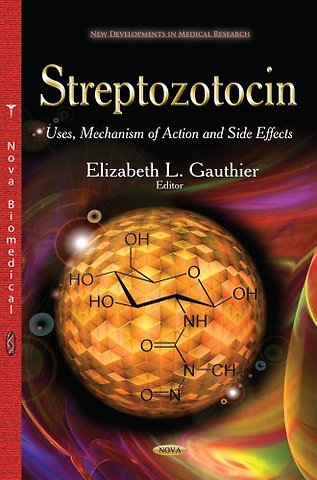
Streptozotocin
Uses, Mechanism of Action & Side Effects
Gebonden EN 2014 9781631172557Samenvatting
Streptozotocin (STZ), an antibiotic and anticancer agent, is the most prominent diabetogenic chemical agent in diabetes research due to its cytotoxicity in pancreatic beta-cells. The selective toxicity of STZ to beta cells occurs because of its preferential accumulation in beta cells through uptake via GLUT2 glucose transporter. Insulin dependent diabetes mellitus can be induced by either single high dose or multiple low-dose STZ injections. At low dose, STZ induces pancreatic beta-cell apoptosis and at high dose it causes necrosis. Though STZ itself can cause carcinogenesis and renal, hepatic and muscle myoblast toxicity, these side effects can be minimised or completely avoided by using lower doses. This book discusses in further detail the different ways in which streptozotocin is used in the medical field.
Specificaties
Lezersrecensies
Rubrieken
- advisering
- algemeen management
- coaching en trainen
- communicatie en media
- economie
- financieel management
- inkoop en logistiek
- internet en social media
- it-management / ict
- juridisch
- leiderschap
- marketing
- mens en maatschappij
- non-profit
- ondernemen
- organisatiekunde
- personal finance
- personeelsmanagement
- persoonlijke effectiviteit
- projectmanagement
- psychologie
- reclame en verkoop
- strategisch management
- verandermanagement
- werk en loopbaan