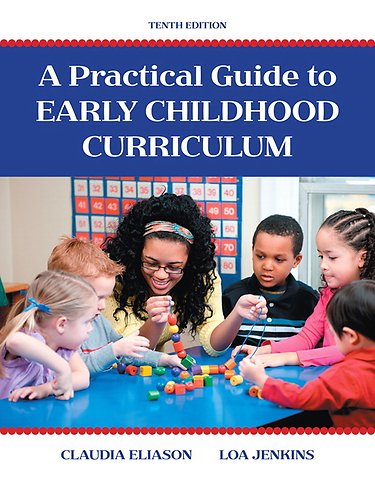
Practical Guide to Early Childhood Curriculum, A
Paperback Engels 2015 9780133801293Samenvatting
Reader friendly and filled with examples, anecdotes, and practical, hands-on strategies, activities, and lesson plans, A Practical Guide to Early Childhood Curriculum offers pre- and in-service teachers specific help for planning, designing, and implementing effective early childhood curriculum for ages three through eight. Here the authors emphasize how to teach, while providing a solid foundation for the theoretical basis of the concepts being applied. Teachers see clearly what can be taught to young children, why it is important, and how it can be accomplished. The emphasis is on the importance of a child-centered curriculum that encompasses the whole child–physical, social, emotional, creative, and cognitive–and the focus is on the developmental needs of the children in the classroom, the cognitive areas of the curriculum, and effective methods of curriculum implementation.
Invigorate learning with the Enhanced Pearson eText
The Enhanced Pearson eText provides a rich, interactive learning environment designed to improve student mastery of content with the following multimedia features: Embedded videos. Students get opportunities to see into real classrooms and see examples of the concepts and ideas in action through the digitally integrated video clips supporting and illustrating key chapter ideas and concepts. Every chapter includes three to six of these digital videos. Check Your Understanding of chapter content. Exercises matched to chapter learning outcomes help readers apply the concepts and ensure that they master the learning outcomes. Exercises and suggested feedback are provided in the Pearson eText. End of Chapter Self-Check. Embedded assessments with feedback help students review new terms and concepts and encourage reflection and discussion on the issues of the chapter. These are presented within the Pearson eText as interactive quizzes.
Specificaties
Lezersrecensies
Inhoudsopgave
1 Early Childhood Education and Developmentally Appropriate Practice
2 Family, School, and Community Partnerships
3 Assessment
4 Planning the Curriculum
Part 2 Personal and Social Development
5 Appreciating Differences
6 Myself and Others
Part 3 Cognitive and Literacy Development
7 Language Development
8 Literacy Development
9 Physical Science Experiences
10 Earth and Space Science Experiences
11 Life Science Experiences
12 Problem Solving and Mathematics
Part 4 Aesthetic and Creative Development
13 Music and Movement
14 Creativity, Art, and Dramatic Activities
Appendix A Lesson Plans
Appendix B Recipes for Food Experiences
References
Name Index
Subject Index




Rubrieken
- advisering
- algemeen management
- coaching en trainen
- communicatie en media
- economie
- financieel management
- inkoop en logistiek
- internet en social media
- it-management / ict
- juridisch
- leiderschap
- marketing
- mens en maatschappij
- non-profit
- ondernemen
- organisatiekunde
- personal finance
- personeelsmanagement
- persoonlijke effectiviteit
- projectmanagement
- psychologie
- reclame en verkoop
- strategisch management
- verandermanagement
- werk en loopbaan