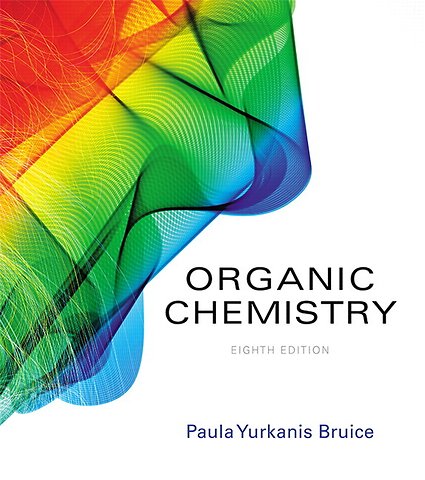
Organic Chemistry
Gebonden Engels 2016 9780134042282Samenvatting
For courses in Organic Chemistry (2-Semester)
A framework for organic chemistry built around the similarities in reaction types
Paula Bruice’s presentation in Organic Chemistry, Eighth Edition provides mixed-science majors with the conceptual foundations, chemical logic, and problem-solving skills they need to reason their way to solutions for diverse problems in synthetic organic chemistry, biochemistry, and medicine. The Eighth Edition builds a strong framework for thinking about organic chemistry by unifying principles of reactivity that students will apply throughout the course, discouraging memorization. With more applications than any other textbook, Dr. Bruice consistently relates structure and reactivity to what occurs in our own cells and reinforces the fundamental reason for all chemical reactions–electrophiles react with nucleophiles. New streamlined coverage of substitution and elimination, updated problem-solving strategies, synthesis skill-building applications and tutorials guide students throughout fundamental and complex content in both the first and second semesters of the course.
Also available as a Pearson eText or packaged with Mastering Chemistry
Pearson eText is a simple-to-use, mobile-optimized, personalized reading experience that can be adopted on its own as the main course material. It lets students highlight, take notes, and review key vocabulary all in one place, even when offline. Seamlessly integrated videos and other rich media engage students and give them access to the help they need, when they need it. Educators can easily share their own notes with students so they see the connection between their eText and what they learn in class — motivating them to keep reading, and keep learning. Learn more about Pearson eText.
MasteringChemistry is an online homework, tutorial, and assessment system, designed to improve results by engaging students before, during, and after class with powerful content. Instructors ensure students arrive ready to learn by assigning educationally effective content before class, and encourage critical thinking and retention with in-class resources such as Learning Catalytics ™. Students can further master concepts after class through traditional and adaptive homework assignments that provide hints and answer-specific feedback. The Mastering gradebook records scores for all automatically graded assignments in one place, while diagnostic tools give instructors access to rich data to assess student understanding and misconceptions.
Specificaties
Lezersrecensies
Inhoudsopgave
PART 1: AN INTRODUCTION TO THE STUDY OF ORGANIC CHEMISTRY
- 1. Remembering General Chemistry: Electronic Structure and Bonding
- 2. Acids and Bases: Central to Understanding Organic Chemistry
- TUTORIAL: Acids and Bases
- 3. An Introduction to Organic Compounds: Nomenclature, Physical Properties, and Structure
PART 2: ELECTROPHILIC ADDITION REACTIONS, STEREOCHEMISTRY, AND ELECTRON DELOCALIZATION
- TUTORIAL: Using Molecular Models
- 4. Isomers: The Arrangement of Atoms in Space
- TUTORIAL: Interconverting Structural Representations
- 5. Alkenes: Structure, Nomenclature, and an Introduction to Reactivity • Thermodynamics and Kinetics
- TUTORIAL: Drawing Curved Arrows
- 6. The Reactions of Alkenes • The Stereochemistry of Addition Reactions
- 7. The Reactions of Alkynes • An Introduction to Multistep Synthesis
- 8. Delocalized Electrons: Their Effect on Stability, pKa, and the Products of a Reaction • Aromaticity and Electronic Effects: An Introduction the Reactions of Benzene
- TUTORIAL: Drawing Resonance Contributors
PART 3: SUBSTITUTION AND ELIMINATION REACTIONS
- 9. Substitution and Elimination Reactions of Alkyl Halides
- 10. Reactions of Alcohols, Ethers, Epoxides, Amines, and Sulfur-Containing Compounds
- 11. Organometallic Compounds
- 12. Radicals
- TUTORIAL: Drawing Curved Arrows in Radical Systems
PART 4: IDENTIFICATION OF ORGANIC COMPOUNDS
- 13. Mass Spectrometry; Infrared Spectroscopy; and UV/Vis Spectroscopy
- 14. NMR Spectroscopy
PART 5: CARBONYL COMPOUNDS
- 15. Reactions of Carboxylic Acids and Carboxylic Acid Derivatives
- 16. Reactions of Aldehydes and Ketones • More Reactions of Carboxylic Acid Derivatives
- 17. Reactions at the α-Carbon
- TUTORIAL: Synthesis and Retrosynthetic Analysis
PART 6: AROMATIC COMPOUNDS
- 18. Reactions of Benzene And Substituted Benzenes
- 19. More About Amines • Reactions of Heterocyclic Compounds
PART 7: BIOORGANIC COMPOUNDS
- 20. The Organic Chemistry Of Carbohydrates
- 21. Amino Acids, Peptides, and Proteins
- 22. Catalysis in Organic Reactions and in Enzymatic Reactions
- 23. The Organic Chemistry of the Coenzymes, Compounds Derived from Vitamins
- 24. The Organic Chemistry of the Metabolic Pathways
- 25. The Organic Chemistry of Lipids
- 26. The Chemistry of the Nucleic Acids
PART 8: SPECIAL TOPICS IN ORGANIC CHEMISTRY
- 27. Synthetic Polymers
- 28. Pericyclic Reactions
Appendices
- I. pKa Values
- II. Kinetics
- III. Summary of Methods Used to Synthesize a Particular Functional Group
- IV. Summary of Methods Employed to Form Carbon-Carbon Bonds
- V. Spectroscopy Tables
- VI. Physical Properties of Organic Compounds
- VII. Answers to Selected Problems
Rubrieken
- advisering
- algemeen management
- coaching en trainen
- communicatie en media
- economie
- financieel management
- inkoop en logistiek
- internet en social media
- it-management / ict
- juridisch
- leiderschap
- marketing
- mens en maatschappij
- non-profit
- ondernemen
- organisatiekunde
- personal finance
- personeelsmanagement
- persoonlijke effectiviteit
- projectmanagement
- psychologie
- reclame en verkoop
- strategisch management
- verandermanagement
- werk en loopbaan