, , , , e.a.

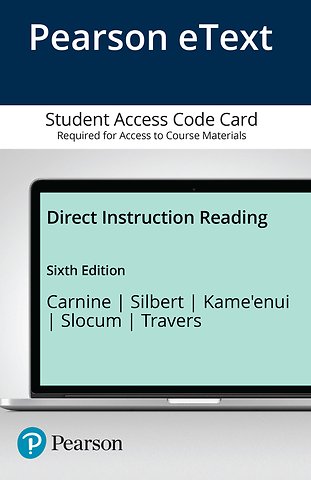
Direct Instruction Reading -- Enhanced Pearson eText

Onbekend Engels 2016 9780134245928
€ 54,94
Levertijd ongeveer 9 werkdagen
Gratis verzonden

Samenvatting

Novice and expert teachers alike get the detailed guidance they need to be successful teaching any child who struggles with reading in the alphabetic writing system.

Unique in its approach of leaving little to chance or guesswork, Direct Instruction Reading details how to teach, what to teach, why it is important to teach it, when to teach it, how long, how often, at what starting point in time, and to what criterion level of performance. For example, teaching format  specify a) example words to teach; b) explicit directions for modeling how to read the words; c) explicit directions for how to guide students in their responses to teaching to teacher prompts; and d) explicit wording for correcting student errors. The book is designed to give both novice teachers with limited or no teaching experience, as well as the expert teacher with extensive teaching experience the detailed guidance they need to be successful teaching any child who struggles with reading in the alphabetic writing system.


Invigorate learning with the Enhanced Pearson eText
This access code card provides access to the new Enhanced Pearson eText, a rich, interactive learning environment designed to improve student mastery of content with the following multimedia features: Embedded videos illustrate key concepts and strategies.

Specificaties

ISBN13:9780134245928
Taal:Engels
Bindwijze:onbekend

Lezersrecensies

Wees de eerste die een lezersrecensie schrijft!

Inhoudsopgave

<p style="MARGIN: 0px">Brief Table of Contents</p> <p style="MARGIN: 0px"></p> <p style="MARGIN: 0px">Part I Perspective</p> <p style="MARGIN: 0px"></p> <p style="MARGIN: 0px">Chapter 1 Perspectives on Reading Instruction</p> <p style="MARGIN: 0px">Chapter 2 A Model of Reading Instruction</p> <p style="MARGIN: 0px">Chapter 3 Classroom Reading Instruction</p> <p style="MARGIN: 0px">Chapter 4 Delivery of Instruction</p> <p style="MARGIN: 0px"></p> <p style="MARGIN: 0px">Part II Beginning Reading</p> <p style="MARGIN: 0px">Chapter 5 An Overview of Beginning Reading</p> <p style="MARGIN: 0px">Chapter 6 Phonemic Awareness and Alphabetic Understanding</p> <p style="MARGIN: 0px">Chapter 7 Letter—Sound Correspondence</p> <p style="MARGIN: 0px">Chapter 8 Sounding Out Regular Words</p> <p style="MARGIN: 0px">Chapter 9 Sight Reading</p> <p style="MARGIN: 0px">Chapter 10 Irregular Words</p> <p style="MARGIN: 0px">Chapter 11 Vocabulary Instruction during the Beginning Reading Stage</p> <p style="MARGIN: 0px">Chapter 12 Comprehension Instruction during the Beginning Reading Stage</p> <p style="MARGIN: 0px">Part III Reading Instruction During The Primary And Intermediate Grades</p> <p style="MARGIN: 0px">Chapter 13 Phonic Analysis</p> <p style="MARGIN: 0px">Chapter 14 Structural Analysis</p> <p style="MARGIN: 0px">Chapter 15 Irregular Words: Primary and Intermediate Grades</p> <p style="MARGIN: 0px"> </p> <p style="MARGIN: 0px"></p>Chapter 16 Fluency Instruction and Passage Reading <p style="MARGIN: 0px"></p> <p style="MARGIN: 0px"> </p> <p style="MARGIN: 0px"></p>Chapter 17 Vocabulary Instruction after the Beginning Stage* <p style="MARGIN: 0px"></p> <p style="MARGIN: 0px"></p> <p style="MARGIN: 0px">Part IV Overview Of Comprehension Instruction</p> <p style="MARGIN: 0px"></p> <p style="MARGIN: 0px">Chapter 18 Comprehension Skills and Procedures</p> <p style="MARGIN: 0px">Chapter 19 Narrative-Comprehension Strategies</p> <p style="MARGIN: 0px">Chapter 20 Critical Reading</p> <p style="MARGIN: 0px"></p> <p style="MARGIN: 0px">Part V Content-Area Reading</p> <p style="MARGIN: 0px"></p> <p style="MARGIN: 0px">Chapter 21 Direct Instruction in Content-Area Reading</p> <p style="MARGIN: 0px">Chapter 22 Response to Intervention: School-Wide Organization of</p> <p style="MARGIN: 0px">Reading Instruction</p> <p style="MARGIN: 0px">&nbsp;</p> <p style="MARGIN: 0px">Detailed Table of Contents</p> <p style="MARGIN: 0px">Part I Perspective 1</p> <p style="MARGIN: 0px">&nbsp;</p> <p style="MARGIN: 0px">Chapter 1 Perspectives on Reading Instruction 2</p> <p style="MARGIN: 0px">Perspectives on Improving Student Reading Performance 3</p> <p style="MARGIN: 0px">Illustrations of The Four Orientations 5</p> <p style="MARGIN: 0px">A More In-Depth Look at Direct Instruction 7</p> <p style="MARGIN: 0px">Chapter 2 A Model of Reading Instruction 10</p> <p style="MARGIN: 0px">National Reading Panel Findings 11</p> <p style="MARGIN: 0px">Common Core State Standards 13</p> <p style="MARGIN: 0px">Stages Of Reading Instruction 14</p> <p style="MARGIN: 0px">English Language Learners 16</p> <p style="MARGIN: 0px">Chapter 3 Classroom Reading Instruction 17</p> <p style="MARGIN: 0px">Instructional Materials 17</p> <p style="MARGIN: 0px">Modifying Core Reading Programs For At-Risk Learners 20</p> <p style="MARGIN: 0px">Assessment 20</p> <p style="MARGIN: 0px">Organization Of Instruction 23</p> <p style="MARGIN: 0px">Chapter 4 Delivery of Instruction 26</p> <p style="MARGIN: 0px">Program Design 26</p> <p style="MARGIN: 0px">Presentation Techniques 30</p> <p style="MARGIN: 0px">&nbsp;</p> <p style="MARGIN: 0px">Part II Beginning Reading 37</p> <p style="MARGIN: 0px">&nbsp;</p> <p style="MARGIN: 0px">Chapter 5 An Overview of Beginning Reading 38</p> <p style="MARGIN: 0px">Key Terminology 38</p> <p style="MARGIN: 0px">The Great Debate: Code-Emphasis Vs. Meaning-Emphasis</p> <p style="MARGIN: 0px">Programs 40</p> <p style="MARGIN: 0px">Providing Explicit And Systematic Instruction During The Beginning</p> <p style="MARGIN: 0px">Reading Stage 44</p> <p style="MARGIN: 0px">Research On Beginning Reading Instruction 46</p> <p style="MARGIN: 0px">Chapter 6 Phonemic Awareness and Alphabetic Understanding 49</p> <p style="MARGIN: 0px">Phonological And Phonemic Awareness 49</p> <p style="MARGIN: 0px">Preskills For Sounding Out Words 51</p> <p style="MARGIN: 0px">Commercial Programs 58</p> <p style="MARGIN: 0px">Chapter 7 Letter—Sound Correspondence 61</p> <p style="MARGIN: 0px">Sequence For Introducing Letter—Sound Correspondences 61</p> <p style="MARGIN: 0px">Rate For Introducing Letter—Sound Correspondences 63</p> <p style="MARGIN: 0px">Procedure for Teaching Letter—Sound Correspondences 63</p> <p style="MARGIN: 0px">Critical Teacher Presentation Behaviors 65</p> <p style="MARGIN: 0px">Using Commercial Materials 70</p> <p style="MARGIN: 0px">Chapter 8 Sounding Out Regular Words 73</p> <p style="MARGIN: 0px">Regular Words 73</p> <p style="MARGIN: 0px">Scope And Sequence 74</p> <p style="MARGIN: 0px">Teaching Procedures 75</p> <p style="MARGIN: 0px">Passage Reading During The Beginning Reading Stage 82</p> <p style="MARGIN: 0px">Commercial Reading Programs 86</p> <p style="MARGIN: 0px">Chapter 9 Sight Reading 88</p> <p style="MARGIN: 0px">Sight Reading In Word Lists 89</p> <p style="MARGIN: 0px">Passage Reading 91</p> <p style="MARGIN: 0px">Commercial Programs 97</p> <p style="MARGIN: 0px">Chapter 10 Irregular Words 99</p> <p style="MARGIN: 0px">When To Introduce Irregular Words 100</p> <p style="MARGIN: 0px">Sequence For Introducing Irregular Words 100</p> <p style="MARGIN: 0px">Teaching Procedure 101</p> <p style="MARGIN: 0px">Modified Introductory Format 102</p> <p style="MARGIN: 0px">Facilitating Retention 102</p> <p style="MARGIN: 0px">Commercial Programs 103</p> <p style="MARGIN: 0px">Chapter 11 Vocabulary Instruction during the Beginning Reading Stage 106</p> <p style="MARGIN: 0px">Teaching Procedure 107</p> <p style="MARGIN: 0px">Teacher Read-Alouds 112</p> <p style="MARGIN: 0px">Commercial Programs 112</p> <p style="MARGIN: 0px">Chapter 12 Comprehension Instruction during the Beginning Reading Stage 115</p> <p style="MARGIN: 0px">Foundational Language 116</p> <p style="MARGIN: 0px">Sentence Comprehension 116</p> <p style="MARGIN: 0px">Story Comprehension: Teacher Read-Alouds 121</p> <p style="MARGIN: 0px">Text-Related Comprehension 122</p> <p style="MARGIN: 0px">&nbsp;</p> <p style="MARGIN: 0px">Part III Reading Instruction During The Primary And Intermediate Grades 127</p> <p style="MARGIN: 0px">&nbsp;</p> <p style="MARGIN: 0px">Chapter 13 Phonic Analysis 128</p> <p style="MARGIN: 0px">Words With Letter Combinations 129</p> <p style="MARGIN: 0px">Words With A Vce Pattern 135</p> <p style="MARGIN: 0px">Chapter 14 Structural Analysis 139</p> <p style="MARGIN: 0px">Words With Common Affixes 139</p> <p style="MARGIN: 0px">Vce Derivatives 143</p> <p style="MARGIN: 0px">Y Derivatives 146</p> <p style="MARGIN: 0px">Multisyllabic Words Formed With Prefixes And Suffixes 147</p> <p style="MARGIN: 0px">Chapter 15 Irregular Words: Primary and Intermediate Grades 151</p> <p style="MARGIN: 0px">Systematic Introduction Of Irregular Words 152</p> <p style="MARGIN: 0px">Context As A Cue 155</p> <p style="MARGIN: 0px">Chapter 16 Fluency Instruction and Passage Reading 160</p> <p style="MARGIN: 0px">Teaching Procedure For Story Reading 161</p> <p style="MARGIN: 0px">Fluency 168</p> <p style="MARGIN: 0px">Reading Outside School 173</p> <p style="MARGIN: 0px">Chapter 17 Vocabulary Instruction after the Beginning Stage* 175</p> <p style="MARGIN: 0px">Direct Vocabulary Teaching 176</p> <p style="MARGIN: 0px">Teaching Word-Learning Strategies 182</p> <p style="MARGIN: 0px">Relation Of Vocabulary Instruction To Improving Comprehension 187</p> <p style="MARGIN: 0px">Research 188</p> <p style="MARGIN: 0px">&nbsp;</p> <p style="MARGIN: 0px">Part IV Overview Of Comprehension Instruction 191</p> <p style="MARGIN: 0px">&nbsp;</p> <p style="MARGIN: 0px">Factors That Affect Reading Comprehension 192</p> <p style="MARGIN: 0px">Improving Comprehension 192</p> <p style="MARGIN: 0px">Strategies 194</p> <p style="MARGIN: 0px">Chapters On Comprehension After The Beginning Stage 195</p> <p style="MARGIN: 0px">&nbsp;</p> <p style="MARGIN: 0px">Chapter 18 Comprehension Skills and Procedures 196</p> <p style="MARGIN: 0px">Inferential Comprehension 196</p> <p style="MARGIN: 0px">Summarization 202</p> <p style="MARGIN: 0px">Sentence Structure 205</p> <p style="MARGIN: 0px">Text-Reading Procedures 207</p> <p style="MARGIN: 0px">Chapter 19 Narrative-Comprehension Strategies 213</p> <p style="MARGIN: 0px">Story Selection 214</p> <p style="MARGIN: 0px">Teaching Procedure 215</p> <p style="MARGIN: 0px">Advanced Story-Reading Comprehension Strategy 217</p> <p style="MARGIN: 0px">Chapter 20 Critical Reading 223</p> <p style="MARGIN: 0px">Steps In Critical Reading 223</p> <p style="MARGIN: 0px">Teaching Procedure 225</p> <p style="MARGIN: 0px">An Overall Critical-Reading Strategy 231</p> <p style="MARGIN: 0px">&nbsp;</p> <p style="MARGIN: 0px">Part V Content-Area Reading 233</p> <p style="MARGIN: 0px">&nbsp;</p> <p style="MARGIN: 0px">Chapter 21 Direct Instruction in Content-Area Reading1 234</p> <p style="MARGIN: 0px">Characteristics Of Expository Materials 235</p> <p style="MARGIN: 0px">Content-Area Lessons 240</p> <p style="MARGIN: 0px">Chapter 22 Response to Intervention: School-Wide Organization of</p> <p style="MARGIN: 0px">Reading Instruction 276</p> <p style="MARGIN: 0px">Assessment For Universal Screening, Progress Monitoring, And Placement 278</p> <p style="MARGIN: 0px">Tier 1 Supports 282</p> <p style="MARGIN: 0px">Tier 2 Supports 283</p> <p style="MARGIN: 0px">Tier 3 Supports 284</p> <p style="MARGIN: 0px">&nbsp;</p> <p style="MARGIN: 0px">Appendix A: Word Lists 287</p> <p style="MARGIN: 0px">Appendix B: List of 400 Common Words 300</p> <p style="MARGIN: 0px">Appendix C: Outline of Lessons for Beginning Phonics Program 302</p> <p style="MARGIN: 0px">Appendix D: Basic Vocabulary for Beginning Readers and Suggestions for Assessing Student Knowledge 305</p> <p style="MARGIN: 0px">Appendix E: Oral Language Screening Test and Record Form 308</p> <p style="MARGIN: 0px">Appendix F: Beginning Phonics Assessment 310</p>

Managementboek Top 100

€ 54,94
Levertijd ongeveer 9 werkdagen
Gratis verzonden

Rubrieken

    Personen

      Trefwoorden

        Direct Instruction Reading -- Enhanced Pearson eText