, , , e.a.

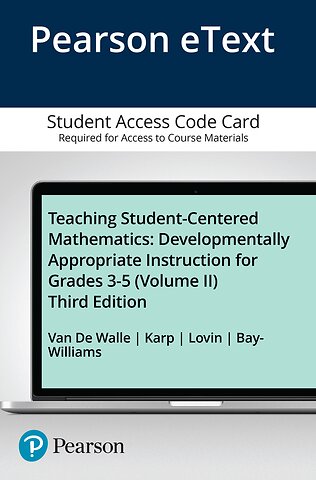
Teaching Student-Centered Mathematics

Developmentally Appropriate Instruction for Grades 3-5 (Volume 2) -- Enhanced Pearson eText

Onbekend Engels 2018 9780134556406
€ 54,94
Levertijd ongeveer 9 werkdagen
Gratis verzonden

Samenvatting

A practical, comprehensive, developmentally appropriate approach to effective mathematical instruction in grades 3 to 5.

Helping students make connections between mathematics and their worlds–and helping them feel empowered to use math in their lives–is the focus of this widely popular guide. Designed for classroom teachers, the book focuses on specific grade bands and includes information on creating an effective classroom environment, aligning teaching to various standards and practices, such as the Common Core State Standards and NCTM’s teaching practices, and engaging families. The first portion of the book addresses how to build a student-centered environment in which children can become mathematically proficient, while the second portion focuses on practical ways to teach important concepts in a student-centered fashion. The new edition features a corresponding Enhanced Pearson eText version with links to embedded videos, blackline masters, downloadable teacher resource and activity pages, lesson plans, activities correlated to the CCSS, and tables of common errors and misconceptions.


Invigorate learning with the Enhanced Pearson eText
This access code card provides access to the new Enhanced Pearson eText, a rich, interactive learning environment designed to improve student mastery of content with the following multimedia features: NEW! Embedded videos throughout provide examples of students' misconceptions, expand on key concepts, and demonstrate how to implement strategies and techniques in real classrooms. NEW! Downloadable Teacher Resource and Activity Pages that support teaching activities such as formative assessment and team-building are now available in the Enhanced Pearson eText at the point of use. NEW! Downloadable Blackline Masters in Part 2 Chapters. Readers may download Blackline Masters that support the activities and Expanded Lessons by clicking on hyperlinks embedded in the Enhanced Pearson eText. Appendix E includes a list of the Blackline Masters and a thumbnail version of each.

Specificaties

ISBN13:9780134556406
Taal:Engels
Bindwijze:onbekend

Lezersrecensies

Wees de eerste die een lezersrecensie schrijft!

Inhoudsopgave

<p style="margin:0px;">Brief Table of Contents</p> <p style="margin:0px;"><br></p> <p style="margin:0px;">Part 1: Establishing a Student-Centered Environment</p> <p style="margin:0px;"><br></p> <p style="margin:0px;">1. Setting a Vision for Learning High-Quality Mathematics </p> <p style="margin:0px;">2. Teaching Mathematics through Problem Solving </p> <p style="margin:0px;">3. Creating Assessments for Learning </p> <p style="margin:0px;">4. Differentiating Instruction </p> <p style="margin:0px;">5. Teaching Culturally and Linguistically Diverse Students </p> <p style="margin:0px;">6. Teaching and Assessing Students with Exceptionalities </p> <p style="margin:0px;">7. Collaborating with Families and Other Stakeholders </p> <p style="margin:0px;"><br></p> <p style="margin:0px;">Part 2: Teaching Student-Centered Mathematics</p> <p style="margin:0px;"><br></p> <p style="margin:0px;">8. Exploring Number and Operation Sense </p> <p style="margin:0px;">9. Developing Basic Fact Fluency </p> <p style="margin:0px;">10.&nbsp;Developing Whole-Number Place-Value Concepts </p> <p style="margin:0px;">11. Building Strategies for Whole-Number Computation </p> <p style="margin:0px;">12. Exploring Fraction Concepts </p> <p style="margin:0px;">13. Building Strategies for Fraction Computation </p> <p style="margin:0px;">14. Developing Decimal and Percent Concepts and Decimal Computation </p> <p style="margin:0px;">15. Promoting Algebraic Thinking </p> <p style="margin:0px;">16. Building Measurement Concepts </p> <p style="margin:0px;">17. Developing Geometric Thinking and Concepts </p> <p style="margin:0px;">18. Representing and Interpreting Data </p> <p style="margin:0px;"><br></p> <p style="margin:0px;">Appendix ACommon Core State Standards: Standards for Mathematical Practice </p> <p style="margin:0px;">Appendix BCommon Core State Standards: Grades 3-5 Critical Content Areas and Overviews </p> <p style="margin:0px;">Appendix C Mathematics Teaching Practices: NCTM Principles to Action (2014)</p> <p style="margin:0px;">Appendix D Activities at a Glance: Volume II</p> <p style="margin:0px;">Appendix E Guide to Blackline Masters</p> <p style="margin:0px;">References</p> <p style="margin:0px;">Index</p> <p style="margin:0px;"><br></p> <p style="margin:0px;">Detailed Table of Contents</p> <p style="margin:0px;"><br></p> <p style="margin:0px;">Part 1: Establishing a Student-Centered Environment</p> <p style="margin:0px;"><br></p> <p style="margin:0px;">1. Setting a Vision for Learning High-Quality Mathematics&nbsp;&nbsp;</p> <p style="margin:0px;"> <r> &nbsp;&nbsp;&nbsp;&nbsp; <r> &nbsp;&nbsp;&nbsp;&nbsp; </r> </r>Understanding and Doing Mathematics&nbsp;</p> <p style="margin:0px;"> <r> &nbsp;&nbsp;&nbsp;&nbsp; <r> &nbsp;&nbsp;&nbsp;&nbsp; </r> </r>How Do Students Learn?&nbsp;</p> <p style="margin:0px;"> <r> &nbsp;&nbsp;&nbsp;&nbsp; <r> &nbsp;&nbsp;&nbsp;&nbsp; </r> </r>Teaching for Understanding&nbsp;&nbsp;</p> <p style="margin:0px;"> <r> &nbsp;&nbsp;&nbsp;&nbsp; <r> &nbsp;&nbsp;&nbsp;&nbsp; </r> </r>The Importance of Students’ Ideas&nbsp;</p> <p style="margin:0px;"> <r> &nbsp;&nbsp;&nbsp;&nbsp; <r> &nbsp;&nbsp;&nbsp;&nbsp; </r> </r>Mathematics Classrooms That Promote Understanding</p> <p style="margin:0px;"> </p> <p style="margin:0px;">2. Teaching Mathematics through Problem Solving</p> <p style="margin:0px;"> <r> &nbsp; &nbsp;&nbsp; </r> <r> &nbsp;&nbsp;&nbsp;&nbsp; </r>Teaching through Problem Solving: An Upside-Down Approach&nbsp;</p> <p style="margin:0px;"> <r> &nbsp;&nbsp;&nbsp;&nbsp; </r> <r> &nbsp;&nbsp;&nbsp;&nbsp; </r>Mathematics Teaching Practices for Teaching through Problem Solving&nbsp;</p> <p style="margin:0px;"> <r> &nbsp;&nbsp;&nbsp;&nbsp; </r> <r> &nbsp;&nbsp;&nbsp;&nbsp; </r>Using Worthwhile Tasks&nbsp;&nbsp;</p> <p style="margin:0px;"> <r> &nbsp;&nbsp;&nbsp;&nbsp; </r> <r> &nbsp;&nbsp;&nbsp;&nbsp; </r>Orchestrating Classroom Discourse&nbsp;</p> <p style="margin:0px;"> <r> &nbsp;&nbsp;&nbsp;&nbsp; </r> <r> &nbsp;&nbsp;&nbsp;&nbsp; </r>Representations: Tools for Problem Solving, Reasoning, and Communication&nbsp;</p> <p style="margin:0px;"> <r> &nbsp;&nbsp;&nbsp;&nbsp; </r> <r> &nbsp;&nbsp;&nbsp;&nbsp; </r>Lessons in the Problem-Based Classroom&nbsp;</p> <p style="margin:0px;"> <r> &nbsp;&nbsp;&nbsp;&nbsp; </r> <r> &nbsp;&nbsp;&nbsp;&nbsp; </r>Life-Long Learning: An Invitation to Learn and Grow&nbsp;</p> <p style="margin:0px;"><br></p> <p style="margin:0px;">3. Creating Assessments for Learning</p> <p style="margin:0px;"> <r> &nbsp;&nbsp;&nbsp;&nbsp; </r> <r> &nbsp;&nbsp;&nbsp;&nbsp; </r>Assessment That Informs Instruction&nbsp;</p> <p style="margin:0px;"> <r> &nbsp;&nbsp;&nbsp;&nbsp; </r> <r> &nbsp;&nbsp;&nbsp;&nbsp; </r>Observations&nbsp;</p> <p style="margin:0px;"> <r> &nbsp;&nbsp;&nbsp;&nbsp; </r> <r> &nbsp;&nbsp;&nbsp;&nbsp; </r>Questions&nbsp;</p> <p style="margin:0px;"> <r> &nbsp;&nbsp;&nbsp;&nbsp; </r> <r> &nbsp;&nbsp;&nbsp;&nbsp; </r>Interviews&nbsp;</p> <p style="margin:0px;"> <r> &nbsp;&nbsp;&nbsp;&nbsp; </r> <r> &nbsp;&nbsp;&nbsp;&nbsp; </r>Tasks&nbsp;</p> <p style="margin:0px;"> <r> &nbsp;&nbsp;&nbsp;&nbsp; </r> <r> &nbsp;&nbsp;&nbsp;&nbsp; </r>Students’ Self-Assessment and Reflection&nbsp;</p> <p style="margin:0px;"> <r> &nbsp;&nbsp;&nbsp;&nbsp; </r> <r> &nbsp;&nbsp;&nbsp;&nbsp; </r>Rubrics and Their Uses&nbsp;</p> <p style="margin:0px;"><br></p> <p style="margin:0px;">4. Differentiating Instruction&nbsp;</p> <p style="margin:0px;"> <r> &nbsp;&nbsp;&nbsp;&nbsp; </r> <r> &nbsp;&nbsp;&nbsp;&nbsp; </r>Differentiation and Teaching Mathematics through Problem Solving&nbsp;</p> <p style="margin:0px;"> <r> &nbsp;&nbsp;&nbsp;&nbsp; </r> <r> &nbsp;&nbsp;&nbsp;&nbsp; </r>The Nuts and Bolts of Differentiating Instruction&nbsp;</p> <p style="margin:0px;"> <r> &nbsp;&nbsp;&nbsp;&nbsp; </r> <r> &nbsp;&nbsp;&nbsp;&nbsp; </r>Differentiated Tasks for Whole-Class Instruction&nbsp;</p> <p style="margin:0px;"> <r> &nbsp;&nbsp;&nbsp;&nbsp; </r> <r> &nbsp;&nbsp;&nbsp;&nbsp; </r>Tiered Lessons&nbsp;</p> <p style="margin:0px;"> <r> &nbsp;&nbsp;&nbsp;&nbsp; </r> <r> &nbsp;&nbsp;&nbsp;&nbsp; </r>Flexible Grouping&nbsp;</p> <p style="margin:0px;"><br></p> <p style="margin:0px;">5. Teaching Culturally and Linguistically Diverse Students&nbsp;&nbsp;</p> <p style="margin:0px;"> <r> &nbsp;&nbsp;&nbsp;&nbsp; </r> <r> &nbsp;&nbsp;&nbsp;&nbsp; </r>Culturally and Linguistically Diverse Students&nbsp;</p> <p style="margin:0px;"> <r> &nbsp;&nbsp;&nbsp;&nbsp; </r> <r> &nbsp;&nbsp;&nbsp;&nbsp; </r>Culturally Responsive Mathematics Instruction&nbsp;</p> <p style="margin:0px;"> <r> &nbsp;&nbsp;&nbsp;&nbsp; </r> <r> &nbsp;&nbsp;&nbsp;&nbsp; </r>Teaching Strategies That Support Culturally and Linguistically Diverse Students&nbsp;</p> <p style="margin:0px;"> <r> &nbsp;&nbsp;&nbsp;&nbsp; </r> <r> &nbsp;&nbsp;&nbsp;&nbsp; </r>Assessment Considerations for ELLs&nbsp;</p> <p style="margin:0px;"><br></p> <p style="margin:0px;">6. Planning, Teaching, and Assessing Students with Exceptionalities</p> <p style="margin:0px;"> <r> &nbsp;&nbsp;&nbsp;&nbsp; </r> <r> &nbsp;&nbsp;&nbsp;&nbsp; </r>Instructional Principles for Diverse Learners&nbsp;</p> <p style="margin:0px;"> <r> &nbsp;&nbsp;&nbsp;&nbsp; </r> <r> &nbsp;&nbsp;&nbsp;&nbsp; </r>Implementing Interventions&nbsp;</p> <p style="margin:0px;"> <r> &nbsp;&nbsp;&nbsp;&nbsp; </r> <r> &nbsp;&nbsp;&nbsp;&nbsp; </r>Teaching and Assessing Students with Learning Disabilities&nbsp;</p> <p style="margin:0px;"> <r> &nbsp;&nbsp;&nbsp;&nbsp; </r> <r> &nbsp;&nbsp;&nbsp;&nbsp; </r>Adapting for Students with Moderate/Severe Disabilities&nbsp;</p> <p style="margin:0px;"> <r> &nbsp;&nbsp;&nbsp;&nbsp; </r> <r> &nbsp;&nbsp;&nbsp;&nbsp; </r>Planning for Students Who Are Mathematically Gifted&nbsp;</p> <p style="margin:0px;"><br></p> <p style="margin:0px;">7. Collaborating with Families and Other Stakeholders&nbsp;</p> <p style="margin:0px;"> <r> &nbsp;&nbsp;&nbsp;&nbsp; </r> <r> &nbsp;&nbsp;&nbsp;&nbsp; </r>Sharing the Message with Stakeholders&nbsp;</p> <p style="margin:0px;"> <r> &nbsp;&nbsp;&nbsp;&nbsp; </r> <r> &nbsp;&nbsp;&nbsp;&nbsp; </r>Administrator Engagement and Support&nbsp;</p> <p style="margin:0px;"> <r> &nbsp;&nbsp;&nbsp;&nbsp; </r> <r> &nbsp;&nbsp;&nbsp;&nbsp; </r>Family Engagement&nbsp;</p> <p style="margin:0px;"> <r> &nbsp;&nbsp;&nbsp;&nbsp; </r> <r> &nbsp;&nbsp;&nbsp;&nbsp; </r>Homework Practices and Parent Coaching&nbsp;</p> <p style="margin:0px;"><br></p> <p style="margin:0px;">Part 2: Teaching Student-Centered Mathematics</p> <p style="margin:0px;"><br></p> <p style="margin:0px;">8. Exploring Number and Operation Sense</p> <p style="margin:0px;"> <r> &nbsp;&nbsp;&nbsp;&nbsp; </r> <r> &nbsp;&nbsp;&nbsp;&nbsp; </r>Developing Addition and Subtraction Operation Sense&nbsp;</p> <p style="margin:0px;"> <r> &nbsp;&nbsp;&nbsp;&nbsp; </r> <r> &nbsp;&nbsp;&nbsp;&nbsp; </r>Developing Multiplication and Division Operation Sense&nbsp;</p> <p style="margin:0px;"> <r> &nbsp;&nbsp;&nbsp;&nbsp; </r> <r> &nbsp;&nbsp;&nbsp;&nbsp; </r>Multiplication and Division Problem Structures&nbsp;</p> <p style="margin:0px;"> <r> &nbsp;&nbsp;&nbsp;&nbsp; </r> <r> &nbsp;&nbsp;&nbsp;&nbsp; </r>Teaching Multiplication and Division&nbsp;</p> <p style="margin:0px;"> <r> &nbsp;&nbsp;&nbsp;&nbsp; </r> <r> &nbsp;&nbsp;&nbsp;&nbsp; </r>Properties of Multiplication and Division&nbsp;</p> <p style="margin:0px;"> <r> &nbsp;&nbsp;&nbsp;&nbsp; </r> <r> &nbsp;&nbsp;&nbsp;&nbsp; </r>Strategies for Solving Contextual Problems&nbsp;</p> <p style="margin:0px;"> <r> &nbsp;&nbsp;&nbsp;&nbsp; </r> <r> &nbsp;&nbsp;&nbsp;&nbsp; </r>Multistep Word Problems</p> <p style="margin:0px;">&nbsp;</p> <p style="margin:0px;">9. Developing Basic Fact Fluency</p> <p style="margin:0px;"> <r> &nbsp;&nbsp;&nbsp;&nbsp; </r> <r> &nbsp;&nbsp;&nbsp;&nbsp; </r>Developmental Phases for Learning the Basic Fact Combinations&nbsp;</p> <p style="margin:0px;"> <r> &nbsp;&nbsp;&nbsp;&nbsp; </r> <r> &nbsp;&nbsp;&nbsp;&nbsp; </r>Teaching and Assessing the Basic Fact Combinations&nbsp;</p> <p style="margin:0px;"> <r> &nbsp;&nbsp;&nbsp;&nbsp; </r> <r> &nbsp;&nbsp;&nbsp;&nbsp; </r>Reasoning Strategies for Addition Facts&nbsp;</p> <p style="margin:0px;"> <r> &nbsp;&nbsp;&nbsp;&nbsp; </r> <r> &nbsp;&nbsp;&nbsp;&nbsp; </r>Reasoning Strategies for Subtraction Facts&nbsp;</p> <p style="margin:0px;"> <r> &nbsp;&nbsp;&nbsp;&nbsp; </r> <r> &nbsp;&nbsp;&nbsp;&nbsp; </r>Reasoning Strategies for Multiplication and Division Facts&nbsp;</p> <p style="margin:0px;"> <r> &nbsp;&nbsp;&nbsp;&nbsp; </r> <r> &nbsp;&nbsp;&nbsp;&nbsp; </r>Reinforcing Basic Fact Mastery&nbsp;</p> <p style="margin:0px;"><br></p> <p style="margin:0px;">10. Developing Whole-Number Place-Value Concepts</p> <p style="margin:0px;"> <r> &nbsp;&nbsp;&nbsp;&nbsp; </r> <r> &nbsp;&nbsp;&nbsp;&nbsp; </r>Extending Number Relationships to Larger Numbers&nbsp;</p> <p style="margin:0px;"> <r> &nbsp;&nbsp;&nbsp;&nbsp; </r> <r> &nbsp;&nbsp;&nbsp;&nbsp; </r>Important Place-Value Concepts&nbsp;</p> <p style="margin:0px;"> <r> &nbsp;&nbsp;&nbsp;&nbsp; </r> <r> &nbsp;&nbsp;&nbsp;&nbsp; </r>Extending Base-Ten Concepts&nbsp;</p> <p style="margin:0px;"> <r> &nbsp;&nbsp;&nbsp;&nbsp; </r> <r> &nbsp;&nbsp;&nbsp;&nbsp; </r>Oral and Written Names for Numbers&nbsp;</p> <p style="margin:0px;"> <r> &nbsp;&nbsp;&nbsp;&nbsp; </r> <r> &nbsp;&nbsp;&nbsp;&nbsp; </r>Patterns and Relationships with Multidigit Numbers&nbsp;</p> <p style="margin:0px;"> <r> &nbsp;&nbsp;&nbsp;&nbsp; </r> <r> &nbsp;&nbsp;&nbsp;&nbsp; </r>Numbers beyond 1000&nbsp;</p> <p style="margin:0px;"><br></p> <p style="margin:0px;">11. Building Strategies for Whole-Number Computation</p> <p style="margin:0px;"> <r> &nbsp;&nbsp;&nbsp;&nbsp; </r> <r> &nbsp;&nbsp;&nbsp;&nbsp; </r>Toward Computational Fluency&nbsp;</p> <p style="margin:0px;"> <r> &nbsp;&nbsp;&nbsp;&nbsp; </r> <r> &nbsp;&nbsp;&nbsp;&nbsp; </r>Development of Invented Strategies in Addition and Subtraction&nbsp;</p> <p style="margin:0px;"> <r> &nbsp;&nbsp;&nbsp;&nbsp; </r> <r> &nbsp;&nbsp;&nbsp;&nbsp; </r>Standard Algorithms for Addition and Subtraction&nbsp;</p> <p style="margin:0px;"> <r> <r> &nbsp;&nbsp;&nbsp;&nbsp; </r>&nbsp;&nbsp;&nbsp;&nbsp; </r>Invented Strategies for Multiplication&nbsp;</p> <p style="margin:0px;"> <r> &nbsp;&nbsp;&nbsp;&nbsp; </r> <r> &nbsp;&nbsp;&nbsp;&nbsp; </r>Standard Algorithms for Multiplication&nbsp;</p> <p style="margin:0px;"> <r> &nbsp;&nbsp;&nbsp;&nbsp; </r> <r> &nbsp;&nbsp;&nbsp;&nbsp; </r>Invented Strategies for Division&nbsp;</p> <p style="margin:0px;"> <r> &nbsp;&nbsp;&nbsp;&nbsp; </r> <r> &nbsp;&nbsp;&nbsp;&nbsp; </r>Standard Algorithms for Division&nbsp;</p> <p style="margin:0px;"></p> <p style="margin:0px;"> <r> &nbsp;&nbsp;&nbsp;&nbsp; </r> <r> &nbsp;&nbsp;&nbsp;&nbsp; </r>Computational Estimation&nbsp;</p> <p style="margin:0px;"><br></p> <p style="margin:0px;">12. Exploring Fraction Concepts</p> <p style="margin:0px;"> <r> &nbsp;&nbsp;&nbsp;&nbsp; </r> <r> &nbsp;&nbsp;&nbsp;&nbsp; </r>Meanings of Fractions&nbsp;</p> <p style="margin:0px;"> <r> &nbsp;&nbsp;&nbsp;&nbsp; </r> <r> &nbsp;&nbsp;&nbsp;&nbsp; </r>Models for Fractions&nbsp;</p> <p style="margin:0px;"> <r> &nbsp;&nbsp;&nbsp;&nbsp; </r> <r> &nbsp;&nbsp;&nbsp;&nbsp; </r>Fractional Parts of a Whole&nbsp;</p> <p style="margin:0px;"> <r> &nbsp;&nbsp;&nbsp;&nbsp; </r> <r> &nbsp;&nbsp;&nbsp;&nbsp; </r>Equivalent Fractions&nbsp;</p> <p style="margin:0px;"> <r> &nbsp;&nbsp;&nbsp;&nbsp; </r> <r> &nbsp;&nbsp;&nbsp;&nbsp; </r>Comparing Fractions&nbsp;</p> <p style="margin:0px;"> <r> &nbsp;&nbsp;&nbsp;&nbsp; </r> <r> &nbsp;&nbsp;&nbsp;&nbsp; </r>Teaching Considerations for Fraction Concepts</p> <p style="margin:0px;"><br></p> <p style="margin:0px;">13. Building Strategies for Fraction Computation&nbsp;</p> <p style="margin:0px;"> <r> &nbsp;&nbsp;&nbsp;&nbsp; </r> <r> &nbsp;&nbsp;&nbsp;&nbsp; </r>Understanding Fraction Operations&nbsp;</p> <p style="margin:0px;"> <r> &nbsp;&nbsp;&nbsp;&nbsp; </r> <r> &nbsp;&nbsp;&nbsp;&nbsp; </r>Addition and Subtraction&nbsp;</p> <p style="margin:0px;"> <r> &nbsp;&nbsp;&nbsp;&nbsp; </r> <r> &nbsp;&nbsp;&nbsp;&nbsp; </r>Multiplication&nbsp;</p> <p style="margin:0px;"> <r> &nbsp;&nbsp;&nbsp;&nbsp; </r> <r> &nbsp;&nbsp;&nbsp;&nbsp; </r>Division</p> <p style="margin:0px;"><br></p> <p style="margin:0px;">14. Developing Decimal and Percent Concepts and Decimal Computation</p> <p style="margin:0px;"> <r> &nbsp;&nbsp;&nbsp;&nbsp; </r> <r> &nbsp;&nbsp;&nbsp;&nbsp; </r>Developing Concepts of Decimals&nbsp;</p> <p style="margin:0px;"> <r> &nbsp;&nbsp;&nbsp;&nbsp; </r> <r> &nbsp;&nbsp;&nbsp;&nbsp; </r>Connecting Fractions and Decimals&nbsp;</p> <p style="margin:0px;"> <r> &nbsp;&nbsp;&nbsp;&nbsp; </r> <r> &nbsp;&nbsp;&nbsp;&nbsp; </r>Developing Decimal Number Sense&nbsp;</p> <p style="margin:0px;"> <r> &nbsp;&nbsp;&nbsp;&nbsp; </r> <r> &nbsp;&nbsp;&nbsp;&nbsp; </r>Computation with Decimals&nbsp;</p> <p style="margin:0px;"> <r> &nbsp;&nbsp;&nbsp;&nbsp; </r> <r> &nbsp;&nbsp;&nbsp;&nbsp; </r>Introducing Percents&nbsp;</p> <p style="margin:0px;"><br></p> <p style="margin:0px;">15. Promoting Algebraic Thinking&nbsp; </p> <p style="margin:0px;"> <r> &nbsp;&nbsp;&nbsp;&nbsp; </r> <r> &nbsp;&nbsp;&nbsp;&nbsp; </r>Strands of Algebraic Thinking&nbsp;</p> <p style="margin:0px;"> <r> &nbsp;&nbsp;&nbsp;&nbsp; </r> <r> &nbsp;&nbsp;&nbsp;&nbsp; </r>Generalized Arithmetic&nbsp;</p> <p style="margin:0px;"> <r> &nbsp;&nbsp;&nbsp;&nbsp; </r> <r> &nbsp;&nbsp;&nbsp;&nbsp; </r>Meaningful Use of Symbols&nbsp;</p> <p style="margin:0px;"> <r> &nbsp;&nbsp;&nbsp;&nbsp; </r> <r> &nbsp;&nbsp;&nbsp;&nbsp; </r>Making Structure in the Number System Explicit&nbsp;</p> <p style="margin:0px;"> <r> &nbsp;&nbsp;&nbsp;&nbsp; </r> <r> &nbsp;&nbsp;&nbsp;&nbsp; </r>Patterns and Functional Thinking&nbsp;</p> <p style="margin:0px;"><br></p> <p style="margin:0px;">16. Building Measurement Concepts</p> <p style="margin:0px;"> <r> &nbsp;&nbsp;&nbsp;&nbsp; </r> <r> &nbsp;&nbsp;&nbsp;&nbsp; </r>The Meaning and Process of Measuring&nbsp;</p> <p style="margin:0px;"> <r> &nbsp;&nbsp;&nbsp;&nbsp; </r> <r> &nbsp;&nbsp;&nbsp;&nbsp; </r>The Role of Estimation and Approximation&nbsp;</p> <p style="margin:0px;"> <r> &nbsp;&nbsp;&nbsp;&nbsp; </r> <r> &nbsp;&nbsp;&nbsp;&nbsp; </r>Length&nbsp;</p> <p style="margin:0px;"> <r> &nbsp;&nbsp;&nbsp;&nbsp; </r> <r> &nbsp;&nbsp;&nbsp;&nbsp; </r>Area&nbsp;</p> <p style="margin:0px;"> <r> &nbsp;&nbsp;&nbsp;&nbsp; </r> <r> &nbsp;&nbsp;&nbsp;&nbsp; </r>Volume&nbsp;</p> <p style="margin:0px;"> <r> &nbsp;&nbsp;&nbsp;&nbsp; </r> <r> &nbsp;&nbsp;&nbsp;&nbsp; </r>Weight and Mass&nbsp;</p> <p style="margin:0px;"> <r> &nbsp;&nbsp;&nbsp;&nbsp; </r> <r> &nbsp;&nbsp;&nbsp;&nbsp; </r>Angles&nbsp;</p> <p style="margin:0px;"> <r> &nbsp;&nbsp;&nbsp;&nbsp; </r> <r> &nbsp;&nbsp;&nbsp;&nbsp; </r>Time&nbsp;</p> <p style="margin:0px;"></p> <p style="margin:0px;"> <r> &nbsp;&nbsp;&nbsp;&nbsp; </r> <r> &nbsp;&nbsp;&nbsp;&nbsp; </r>Money&nbsp;</p> <p style="margin:0px;"><br></p> <p style="margin:0px;">17. Developing Geometric Thinking and Concepts</p> <p style="margin:0px;"> <r> &nbsp;&nbsp;&nbsp;&nbsp; </r> <r> &nbsp;&nbsp;&nbsp;&nbsp; </r>Geometry Goals for Your Students&nbsp;</p> <p style="margin:0px;"> <r> &nbsp;&nbsp;&nbsp;&nbsp; </r> <r> &nbsp;&nbsp;&nbsp;&nbsp; </r>Developing Geometric Thinking&nbsp;</p> <p style="margin:0px;"> <r> &nbsp;&nbsp;&nbsp;&nbsp; </r> <r> &nbsp;&nbsp;&nbsp;&nbsp; </r>Shapes and Properties</p> <p style="margin:0px;"> <r> &nbsp;&nbsp;&nbsp;&nbsp; </r> <r> &nbsp;&nbsp;&nbsp;&nbsp; </r>Learning about Transformations&nbsp;</p> <p style="margin:0px;"> <r> &nbsp;&nbsp;&nbsp;&nbsp; </r> <r> &nbsp;&nbsp;&nbsp;&nbsp; </r>Learning about Location&nbsp;</p> <p style="margin:0px;"> <r> &nbsp;&nbsp;&nbsp;&nbsp; </r> <r> &nbsp;&nbsp;&nbsp;&nbsp; </r>Learning about Visualizations</p> <p style="margin:0px;"><br></p> <p style="margin:0px;">18. Representing and Interpreting Data </p> <p style="margin:0px;"> <r> &nbsp;&nbsp;&nbsp;&nbsp; </r> <r> &nbsp;&nbsp;&nbsp;&nbsp; </r>What Does It Mean to Do Statistics?&nbsp;</p> <p style="margin:0px;"> <r> &nbsp;&nbsp;&nbsp;&nbsp; </r> <r> &nbsp;&nbsp;&nbsp;&nbsp; </r>Formulating Questions&nbsp;</p> <p style="margin:0px;"> <r> &nbsp;&nbsp;&nbsp;&nbsp; </r> <r> &nbsp;&nbsp;&nbsp;&nbsp; </r>Data Collection&nbsp;</p> <p style="margin:0px;"> <r> &nbsp;&nbsp;&nbsp;&nbsp; </r> <r> &nbsp;&nbsp;&nbsp;&nbsp; </r>Data Analysis: Classification&nbsp;</p> <p style="margin:0px;"> <r> &nbsp;&nbsp;&nbsp;&nbsp; </r> <r> &nbsp;&nbsp;&nbsp;&nbsp; </r>Data Analysis: Graphical Representations&nbsp;</p> <p style="margin:0px;"> <r> &nbsp;&nbsp;&nbsp;&nbsp; </r> <r> &nbsp;&nbsp;&nbsp;&nbsp; </r>Interpreting Results</p> <p style="margin:0px;"><br></p> <p style="margin:0px;">Appendix ACommon Core State Standards: Standards for Mathematical Practice </p> <p style="margin:0px;">Appendix BCommon Core State Standards: Grades 3-5 Critical Content Areas and Overviews </p> <p style="margin:0px;">Appendix C Mathematics Teaching Practices: NCTM Principles to Action (2014)</p> <p style="margin:0px;">Appendix D Activities at a Glance: Volume II</p> <p style="margin:0px;">Appendix E Guide to Blackline Masters</p> <p style="margin:0px;">References</p> <p style="margin:0px;">Index</p>

Managementboek Top 100

€ 54,94
Levertijd ongeveer 9 werkdagen
Gratis verzonden

Rubrieken

    Personen

      Trefwoorden

        Teaching Student-Centered Mathematics