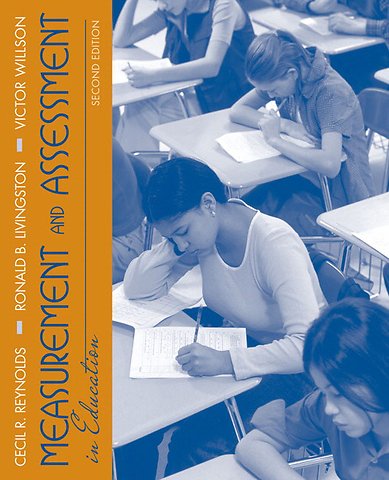
Measurement and Assessment in Education
Paperback Engels 2008 2e druk 9780205579341Samenvatting
Measurement and Assessment in Education, Second Edition, employs a pragmatic approach to the study of educational tests and measurement so that teachers will understand essential psychometric concepts and be able to apply them in the classroom.
The principles that guide this text are:
-What essential knowledge and skills do classroom teachers need to conduct student assessments in a professional manner?
-What does the research on educational assessment tell us?
This focus has resulted in a uniquely approachable and technically accurate presentation of the material.
While providing a slightly more technical presentation of measurement and assessment than more basic texts, this text is both approachable and comprehensive. The text includes a gentle introduction to the basic mathematics of measurement, and expands traditional coverage to include a thorough discussion of performance and portfolio assessments, a complete presentation of assessment accommodations for students with disabilities, and a practical discussion of professional best practices in educational measurement.
Highlights of This Text
-This text is very user friendly, helping students to master the more technical aspects of educational assessment and gain a good understanding of the mathematical concepts needed to master measurement and assessment (Chapters 2—6).
-Ethical principles, legal issues, and professional standards relevant to classroom assessment are covered thoroughly so that students are prepared to conduct classroom assessments in a professional and ethical manner (throughout the text, but specifically in Chapter 17).
-An entire chapter (Chapter15) is devoted to the use of assessments for students with disabilities to prepare students to assess the knowledge and skills of all students, including those with disabilities.
-Contemporary issues regarding the assessment of students are covered in detail so that students are aware of important issues related to educational assessment.
-Numerous pedagogical devices such as exercises, cases, and end-of-chapter problems are included throughout the text so that students can explore topics further.
-Audio enhanced PowerPointTM lectures featuring Dr. Victor Willson are particularly useful for student review and mastery of the material presented.
-A Test Bank is also available to instuctors.
Specificaties
Lezersrecensies
Inhoudsopgave
 
I. Introduction
 
II. The Language of Assessment
A. Tests, Measurement, & Assessment
            B. Types of Tests
            C. Types of Scores Interpretations
 
III. Assumptions of Educational Assessment
A. Psychological and educational constructs exist.
B. Psychological and educational constructs can be measured.
C. While we can measure constructs, our measurement is not perfect.
D. There are different ways to measure any given construct.
E. All assessment procedures have strengths and limitations.
F. Multiple sources of information should be part of the assessment process.
G. Performance on tests can be generalized to non-test behaviors.
H. Assessment can provide information that helps educators make better        educational decisions.
I. Assessments can be conducted in a fair manner.
J. Testing and assessment can benefit our educational institutions and society as a whole.
                       
IV. Participants in the Assessment Process
            A. People who develop tests.
            B. People who use tests.
            C. People who take tests.
            D. Other people involved in the assessment process.
 
V. Common Application of Educational Assessments
            A. Student Evaluation
            B. Instructional Decisions
            C. Selection, Placement, and Classification Decisions
            D. Policy Decisions
            E. Counseling and Guidance Decisions
 
VI. What Teachers Need to Know About Assessment
A. Teachers should be proficient in selecting professionally developed assessment
procedures that are appropriate for making instructional decisions.
B. Teachers should be proficient in developing assessment procedures that are
appropriate for making instructional decisions.
C. Teachers should be proficient in administering, scoring, and interpreting
professionally developed and teacher-made assessment procedures.
D. Teachers should be proficient in using assessment results when making
educational decisions.
E. Teachers should be proficient in developing valid grading procedures that
incorporate assessment information.
F. Teachers should be proficient in communicating assessment results.
G. Teachers should be proficient in recognizing unethical, illegal, and other
inappropriate uses of assessment procedures or information.
 
VII. Educational Assessment in the 21st Century
            A. Computerized Adaptive Testing (CAT) and Other Technological Advances.
            B. Authentic Assessments
            C. Educational Accountability and High-Stakes Assessment
            D. Trends in the Assessment of Students with Disabilities
 
VIII. Summary
 
Tables
 
B. Table 1.2: Norm- and Criterion-Referenced Scores
C. Table 1.3: Assumptions of Educational Assessment
D. Table 1.4: Common Applications of Educational Assessments
E. Table 1.5: Teacher Competencies in Educational Assessment
 
Special Interest Topics
 
A. Special Interest Topic 1.1: Cognitive Diagnostic Assessment — Another Step Toward Unifying Assessment and Instruction
B. Special Interest Topic 1.2: Technology and Assessment in the Schools
C. Special Interest Topic 1.3: Princeton Review's Rankings of High-Stakes Testing Programs
D. Special Interest Topic 1.4: The “Nation’s Report Card”
E. Special Interest Topic 1.5: What Does the 21st Century Hold for the Assessment Profession?
 
Chapter 2: The Basic Mathematics of Measurement
 
I. The Role of Mathematics in Assessment
 
II. Scales of Measurement
            A. What is Measurement?
            B. Nominal Scales
            C. Ordinal Scales
            D. Interval Scales
            E. Ratio Scales
III. The Description of Test Scores
            A. Distributions
            B. Measures of Central Tendency
            C. Measures of Variability
 
IV. Correlation Coefficients
            A. Scatterplots
            B. Correlation and Prediction
            C. Types of Correlation Coefficients
            D. Correlation and Causality
 
V. Summary
 
Tables
Table 2.1: Common Nominal, Ordinal, Interval, & Ratio Scales
Table 2.2: Distribution of Scores for 20 Students Table 2.3: Ungrouped Frequency Distribution
Table 2.4: Group Frequency Distribution
Table 2.5: Calculating the Standard Deviation and Variance
Table 2.6: Calculating a Pearson Correlation Coefficient
 
Figures
 
Figure 2.1: Graph of the Homework Scores
Figure 2.2: Hypothetical Distribution of Large Standardization Sample
Figure 2.3: Negatively Skewed Distribution
Figure 2.4: Positively Skewed Distribution
Figure 2.5: Bimodal Distribution
Figure 2.6: Relationship between Mean, Median, and Mode in Normal and Skewed Distributions
Figure 2.7: Three Distributions with Different Degrees of Variability
Figure 2.8: Scatterplots of Different Correlation Coefficients
 
Special Interest Topics
 
Special Interest Topic 2.1: Population Parameters and Sample Statistics
Special Interest Topic 2.2: A Public Outrage: Physicians Overcharge Their Patients
Special Interest Topic 2.3: Is the Variance Always Larger Than the Standard Deviation?
Special Interest Topic 2.4: Caution: Drawing Conclusions of Causality
Chapter 3: The Meaning of Test Scores
 
I. Introduction
 
II. Norm-Referenced & Criterion-Referenced Score Interpretations
A. Norm-Referenced Interpretations
B. Criterion-Referenced Interpretations
 
III. Norm-Referenced, Criterion-Referenced, or Both?
 
IV. Qualitative Description of Scores
 
V. Summary
 
Tables
 
Table 3.1: Transforming Raw Scores to Standard Scores
Table 3.2: Relationship of Different Standard Score Formats
Table 3.3: Converting Standard Scores From One Format to Another
Table 3.4: Characteristics of Norm-Referenced and Criterion-Referenced Scores
 
Figures Figure 3.1: Illustration of the Normal Distribution
Figure 3.2: Normal Distribution with Mean, Standard Deviation, & Percentages.
Figure 3.3: Normal Distribution Illustrating the Relationship among Standard Scores.
  Special Interest Topics   Special Interest Topic 3.1: The “Flynn Effect.” Special Interest Topic 3.2: Whence the Normal Curve? Special Interest Topic 3.3: Why do IQ Tests use a Mean of 100 and Standard Deviation of 15?
Special Interest Topic 3.4: The History of Stanine Scores
Special Interest Topic 3.5: Every Child on Grade Level?
 
Chapter 4: Reliability for Teachers
I. Introduction
 
II. Errors of Measurement
            A. Sources of Measurement Error
 
III. Methods of Estimating Reliability
            A. Test-Retest Reliability
            B. Alternate Form Reliability
            C. Internal Consistency Reliability
            D. Inter-Rater Reliability
            E. Reliability of Composite Scores
            F. Selecting a Reliability Coefficient
            G. Evaluating Reliability Coefficients
            H. How to Improve Reliability
            I. Special Problems in Estimating Reliability
 
IV. The Standard Error of Measurement
            A. Evaluating the Standard Error of Measurement
 
V. Reliability: Practical Strategies for Teachers
 
VI. Summary
Tables
 
Table 4.1: Major Types of Reliability
Table 4.2: Half-Test Coefficients and Corresponding Full-Test Coefficients Corrected
with the Spearman-Brown Formula
Table 4.3: Calculation of KR 20
Table 4.4: Calculation of Coefficient Alpha
Table 4.5: Calculating Inter-Rater Agreement
Table 4.6: Source of Error Variance Associated with Major Types of Reliability
Table 4.7: Reliability Expected When Increasing the Numbers of Items
Table 4.8: Standard Errors of Measurement for Values of Reliability and Standard Deviations
Table 4.9: Reliability Estimates for Tests with a Mean of 80%
 
Figures
 
Figure 4.1: Partitioning the Variance
 
Special Interest Topics
 
Special Interest Topic 4.1: Generalizability Theory
Special Interest Topic 4.2: Consistency of Classification with Mastery Tests
Special Interest Topic 4.3: A Quick Way To Estimate Reliability for Classroom Exams
 
Chapter 5: Validity for Teachers
 
I. Introduction
            A. Threats to Validity
            B. Reliability & Validity
           
II. "Types of Validity" versus "Types of Validity Evidence"
III. Types of Validity Evidence
A. Evidence Based on Test Content
B. Evidence Based on Relations to Other Variables
            C. Evidence Based on Internal Structure
            D. Evidence Based on Response Processes
            E. Evidence Based on Consequences of Testing
F. Integrating Evidence of Validity
 
IV. Validity: Practical Strategies for Teachers
 
V. Chapter Summary
 
Tables
 
Table 5.1: Tracing Historical Trends in the Concept of Validity
Table 5.2: Sources of Validity Evidence
 
Figures
 
Figure 5.1: Illustration of Item Relevance
Figure 5.2: Illustration of Content Coverage
Figure 5.3: Predictive and Concurrent Studies
Figure 5.4: Graph of a Regression Line
 
Special Interest Topic
 
Special Interest Topic 5.1: Regression, Prediction, and Your First Algebra Class
 
Chapter 6: Item Analysis for Teachers
 
I. Introduction
 
II. Item Difficulty Index (or Item Difficulty Level)
A. Special Assessment Situations and Item Difficulty
 
III. Item Discrimination
A. Item Discrimination on Mastery Tests
B. Difficulty and Discrimination on Speed Tests
 
IV. Distracter Analysis
            A. How Distracters Influence Item Difficulty and Discrimination
 
V. Item Analysis: Practical Strategies for Teachers
 
VI. Using Item Analysis to Improve Items
 
VII. Item Analysis and Performance Assessments
VIII. Qualitative Item Analysis
 
IX. Using Item Analysis to Improve Classroom Instruction
 
X. Summary
 
Tables
 
Table 6.1: Optimal p Values for Items with Varying Numbers of Choices
Table 6.2: Guidelines for Evaluating D Values
Table 6.3: Maximum D Values at Different Difficulty Levels
Table 6.4: Two Examples of Test Scoring and Item Analysis Programs
 
Special Interest Topics
 
Special Interest Topic 6.1: Item Difficulty Indexes and Power Tests
Special Interest Topic 6.2: Item Analysis for Constructed Response Items
Special Interest Topic 6.3: Developing a Test Bank
 
Chapter 7: The Initial Steps in Developing a Classroom Test:
Deciding What to Test and How to Test It
 
I. Introduction
 
II. Characteristics of Educational Objectives
 
III. Taxonomy of Educational Objectives
A. Cognitive Domain
B. Affective Domain
C. Psychomotor Domain
 
IV. Behavioral versus Nonbehavioral Educational Objectives
 
V. Writing Educational Objectives
VI. Developing a Table of Specifications
VII. Implementing the Table of Specifications and Developing an Assessment
            A. Norm-Referenced versus Criterion-Referenced Assessment
            B. Selecting which types of items to use
            C. Putting the Assessment Together
VIII. Preparing your Students and Administering the Assessment.
IX. Summary
Tables
 
Table 7.1: Bloom's Taxonomy of Educational Objectives
Table 7.2: Krathwohl’s Taxonomy of Affective Objectives
Table 7.3: Harrow’s Taxonomy of Psychomotor Objectives
Table 7.4: Learning Objectives for Chapter 2: The Basic Math of Measurement
Table 7.5: Table of Specifications for Test on Chapter 2: Based on Content Areas
Table 7.6: Table of Specifications for Test on Chapter 2: Content Areas with Percentages
Table 7.7: Strengths and Weaknesses of Selected-Response Items
Table 7.8: Strengths and Weaknesses of Constructed-Response Items
Table 7.9: Practical Suggestions for Assembling an Assessment
 
Special Interest Topics
 
A. Special Interest Topic 7.1: Suggestions for Reducing Test Anxiety.
B. Special Interest Topic 7.2: Strategies for Preventing Cheating
Chapter 8: The Development and Use of Selected-Response Items
 
I. Introduction
II. Multiple-choice Items
A. Guidelines for Developing Multiple-choice Items
B. Strengths and Weaknesses of Multiple-choice Items
 
III. True-False Items
A. Guidelines for Developing Multiple-choice Items
B. Strengths and Weaknesses of Multiple-choice Items
 
IV. Matching Items
A. Guidelines for Developing Matching Items
B. Strengths and Weaknesses of Matching Items
 
V. Summary
Tables
 
Table 8.1: Checklist for the Development of Multiple-choice Items
Table 8.2: Strengths and Weaknesses of Multiple-choice Items
Table 8.3: Checklist for the Development of True-False Items
Table 8.4: Strengths and Weaknesses of True-False Items
Table 8.5: Checklist for the Development of Matching Items
Table 8.6: Strengths and Weaknesses of Matching Items
 
 
Special Interest Topics
 
Special Interest Topic 8.1: Do Multiple-choice Items Penalize Creative Students?
Special Interest Topic 8.2: Correction for Guessing
Special Interest Topic 8.3: What research says about "Changing your answer?"
 
Chapter 9: The Development and Use of Constructed-Response Items
 
I. Introduction
II. Oral Testing: The Oral Essay as a Precursor of Constructed-Response Items
III. Essay Items
A. Purposes of Essay Items
B. Essay Items at Different Levels of Complexity
            C. Restricted-Response versus Extended-Response Essays
            D. Guidelines for Developing Essay Items
            E. Strengths and Weaknesses of Essay Items
            F. Guidelines for Scoring Essay Items
 
III. Short-Answer Items
A. Guidelines for Developing Short-Answer Items
B. Strengths and Weaknesses of Short-Answer Items
 
IV. A Final Note: Constructed-Response versus Selected-Response Items
 
V. Summary
Tables
 
Table 9.1: Purposes of Essay Testing
Table 9.2: Guidelines for the Development of Essay Items
Table 9.3: Strengths and Weaknesses of Essay Items
Table 9.4: Holistic Scoring Rubric
Table 9.5: Analytic Scoring Rubric
Table 9.6: Guidelines for Scoring Essay Items
Table 9.7: Guidelines for the Development of Short-Answer Items
Table 9.8: Strengths and Weaknesses of Short-Answer Items
 
Special Interest Topics
 
Special Interest Topic 9.1: Computer Scoring of Essay Items
 
Chapter 10: Performance Assessments & Portfolios
I. Introduction - What Are Performance Assessments?
II. Guidelines for Developing Effective Performance Assessments
A. Selecting Appropriate Performance Tasks
            B. Developing Instructions
            C. Developing Procedures for Scoring Responses
            D. Implementing Procedures to Minimize Errors in Rating
 
III. Strengths & Weaknesses of Performance Assessments
 
IV. Portfolios
 
V. Guidelines for Developing Portfolio Assessments
 
VI. Strengths & Weaknesses of Portfolios
 
VII. Summary
 
List of Tables
 
Table 10.1: Guidelines for Selecting Performance Tasks.
Table 10.2: Guidelines for Developing Instructions for Performance Assessments.
Table 10.3: Example of a Rating Scale using Verbal Descriptions
Table 10.4: Example of a Numerical Rating Scale 
Table 10.5: Example of a Graphic Rating Scale 
Table 10.6: Example of a Descriptive Graphic Rating Scale 
Table 10.7: Example of a Checklist Used with Preschool Children
Table 10.8: Guidelines for Developing and Implementing Scoring Procedures
Table 10.9: Strengths & Weaknesses of Performance Assessments
Table 10.10: Guidelines for Developing Portfolio Assessments
Table 10.11: Strengths and Weaknesses of Portfolios Assessments
 
Special Interest Topics
 
Special Interest Topic 10.1: Example of a Performance Assessment in Mathematics
Special Interest Topic 10.2: Reliability Issues in Performance Assessments
Special Interest Topic 10.3: Performance Assessments in High-Stakes Testing.
 
Chapter 11: Assigning Grades on the Basis of Classroom Assessments
 
I. Introduction
 
II. Feedback and Evaluation
A. Formal and Informal Evaluation
B. The Use of Formative Evaluation in Summative Evaluation
 
III. Reporting Student Progress: Which Symbols to Use
 
IV. The Basis for Assigning Grades
 
V. Frame of Reference
            A. Norm-Referenced Grading (Relative Grading)
            B. Criterion-Referenced Grading (Absolute Grading)
            C. Achievement in Relation to Improvement or Effort
            D. Achievement Relative to Ability
            E. Recommendations
 
VI. Combining Grades Into a Composite
 
VII. Informing Students of Grading System
 
VIII. Parent Conferences
 
IX. Summary
 
Tables
 
Table 11.1: Report Form Reflecting Achievement and Non-Achievement Factors
Table 11.2: Examples of Grading based on Effort versus Achievement
Table 11.3: Example of Weighting Different Assessment Procedures
Table 11.4: Commercially Available Grade Book Programs
Table 11.5: Example of Grading Requirements Presented to Students at the Beginning of a Test & Measurement Course
 
Special Interest Topics
 
Special Interest Topic 11.1: Brief History of Grading
Special Interest Topic 11.2: Schools No Longer Assigning Ds?
Special Interest Topic 11.3: Grading and Punishment?
Special Interest Topic 11.4: Some Thoughts on Weighting Assessment Procedures
 
Chapter 12: Standardized Achievement Tests in the Era of High-Stakes Assessment
 
I. Introduction
 
II. Group Administered Achievement Tests
            A. Commercially Developed Group Achievement Test
            B. State Developed Achievement Tests
            C. Best Practices in Achievement Testing in the Schools
 
III. Individual Achievement Tests
 
IV. Selecting an Achievement Battery
 
V. Summary
 
Tables
 
Table 12.1: Major Publishers of Standardized Group Achievement Tests
Table 12.2: Important Test-Taking Skills to Teach Students
 
Figures
 
Figure 12.1: TerraNova The Second Edition Sample Report - Individual Profile Report
Figure 12.2: TerraNova The Second Edition Sample Report - Home Report
Figure 12.3: Performance Profile for Iowa Tests of Basic Skills (ITBS)
Figure 12.4: Profile Narrative for Iowa Tests of Basic Skills (ITBS)
Figure 12.5: Score Labels for the Iowa Tests and CogAT
 
Special Interest Topics
 
Special Interest Topic 12.1: Standards-Based Assessment
Special Interest Topic 12.2: Finding Information on Standardized Tests
Special Interest Topic 12.3: Mismatch Between State Standards and Off-The-Shelf
Achievement Tests
Special Interest Topic 12.4: American Educational Research Association (AERA)
Position Statement on High-Stakes Testing.
Special Interest Topic 12.5: Why Standardized Tests Should Not be Used to Evaluate
Educational Quality
Special Interest Topic 12.6: Value-Added Assessment: A New Approach to
Educational Accountability
Special Interest Topic 12.7: Deciding Not to Test an Upset Student.
 
Chapter 13: The Use of Aptitude Tests in the Schools
I. Introduction
 
II. A Brief History of Intelligence Tests
 
III. The Use of Aptitude and Intelligence Tests in the Schools
            A. Aptitude-Achievement Discrepancies
 
IV. Aptitude and Intelligence Tests
            A. Group Aptitude/Intelligence Tests
            B. Individual Aptitude/Intelligence Tests
            C. Selecting Aptitude/Intelligence Tests
 
V. College Admission Tests
 
VI. Summary
Tables
 
Table 13.1: Organization of Major Group Intelligence/Aptitude Tests
Table 13.2: Organization of the Wechsler Intelligence Scale for Children - 4th Edition (WISC-IV)
Table 13.3: Organization of the Stanford-Binet Intelligence Scales, 5th Edition (SB5)
Table 13.4: Organization of Woodcock-Johnson III (WJ-III) Tests of Cognitive Abilities
Table 13.5: Organization of the Reynolds Intellectual Assessment Scales (RIAS)
Table 13.6: Organization of the Universal Nonverbal Intelligence Test (UNIT)
 
Figures
 
Figure 13.1: A Continuum of General Abilities
Figure 13.2: InView Sample Report - Home Report Form
Figure 13.3: Profile Narrative for the Cognitive Abilities Test (CogAT)
Figure 13.4: Combined Profile Narrative for the Iowa Tests of Basic Skills (ITBS)        and the Cognitive Abilities Test (CogAT)
Figure 13.5: Achievement/Ability Graphic Comparison of the Iowa Tests of Basic         Skills (ITBS) and the Cognitive Abilities Test (CogAT)
 
Special Interest Topics
 
Special Interest Topic 13.1:The Controversial IQ: Knows & Unknowns
Special Interest Topic 13.2: The Controversial IQ: IQ Tests & Schools
Special Interest Topic 13.3:Ability Profiles on the CogAT
 
Chapter 14: Assessment of Behavior and Personality
I. Assessing Behavior and Personality
            A. Response Sets
            B. Assessment of Behavior and Personality in the Schools
 
II. Behavior Rating Scales
A. Behavior Assessment System for Children - TRS & PRS
B.  Conners Rating Scales - Revised
C. Child Behavior Checklist & Teacher Report Form
 
III. Self-Report Measures
A. Behavior Assessment System for Children - Self-Report of Personality
B. Youth Self-Report
 
IV. Projective Techniques
            A. Projective Drawings
            B. Sentence Completion Tests
            C. Apperception Tests
            D. Inkblot Tests
           
V. Summary
Tables
Table 14.1: Composites and Scales in the TRS and PRS
Table 14.2: Composites and Scales in the SRP
Table 14.3: The Projective Debate
 
Figures
Figure 14.1: Completed Clinical and Adaptive Profile sections of a TRS
Figure 14.2: Completed Clinical and Adaptive Profile sections of a SRP
Figure 14.3: A Picture Similar to Those Used on Apperception Tests
Figure 14.4: An Inkblot Similar to Those Used on Inkblot Tests
 
Special Interest Topics
Special Interest Topic 14:1: The Handsome and Deformed Leg
Special Interest Topic 14.2: An Example of a "Fake Good" Response Set
Special Interest Topic 14.3: Popular Tests of Behavior & Personality
 
Chapter 15: Assessment Accommodations for Students with Disabilities
 
I. Introduction
 
II. Major Legislation that Impact the Assessment of Students with Disabilities
 
III. Individuals with Disabilities Education Act (IDEA)
            A. IDEA Categories of Disabilities
 
IV. Section 504
 
V. The Rationale for Accommodations
 
VI. When are accommodations not appropriate or necessary?
 
VII. Strategies for Accommodations
            A. Modifications of Presentation Format
            B. Modifications of Response Format
            C. Modifications of Timing
            D. Modification of Setting
            E. Adaptive Devices and Supports
            F. Using Only Portion of a Test
            G. Using Alternate Assessments
 
VIII. Determining What Accommodations to Provide
 
IX. Reporting Results of Modified Assessments
 
X. Summary
Tables
 
Table 15.1: Accommodations Involving Modifications of the Presentation Format
Table 15.2: Accommodations Involving Modifications of the Response Format
Table 15.3: Accommodations Involving Modifications of Timing
Table 15.4: Accommodations Involving Modifications of Setting
Table 15.5: Accommodations Involving Adaptive Devices and Supports
Table 15.6: Determining which Accommodations to Provide
 
List of Special Interest Topics
 
Special Interest Topic 15.1: Differential Effects & Assessment Accommodations?
Special Interest Topic 15.2: Allowable Accommodations in a Statewide Assessment Program
Special Interest Topic 15.3: Assessment of Students with Disabilities — Selected Legal Issues
 
Chapter 16: The Problem of Bias in Educational Assessment
I. Introduction
II. What Do We Mean By Bias?
III. Past and Present Concerns: A Brief Look
IV. The Controversy over Bias in Testing: Its Origin, What it is, and What it is Not
V. Cultural Bias and the Nature of Psychological Testing
VI. Objections to the Use of Educational Tests with Minorities
            A. Inappropriate content
            B. Inappropriate standardization samples.
            C. Examiner and language bias.
            D. Inequitable social consequences.
            E. Measurement of different constructs.
            F. Differential predictive validity.
            G. Qualitatively distinct aptitude and personality.
 
VII. The Problem of Definition in the Study of Bias
VIII. Culture Free Tests, Cultural Loading, and Cultural Bias
IX. Inappropriate Indicators of Bias: Mean Differences & Equivalent Distributions
X. Bias in Test Content
XII. Bias in Other Internal Features of Tests
XIII. Bias in Predictive and in Relation to Variables External to the Test
XV. Conclusion
List of Figures
Figure 16.1: Equal Slopes and Intercepts
Figure 16.2: Equal Slopes with Differing Intercepts
Figure 16.3: Equal Intercepts and Differing Slopes
Figure 16.4: Differing Slopes and Intercepts
 
Special Interest Topics
Special Interest Topic 16.1: Sex Differences in Intelligence
Special Interest Topic 16.2: Courtroom Controversy Over IQ Testing in the Public Schools
Special Interest Topic 16.3: Fairness & Bias — A Complex Relationship
 
Chapter 17: Best Practices in Educational Assessment
 
I. Introduction
II. Guidelines for Developing Assessments
III. Guidelines for Published Assessments
IV. Guidelines for Administering Assessments
V. Guidelines for Scoring Assessments
VI. Guidelines for Interpreting, Using, and Communicating Assessment Results
VII. Responsibilities of Test Takers
VIII. Summary
 
List of Tables
 
Table 17.1: Checklist for Developing Assessments
Table 17.2: Checklist for Selecting Published Assessments
Table 17.3: Checklist for Administering Assessments
Table 17.4 Checklist for Scoring Assessments
Table 17.5: Checklist for Interpreting, Using, and Communicating Assessment Results
Table 17.6: Responsibilities of Test Takers
 
List of Special Interest Topics
 
Special Interest Topic 17.1: Teachers Cheating?
Special Interest Topic 17.2: Steps to Prevent Student Cheating.
Appendices
Anderen kochten ook
 Jacqueline van Swet€ 44,95
 R. de Lange€ 37,60
 Henk van Berkel€ 51,95
 Ad Verhagen€ 57,95
 Liam Healy€ 19,99
 -52%Melissa Bray€ 54,95113,18
Rubrieken
- advisering
- algemeen management
- coaching en trainen
- communicatie en media
- economie
- financieel management
- inkoop en logistiek
- internet en social media
- it-management / ict
- juridisch
- leiderschap
- marketing
- mens en maatschappij
- non-profit
- ondernemen
- organisatiekunde
- personal finance
- personeelsmanagement
- persoonlijke effectiviteit
- projectmanagement
- psychologie
- reclame en verkoop
- strategisch management
- verandermanagement
- werk en loopbaan