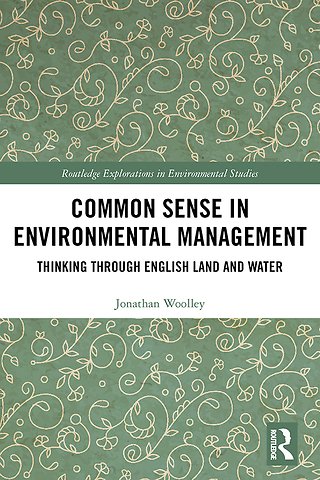
Common Sense in Environmental Management
Thinking Through English Land and Water
Gebonden Engels 2019 9780367002374Samenvatting
Common Sense in Environmental Management examines common sense not in theory, but in practice. Jonathan Woolley argues that common sense as a concept is rooted in English experiences of landscape and land management and examines it ethnographically - unveiling common sense as key to understanding how British nature and public life are transforming in the present day.
Common sense encourages English people to tacitly assume that the management of land and other resources should organically converge on a consensus that yields self-evident, practical results. Furthermore, the English then tend to assume that their own position reflects that consensus. Other stakeholders are not seen as having legitimate but distinct expertise and interests – but are rather viewed as being stupid and/or immoral, for ignoring self-evident, pragmatic truths. Compromise is therefore less likely, and land management practices become entrenched and resistant to innovation and improvement. Through a detailed ethnographic study of the Norfolk Broads, this book explores how environmental policy and land management in rural areas could be more effective if a truly common sense was restored in the way we manage our shared environment.
Using academic and lay deployments of common sense as a route into the political economy of rural environments, this book will be of great interest to scholars and students of socio-cultural anthropology, sociology, human geography, cultural studies, social history, and the environmental humanities.
Specificaties
Lezersrecensies
Inhoudsopgave
Preface – Common sense: A briefing for policymakers
The problem – Siloing obstructs effective Environmental Land Management
What is common sense?
How does it shape English society and land management?
How should policymakers respond?
Acknowledgements
Introduction – Common sense questions
Why: Why Common Sense?
Where: The Broads as a Fieldsite
What: A Commonsense Argument
Bibliography
Chapter 1 – Do academics have common sense?
Koinē aísthēsis and other opinions: Key philosophical debates on common sense
"Sons of the Soil": Etymologies of common sense
Common sense as a social scientific object
Common sense as a political object
Chapter 2 – What is common sense?
Common sense as a vernacular object
Common sense in vernacular use
Chapter 2: Where is common sense to be found?
Learned voices: Common land in environmental histories of Broadland
Working Voices: "Bad Farming", Tidyness and the Balance of Contemporary Rural Life in Norfolk
Concerned voices: Current trends in Britain’s rural economy
Analysis: Work, Common Land and the Process of Enclosure in Broadland
Conclusion: The Institution of Common Ground
Chapter 4 – Can you learn common sense?
Overview: Strumpshaw Fen as a Place of Desire
Underview: Thicket Description of Working Your Way Through the Landscape
Counterview: Quiet Enjoyment and Visitor Experience
Interview: Farmers, Children, and the Acquisition of Common Sense
Teleview: "Broadland Consciousness" versus "Barrier Consciousness"
Chapter 5 – Why is common sense so scarce?
Hickling Broad: A lack of common ground
Bird Farmers: Catfield Fen and Landscape-Scale Conservation
Fragmenting Corporeal Attitudes: Habitus and "The Silo Effect"
Trials and Errors: The trouble with common sense
Conclusion: Chedgrave Common and the Apogee of Commoning
Conclusions – What do we need to know about common sense?
Gillian Tett, Robert Kett, and the Division of Labour
Rubrieken
- advisering
- algemeen management
- coaching en trainen
- communicatie en media
- economie
- financieel management
- inkoop en logistiek
- internet en social media
- it-management / ict
- juridisch
- leiderschap
- marketing
- mens en maatschappij
- non-profit
- ondernemen
- organisatiekunde
- personal finance
- personeelsmanagement
- persoonlijke effectiviteit
- projectmanagement
- psychologie
- reclame en verkoop
- strategisch management
- verandermanagement
- werk en loopbaan