,

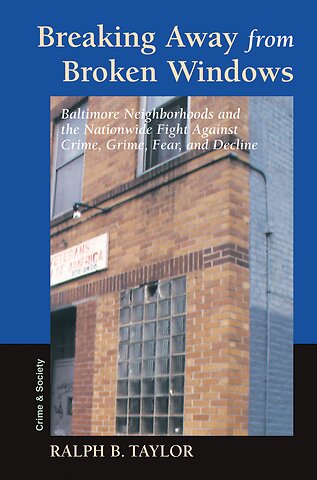
Breaking Away From Broken Windows

Baltimore Neighborhoods And The Nationwide Fight Against Crime, Grime, Fear, And Decline

Gebonden Engels 2019 9780367098728
€ 252,65
Levertijd ± 11 werkdagen
Gratis verzonden

Samenvatting

In Breaking Away from Broken Windows Ralph Taylor uses data on recent Baltimore crime-reduction efforts to attack the 'broken windows' thesis--that is, the currently fashionable notion that by reducing or eliminating superficial signs of disorder (dilapidated buildings, graffiti, incivil behavior by teenagers, etc.), urban police deparments can make significant and lasting reductions in crime. Taylor argues that such measures, while useful, are only a partial solution to the problem at hand. His data supports a materialist view: changes in levels of physical decay, superficial social disorder, and racial composition do not lead to higher crime, while economic decline does. He contends that the Baltimore example shows that in order to make real, long-term reductions in crime, urban politicians, businesses, and community leaders must work together to improve the economic fortunes of those living in high-crime areas.

Specificaties

ISBN13:9780367098728
Taal:Engels
Bindwijze:Gebonden
Aantal pagina's:408
Uitgever:Taylor & Francis Ltd

Lezersrecensies

Wees de eerste die een lezersrecensie schrijft!

Inhoudsopgave

* List of Tables and Figures * Acknowledgments * List of Acronyms Part 1: Background on the Place, the Theory, and Policies * 1. Introduction * Philadelphia, Pennsylvania * Oakland, California * Focus * Incivilities, Disorder, Social Disorganization, Collective Efficacy, and Social Capital * Broader Theoretical and Empirical Context of Current Approaches * Evidence * The Argument and the Chapters Ahead * The "Bottom Line," * Notes * References * 2. The Baltimore Context, and Its Context * With Charles David Linne * The War Has Been Won? * Purpose * Changes in People, Housing, and Jobs * Changes in Crime: The City as a Whole * Baltimore Neighborhood Crime Rates * Shifting Incivilities, 1981-1994 * Summary Comments on Changes * The Questions of Fear and Neighborhood Problems * In the News * Notes * References * 3. The Incivilities Thesis: Theory, Measurement, and Policy * Organization * Variations on a Theme * Empirical Support for Hypotheses * A Theoretical Aside on Demographic and Structural Issues * From Theory to Research: Incivilities Indicators * Implications for Policy, Practice, and Theory * Notes * References Part 2: Quantitative Evidence on Origins and Impacts * 4. Origins of Incivilities * A Story About One Broken Window * Focus and Organization * Perspectives on the Origins of Incivilities * An Unexciting, but Necessary, Methodological Aside on Change * Another Necessary, but Unexciting, Aside on Multilevel Models * Overview of Indicators, Outcomes, and Controls * Incivilities Observed * Incivilities As Perceived by Residents * Discussion * Notes * References * 5. Impacts of Incivilities on Later Crime and Decline * A Systemic Perspective * Focus * Data and Analysis, * Changes on Decline Indicators in the 1980s * Crime Rate Changes * Predicting Decline * Discussion * Notes * References * 6. Longitudinal Impacts of Incivilities on Reactions to Crime and Local Commitment * Reactions to Crime * Focus * Data and Analysis * Impacts of Specific Predictors * Clos

Managementboek Top 100

€ 252,65
Levertijd ongeveer 11 werkdagen
Gratis verzonden

Rubrieken

Producten

    Auteurs

      Trefwoorden

        Artikelen

          Breaking Away From Broken Windows