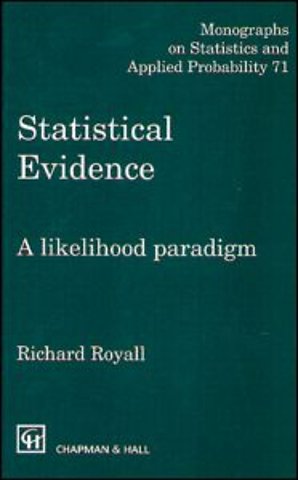
Statistical Evidence
A Likelihood Paradigm
Gebonden EN 1997 9780412044113Samenvatting
Interpreting statistical data as evidence, Statistical Evidence: A Likelihood Paradigm focuses on the law of likelihood, fundamental to solving many of the problems associated with interpreting data in this way. Statistics has long neglected this principle, resulting in a seriously defective methodology. This book redresses the balance, explaining why science has clung to a defective methodology despite its well-known defects. After examining the strengths and weaknesses of the work of Neyman and Pearson and the Fisher paradigm, the author proposes an alternative paradigm which provides, in the law of likelihood, the explicit concept of evidence missing from the other paradigms. At the same time, this new paradigm retains the elements of objective measurement and control of the frequency of misleading results, features which made the old paradigms so important to science. The likelihood paradigm leads to statistical methods that have a compelling rationale and an elegant simplicity, no longer forcing the reader to choose between frequentist and Bayesian statistics.
Specificaties
Lezersrecensies
Rubrieken
- advisering
- algemeen management
- coaching en trainen
- communicatie en media
- economie
- financieel management
- inkoop en logistiek
- internet en social media
- it-management / ict
- juridisch
- leiderschap
- marketing
- mens en maatschappij
- non-profit
- ondernemen
- organisatiekunde
- personal finance
- personeelsmanagement
- persoonlijke effectiviteit
- projectmanagement
- psychologie
- reclame en verkoop
- strategisch management
- verandermanagement
- werk en loopbaan