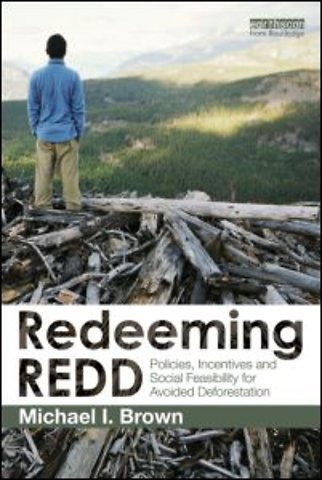
Redeeming REDD
Policies, Incentives and Social Feasibility for Avoided Deforestation
Paperback Engels 2013 1e druk 9780415517867Samenvatting
It is now well accepted that deforestation is a key source of greenhouse gas emissions and of climate change, with forests representing major sinks for carbon. As a result, public and private initiatives for reducing emissions from deforestation and forest degradation (REDD) have been widely endorsed by policy-makers. A key issue is the feasibility of carbon trading or other incentives to encourage land-owners and indigenous people, particularly in developing tropical countries, to conserve forests, rather than to cut them down for agricultural or other development purposes.
This book presents a major critique of the aims and policies of REDD as currently structured, particularly in terms of their social feasibility. It is shown how the claims to be able to reduce greenhouse gas emissions as well as enhance people's livelihoods and biodiversity conservation are unrealistic. There is a naive assumption that technical or economic fixes are sufficient for success. However, the social and governance aspects of REDD, and its enhanced version known as REDD+, are shown to be implausible. Instead to enhance REDD's prospects, the author provides a roadmap for developing a new social contract that puts people first.
Specificaties
Lezersrecensies
Rubrieken
- advisering
- algemeen management
- coaching en trainen
- communicatie en media
- economie
- financieel management
- inkoop en logistiek
- internet en social media
- it-management / ict
- juridisch
- leiderschap
- marketing
- mens en maatschappij
- non-profit
- ondernemen
- organisatiekunde
- personal finance
- personeelsmanagement
- persoonlijke effectiviteit
- projectmanagement
- psychologie
- reclame en verkoop
- strategisch management
- verandermanagement
- werk en loopbaan