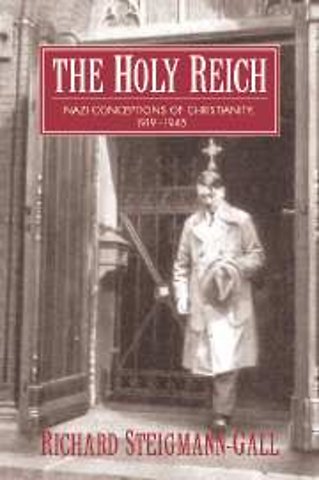
The Holy Reich
Nazi Conceptions of Christianity, 1919–1945
Gebonden Engels 2003 9780521823715Samenvatting
Analyzing the previously unexplored religious views of the Nazi elite, Richard Steigmann-Gall argues against the consensus that Nazism as a whole was either unrelated to Christianity or actively opposed to it. He demonstrates that many participants in the Nazi movement believed that the contours of their ideology were based on a Christian understanding of Germany's ills and their cure. A program usually regarded as secular in inspiration - the creation of a racialist 'people's community' embracing antisemitism, antiliberalism and anti-Marxism - was, for these Nazis, conceived in explicitly Christian terms. His examination centers on the concept of 'positive Christianity,' a religion espoused by many members of the party leadership. He also explores the struggle the 'positive Christians' waged with the party's paganists - those who rejected Christianity in toto as foreign and corrupting - and demonstrates that this was not just a conflict over religion, but over the very meaning of Nazi ideology itself.
Specificaties
Lezersrecensies
Inhoudsopgave
Rubrieken
- advisering
- algemeen management
- coaching en trainen
- communicatie en media
- economie
- financieel management
- inkoop en logistiek
- internet en social media
- it-management / ict
- juridisch
- leiderschap
- marketing
- mens en maatschappij
- non-profit
- ondernemen
- organisatiekunde
- personal finance
- personeelsmanagement
- persoonlijke effectiviteit
- projectmanagement
- psychologie
- reclame en verkoop
- strategisch management
- verandermanagement
- werk en loopbaan