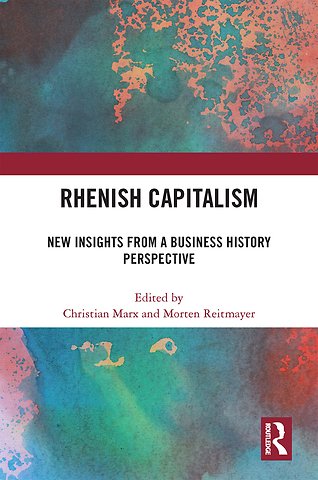
Rhenish Capitalism
New Insights from a Business History Perspective
Gebonden Engels 2022 9781032193151Samenvatting
Rhenish capitalism is an ideal-typical model of capitalism which is characterised by a bank-centered financing system, close economic ties between banks and companies, a balance of power between shareholders and management, and a social partnership between unions and employers. The West German economy of the 1950s to the 1980s is the prime example of that model of capitalism which contrasts with the liberal Anglo-Saxon forms of capitalism. In accordance with recent debates about Varieties of Capitalism, the authors argue that research on capitalism should pay more attention to change over time. The book also claims to put the firm into the centre of analysis.
The empirical contributions uncover the differences between French and German corporate governance practices comparing two European automobile producers (VW and Renault), analyse legal debates and practices of corporate control in post-war Germany, show the tension between national corporate governance and increasing internationalisation by reference to four major West German producers of chemicals, pharmaceuticals and fibres; and explore the opportunities encountered by German big banks vis-à-vis their customers from big industry. Furthermore, they show that coordinating culture in the supply relationship of the German automobile industry came under pressure at the end of the boom and stress the importance of communication processes as a basis for interest coordination in Rhenish capitalism.
The chapters in this book were originally published as a special issue of the journal Business History.
Specificaties
Lezersrecensies
Inhoudsopgave
Rubrieken
- advisering
- algemeen management
- coaching en trainen
- communicatie en media
- economie
- financieel management
- inkoop en logistiek
- internet en social media
- it-management / ict
- juridisch
- leiderschap
- marketing
- mens en maatschappij
- non-profit
- ondernemen
- organisatiekunde
- personal finance
- personeelsmanagement
- persoonlijke effectiviteit
- projectmanagement
- psychologie
- reclame en verkoop
- strategisch management
- verandermanagement
- werk en loopbaan