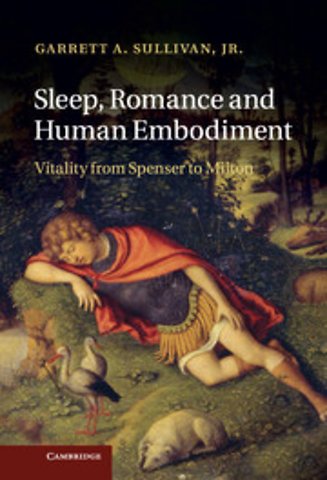
Sleep, Romance and Human Embodiment
Vitality from Spenser to Milton
Gebonden Engels 2012 9781107024410Samenvatting
Garrett Sullivan explores the changing impact of Aristotelian conceptions of vitality and humanness on sixteenth- and seventeenth-century literature before and after the rise of Descartes. Aristotle's tripartite soul is usually considered in relation to concepts of psychology and physiology. However, Sullivan argues that its significance is much greater, constituting a theory of vitality that simultaneously distinguishes man from, and connects him to, other forms of life. He contends that, in works such as Sidney's Old Arcadia, Shakespeare's Henry IV and Henry V, Spenser's Faerie Queene, Milton's Paradise Lost and Dryden's All for Love, the genres of epic and romance, whose operations are informed by Aristotle's theory, provide the raw materials for exploring different models of humanness; and that sleep is the vehicle for such exploration as it blurs distinctions among man, plant and animal.
Specificaties
Lezersrecensies
Inhoudsopgave
Rubrieken
- advisering
- algemeen management
- coaching en trainen
- communicatie en media
- economie
- financieel management
- inkoop en logistiek
- internet en social media
- it-management / ict
- juridisch
- leiderschap
- marketing
- mens en maatschappij
- non-profit
- ondernemen
- organisatiekunde
- personal finance
- personeelsmanagement
- persoonlijke effectiviteit
- projectmanagement
- psychologie
- reclame en verkoop
- strategisch management
- verandermanagement
- werk en loopbaan