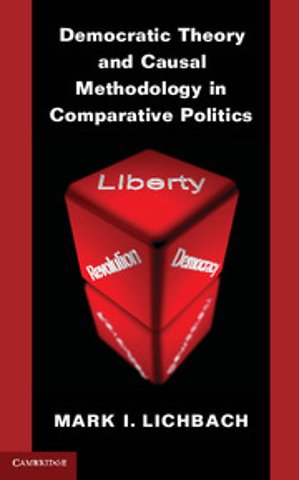
Democratic Theory and Causal Methodology in Comparative Politics
Gebonden Engels 2013 9781107025813Samenvatting
Barrington Moore bequeathed comparativists a problem: how to reconcile his causal claim of 'no bourgeoisie, no democracy' with his normative 'dream of a free and rational society'. Lichbach harmonizes causal methodology and normative democratic theory, illustrating their interrelationship. Using a dialogue among four specific texts, Lichbach advances five constructive themes. First, comparativists should study the causal agency of individuals, groups and democracies. Second, three types of collective agency should be paired with an exploration of three corresponding moral dilemmas: ought-is, freedom-power and democracy-causality. Third, at the center of inquiry, comparativists should place big-P Paradigms and big-M Methodology. Fourth, as they play with research schools, creatively combining prescriptive and descriptive approaches to democratization, they should encourage a mixed-theory and mixed-method field. Finally, comparativists should study pragmatic questions about political power and democratic performance: in building a democratic state, which democracy, under which conditions, is best, and how might it be achieved?
Specificaties
Lezersrecensies
Inhoudsopgave
Rubrieken
- advisering
- algemeen management
- coaching en trainen
- communicatie en media
- economie
- financieel management
- inkoop en logistiek
- internet en social media
- it-management / ict
- juridisch
- leiderschap
- marketing
- mens en maatschappij
- non-profit
- ondernemen
- organisatiekunde
- personal finance
- personeelsmanagement
- persoonlijke effectiviteit
- projectmanagement
- psychologie
- reclame en verkoop
- strategisch management
- verandermanagement
- werk en loopbaan