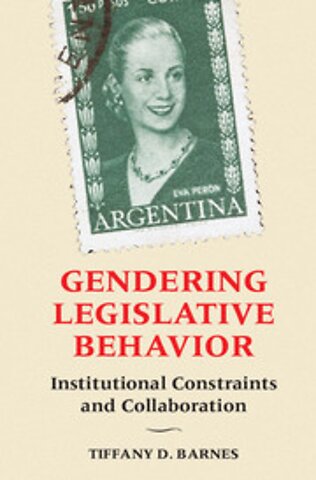
Gendering Legislative Behavior
Institutional Constraints and Collaboration
Gebonden Engels 2016 9781107143197Samenvatting
In democracies, power is obtained via competition. Yet, as women gain access to parliaments in record numbers, worldwide collaboration appears to be on the rise. This is puzzling: why, if politicians can secure power through competition, would we observe collaboration in Congress? Using evidence from 200 interviews with politicians from Argentina and a novel dataset from 23 Argentine legislative chambers over an 18-year period, Gendering Legislative Behavior reexamines traditional notions of competitive democracy by evaluating patterns of collaboration among legislators. Although only the majority can secure power via competition, all legislators - particularly those who do not have power - can influence the policy-making process through collaboration. Tiffany D. Barnes argues that as women have limited access to formal and informal political power, they collaborate more than men to influence policy-making. Despite the benefits of collaboration, patterns of collaboration vary among women because different legislative contexts either facilitate or constrain women's collaboration.
Specificaties
Lezersrecensies
Inhoudsopgave
Rubrieken
- advisering
- algemeen management
- coaching en trainen
- communicatie en media
- economie
- financieel management
- inkoop en logistiek
- internet en social media
- it-management / ict
- juridisch
- leiderschap
- marketing
- mens en maatschappij
- non-profit
- ondernemen
- organisatiekunde
- personal finance
- personeelsmanagement
- persoonlijke effectiviteit
- projectmanagement
- psychologie
- reclame en verkoop
- strategisch management
- verandermanagement
- werk en loopbaan