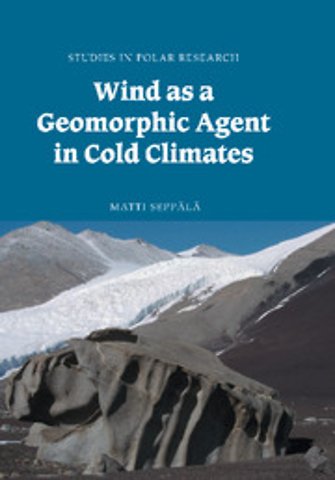
Wind as a Geomorphic Agent in Cold Climates
Paperback Engels 2012 9781107405523Samenvatting
This book was first published in 2004. Wind erosion and deposition are important factors in cold climates because of the open space and scarce vegetation. Aeolian processes connected with sand drift in polar environments are similar to those in deserts but in cold environments, frost and snow also play an important role. The Arctic is characterised by strangely eroded rocks, wind-formed lakes, sand dunes and loess deposits that owe their formation to aeolian processes controlled by frost and snow cover. Wind as a Geomorphic Agent in Cold Climates presents a detailed description and explanation of these wind-generated polar landforms. It includes numerous illustrations that will assist the reader in identifying and interpreting these features; both modern-day and those preserved in the geological record. This book provides an important introduction to this area of geocryology and will form a useful reference for graduate students and researchers in a variety of fields, including geomorphology, geology and environmental science.
Specificaties
Lezersrecensies
Inhoudsopgave
Rubrieken
- advisering
- algemeen management
- coaching en trainen
- communicatie en media
- economie
- financieel management
- inkoop en logistiek
- internet en social media
- it-management / ict
- juridisch
- leiderschap
- marketing
- mens en maatschappij
- non-profit
- ondernemen
- organisatiekunde
- personal finance
- personeelsmanagement
- persoonlijke effectiviteit
- projectmanagement
- psychologie
- reclame en verkoop
- strategisch management
- verandermanagement
- werk en loopbaan