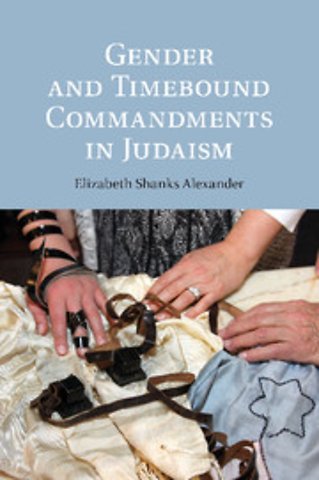
Gender and Timebound Commandments in Judaism
Paperback Engels 2015 9781107479173Samenvatting
The rule that exempts women from rituals that need to be performed at specific times (so-called timebound, positive commandments) has served for centuries to stabilize Jewish gender. It has provided a rationale for women's centrality at home and their absence from the synagogue. Departing from dominant popular and scholarly views, Elizabeth Shanks Alexander argues that the rule was not conceived to structure women's religious lives, but rather became a tool for social engineering only after it underwent shifts in meaning during its transmission. Alexander narrates the rule's complicated history, establishing the purposes for which it was initially formulated and the shifts in interpretation that led to its being perceived as a key marker of Jewish gender. At the end of her study, Alexander points to women's exemption from particular rituals (Shema, tefillin and Torah study), which, she argues, are better places to look for insight into rabbinic gender.
Specificaties
Lezersrecensies
Inhoudsopgave
Rubrieken
- advisering
- algemeen management
- coaching en trainen
- communicatie en media
- economie
- financieel management
- inkoop en logistiek
- internet en social media
- it-management / ict
- juridisch
- leiderschap
- marketing
- mens en maatschappij
- non-profit
- ondernemen
- organisatiekunde
- personal finance
- personeelsmanagement
- persoonlijke effectiviteit
- projectmanagement
- psychologie
- reclame en verkoop
- strategisch management
- verandermanagement
- werk en loopbaan