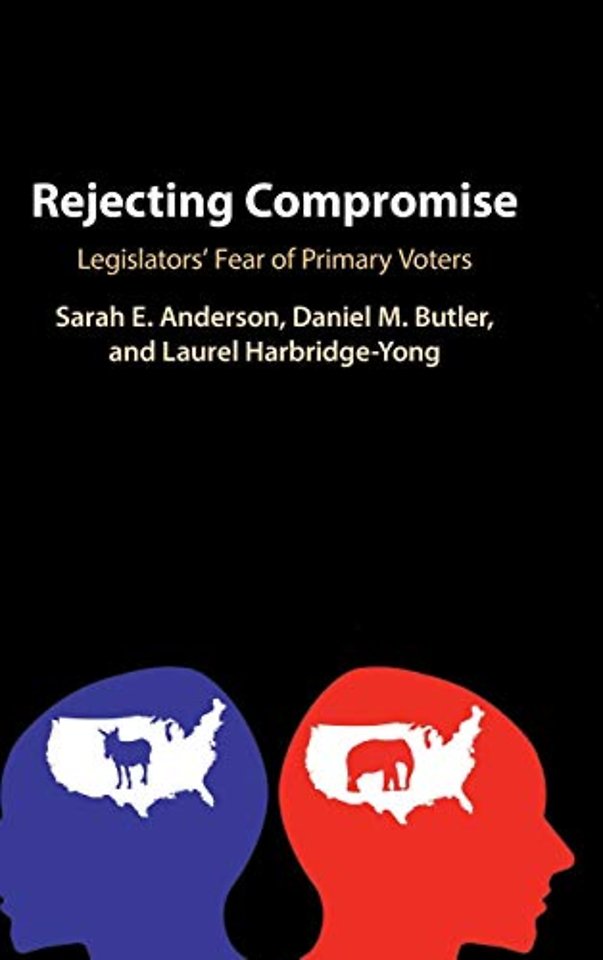
Rejecting Compromise
Legislators' Fear of Primary Voters
Gebonden Engels 2020 9781108487955Samenvatting
Legislative solutions to pressing problems like balancing the budget, climate change, and poverty usually require compromise. Yet national, state, and local legislators often reject compromise proposals that would move policy in their preferred direction. Why do legislators reject such agreements? This engaging and relevant investigation into how politicians think reveals that legislators refuse compromise - and exacerbate gridlock - because they fear punishment from voters in primary elections. Prioritizing these electoral interests can lead lawmakers to act in ways that hurt their policy interests and also overlook the broader electorate's preferences by representing only a subset of voters with rigid positions. With their solution-oriented approach, Anderson, Butler, and Harbridge-Yong demonstrate that improving the likelihood of legislative compromise may require moving negotiations outside of the public spotlight. Highlighting key electoral motives underlying polarization, this book is an excellent resource for scholars and students studying Congress, American politics, public policy, and political behavior.
Specificaties
Lezersrecensies
Inhoudsopgave
Rubrieken
- advisering
- algemeen management
- coaching en trainen
- communicatie en media
- economie
- financieel management
- inkoop en logistiek
- internet en social media
- it-management / ict
- juridisch
- leiderschap
- marketing
- mens en maatschappij
- non-profit
- ondernemen
- organisatiekunde
- personal finance
- personeelsmanagement
- persoonlijke effectiviteit
- projectmanagement
- psychologie
- reclame en verkoop
- strategisch management
- verandermanagement
- werk en loopbaan