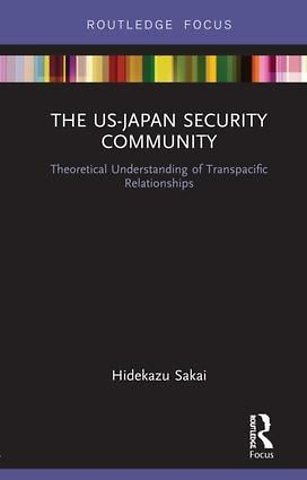
The US-Japan Security Community
Theoretical Understanding of Transpacific Relationships
Gebonden Engels 2018 9781138486676Samenvatting
Drawing on the work of Karl W. Deutsch, this book argues that the United States and Japan have formed their own security community, based on a sense of “collective identity.” In so doing, it provides a new theoretical outlook on co- operation between the United States and Japan, offering a fresh understanding of their bilateral relationship as one that goes beyond a mere military alliance or free trade partnership.
Taking an empirical approach, Sakai analyzes three key case studies: the Persian Gulf War of 1990–1, the terrorist attacks of September 11, 2001, and the Tohoku Earthquake and Tsunami of 2011. He examines how the United States and Japan interacted with one another in their discourses and behaviors in these three instances and thus demonstrates the existence of a collective identity between the two nations.
Specificaties
Lezersrecensies
Inhoudsopgave
Rubrieken
- advisering
- algemeen management
- coaching en trainen
- communicatie en media
- economie
- financieel management
- inkoop en logistiek
- internet en social media
- it-management / ict
- juridisch
- leiderschap
- marketing
- mens en maatschappij
- non-profit
- ondernemen
- organisatiekunde
- personal finance
- personeelsmanagement
- persoonlijke effectiviteit
- projectmanagement
- psychologie
- reclame en verkoop
- strategisch management
- verandermanagement
- werk en loopbaan