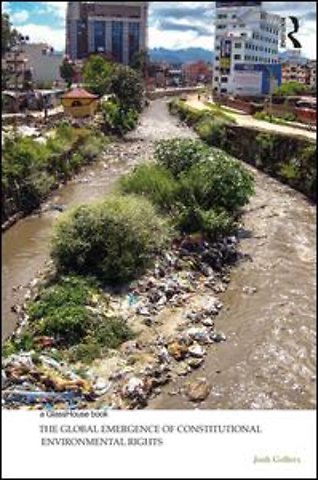
The Global Emergence of Constitutional Environmental Rights
Gebonden EN 2017 9781138696495Samenvatting
Over the past 40 years, countries throughout the world have similarly adopted human rights related to environmental governance and protection in national constitutions. Interestingly, these countries vary widely in terms of geography, politics, history, resources, and wealth. This raises the question: why do some countries have constitutional environmental rights while others do not? Bringing together theory from law, political science, and sociology, a global statistical analysis, and a comparative study of constitutional design in South Asia, Gellers presents a comprehensive response to this important question. Moving beyond normative debates and anecdotal developments in case law, as well as efforts to describe and categorize such rights around the world, this book provides a systematic analysis of the expansion of environmental rights using social science methods and theory. The resulting theoretical framework and empirical evidence offer new insights into how domestic and international factors interact during the constitution drafting process to produce new law that is both locally relevant and globally resonant. Scholars, practitioners, and students of law, political science, and sociology interested in understanding how institutions cope with complex problems like environmental degradation and human rights violations will find this book to be essential reading.
Specificaties
Lezersrecensies





Rubrieken
- advisering
- algemeen management
- coaching en trainen
- communicatie en media
- economie
- financieel management
- inkoop en logistiek
- internet en social media
- it-management / ict
- juridisch
- leiderschap
- marketing
- mens en maatschappij
- non-profit
- ondernemen
- organisatiekunde
- personal finance
- personeelsmanagement
- persoonlijke effectiviteit
- projectmanagement
- psychologie
- reclame en verkoop
- strategisch management
- verandermanagement
- werk en loopbaan