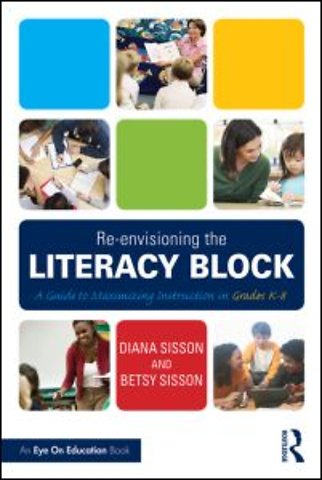
Re-envisioning the Literacy Block
A Guide to Maximizing Instruction in Grades K-8
Paperback Engels 2015 9781138903531Samenvatting
How do you ensure you’re using literacy instruction effectively to meet the needs of all of your students? In this book from Diana and Betsy Sisson, you’ll learn an innovative approach to using the literacy block in a gradual release model that allows you to provide grade-appropriate teaching as well as meaningful, individualized instruction to close the academic gaps of struggling learners and offer accelerated experiences for advanced students.
What’s Inside
·Part I of the book lays out the authors’ framework for the Core Block.
·Part II explains how to use the re-envisioned block to integrate the core components of word study, vocabulary development, strategic reading instruction, writers’ craft, and expanded reading opportunities,,
·Part III reveals how to use differentiation, project-based learning, and assessment to prepare students for new literacy demands.
·The appendix provides literacy block schedules, tools for phonics development and morphology study, and correlations to the Common Core.
Each chapter includes practical tools and examples, as well as "In Action" boxes show how the ideas look in an authentic classroom.
Specificaties
Lezersrecensies
Inhoudsopgave
Meet the Authors
PART I FOUNDATIONS OF LITERACY INSTRUCTION
Chapter 1 Historical Trends in Literacy Instruction
- Brief History of Reading Methodology
- Origins of the Literacy Block and Guided Reading
- Benefits & Challenges of the Literacy Block
Chapter 2 The Core Block
- Gradual Release of Responsibility Instructional Model
- Overview of Components in the Core Block
Whole-Group Instruction
Word Study
Vocabulary
Comprehension and Fluency
- Guided Reading
- Small-Group Application
- The Core Block "In Action"
- Conclusion
PART II COMPONENTS OF THE CORE BLOCK
Chapter 3 Word Study
- Significance of Word Study for Literacy Achievement
- Phonemic Awareness
- Phonics Development
- Morphology
- Word Study "In Action"
- Conclusion
Chapter 4 Vocabulary Development
- Significance of Vocabulary for Literacy Achievement
- Key Principles for Robust Vocabulary Acquisition
- Personalized Vocabulary Study
- Vocabulary APP Centers
- Vocabulary "In Action"
- Conclusion
Chapter 5 Strategic Reading Instruction
- Significance of Comprehension for Literacy Achievement
- Comprehension APP Centers
- Universal Comprehension Strategy Instruction
- Standards-Based Strategy Instruction
- Prescriptive Strategy Instruction
- Integrated Strategy Instruction
- Fluency's Role in Comprehending Text
- Comprehension Strategies "In Action"
- Conclusion
Chapter 6 Writers' Craft
- Significance of Writers' Craft for Literacy Achievement
- The Reading-Writing Connection
- Integrating Writing Instruction in the Classroom
Intentional Planning
Explicit Instruction
Modeled Writing
Shared Writing
Guided Practice
Independent Practice
Targeted Mini-Lessons
Ongoing Conferences
- Writers' Craft "In Action"
- Conclusion
Chapter 7 Expanded Reading Opportunities
- Significance of Expanded Time for Student Reading on Literacy Achievement
- Read Aloud
- Independent Reading
- Book Groups
- Extended Reading Opportunities "In Action"
- Conclusion
PART III ENSURING STUDENT SUCCESS
Chapter 8 Differentiating Instruction
- Individualizing Instruction for Students
- Content
- Process
- Product
- Conclusion
Chapter 9 Project-Based Learning
- What is Project-Based Learning?
- The Power of Project-Based Learning
- Misconceptions About Project-Based Learning
- Obstacles in Implementing Project-Based Learning
- Integration of Projects into Literacy Block
- Suggested PBL Study Topics
- Conclusion
Chapter 10 Assessment
- Attributes of Effective Assessment
Aligned to Instructional Purpose
Reflective of the Learning Process
Flexible to Meet the Needs of Teachers, Students, and the Classroom
Geared to Inform Instruction
Developed as Ongoing Cycle for Teaching and Learning
Screening
Diagnosis
Ongoing Assessment
Outcome Assessment
- Varied Means of Assessment
Anecdotal Records
Constructed-Response Assessments
Developmental Spelling Assessments
Early Literacy Assessments
Essays
Informal Reading Inventories
Objective Tests
Oral Reading Fluency Measures
Oral Retelling
Performance Assessments
Portfolios
Rubrics
Running Records
Self-Assessments
Standardized Tests
- Conclusion
APPENDIX Appendix A - Literacy Block Schedules
Appendix B - Phonics Development
Appendix C - Morphology Study
Appendix D - Common Core Standards
References
Rubrieken
- advisering
- algemeen management
- coaching en trainen
- communicatie en media
- economie
- financieel management
- inkoop en logistiek
- internet en social media
- it-management / ict
- juridisch
- leiderschap
- marketing
- mens en maatschappij
- non-profit
- ondernemen
- organisatiekunde
- personal finance
- personeelsmanagement
- persoonlijke effectiviteit
- projectmanagement
- psychologie
- reclame en verkoop
- strategisch management
- verandermanagement
- werk en loopbaan