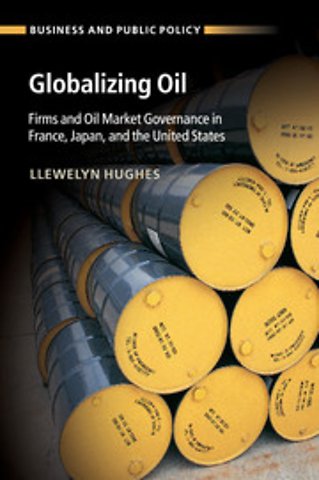
Globalizing Oil
Firms and Oil Market Governance in France, Japan, and the United States
Paperback EN 2016 9781316633052Samenvatting
Oil is the world's most important commodity. It is also one of the most politicized, with national oil companies controlling most of the world's reserves. Contrary to conventional wisdom, Llewelyn Hughes shows that governments across the advanced industrial states responded to the politicization of oil in the 1970s by freeing prices, lowering barriers to trade, and privatizing national oil companies. How did this come about? And why do some governments continue to support domestic firms? In answering these questions, Hughes shows that the politicization of oil also led to a transformation in oil market governance by changing the balance of risk and opportunities facing firms. He also shows that their ability to benefit from this change was conditioned by previous attempts to shape the competitive landscape in their favor. Hughes' study has important implications not only for the politics of oil, but also for the study of economic liberalization.
Specificaties
Lezersrecensies
Rubrieken
- advisering
- algemeen management
- coaching en trainen
- communicatie en media
- economie
- financieel management
- inkoop en logistiek
- internet en social media
- it-management / ict
- juridisch
- leiderschap
- marketing
- mens en maatschappij
- non-profit
- ondernemen
- organisatiekunde
- personal finance
- personeelsmanagement
- persoonlijke effectiviteit
- projectmanagement
- psychologie
- reclame en verkoop
- strategisch management
- verandermanagement
- werk en loopbaan