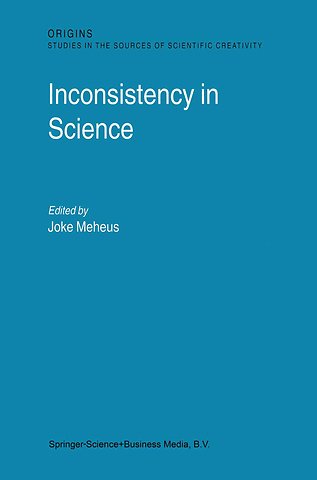
Inconsistency in Science
Gebonden Engels 2002 2002e druk 9781402006302Samenvatting
For centuries, inconsistencies were seen as a hindrance to good reasoning, and their role in the sciences was ignored. In recent years, however, logicians as well as philosophers and historians have showed a growing interest in the matter. Central to this change were the advent of paraconsistent logics, the shift in attention from finished theories to construction processes, and the recognition that most scientific theories were at some point either internally inconsistent or incompatible with other accepted findings. The new interest gave rise to important questions. How is `logical anarchy' avoided? Is it ever rational to accept an inconsistent theory? In what sense, if any, can inconsistent theories be considered as true?
The present collection of papers is the first to deal with this kind of questions. It contains case studies as well as philosophical analyses, and presents an excellent overview of the different approaches in the domain.
Specificaties
Lezersrecensies
Inhoudsopgave
Rubrieken
- advisering
- algemeen management
- coaching en trainen
- communicatie en media
- economie
- financieel management
- inkoop en logistiek
- internet en social media
- it-management / ict
- juridisch
- leiderschap
- marketing
- mens en maatschappij
- non-profit
- ondernemen
- organisatiekunde
- personal finance
- personeelsmanagement
- persoonlijke effectiviteit
- projectmanagement
- psychologie
- reclame en verkoop
- strategisch management
- verandermanagement
- werk en loopbaan