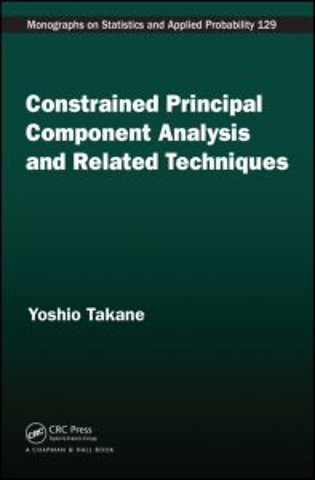
Constrained Principal Component Analysis and Related Techniques
Gebonden EN 2013 9781466556669Samenvatting
In multivariate data analysis, regression techniques predict one set of variables from another while principal component analysis (PCA) finds a subspace of minimal dimensionality that captures the largest variability in the data.
How can regression analysis and PCA be combined in a beneficial way? Why and when is it a good idea to combine them? What kind of benefits are we getting from them?
Addressing these questions, Constrained Principal Component Analysis and Related Techniques shows how constrained PCA (CPCA) offers a unified framework for these approaches.
The book begins with four concrete examples of CPCA that provide readers with a basic understanding of the technique and its applications. It gives a detailed account of two key mathematical ideas in CPCA: projection and singular value decomposition. The author then describes the basic data requirements, models, and analytical tools for CPCA and their immediate extensions. He also introduces techniques that are special cases of or closely related to CPCA and discusses several topics relevant to practical uses of CPCA. The book concludes with a technique that imposes different constraints on different dimensions (DCDD), along with its analytical extensions. MATLAB® programs for CPCA and DCDD as well as data to create the book’s examples are available on the author’s website.
Specificaties
Lezersrecensies
Rubrieken
- advisering
- algemeen management
- coaching en trainen
- communicatie en media
- economie
- financieel management
- inkoop en logistiek
- internet en social media
- it-management / ict
- juridisch
- leiderschap
- marketing
- mens en maatschappij
- non-profit
- ondernemen
- organisatiekunde
- personal finance
- personeelsmanagement
- persoonlijke effectiviteit
- projectmanagement
- psychologie
- reclame en verkoop
- strategisch management
- verandermanagement
- werk en loopbaan