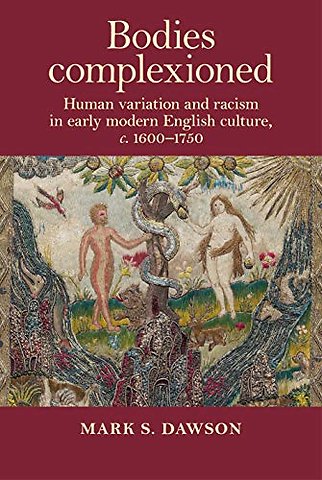
Bodies complexioned
Human variation and racism in early modern English culture, <i>c</i>. 1600-1750
Gebonden EN 2019 9781526134486Samenvatting
Bodily contrasts - from the colour of hair, eyes and skin to the shape of faces and skeletons - allowed the English of the seventeenth and early eighteenth centuries to discriminate systematically among themselves and against non-Anglophone groups. Making use of an array of sources, this book examines how early modern English people understood bodily difference. It demonstrates that individuals' distinctive features were considered innate, even as discrete populations were believed to have characteristics in common, and challenges the idea that the humoral theory of bodily composition was incompatible with visceral inequality or racism. While 'race' had not assumed its modern valence, and 'racial' ideologies were still to come, such typecasting nonetheless had mundane, lasting consequences. Grounded in humoral physiology, and Christian universalism notwithstanding, bodily prejudices inflected social stratification, domestic politics, sectarian division and international relations.
Specificaties
Lezersrecensies
Rubrieken
- advisering
- algemeen management
- coaching en trainen
- communicatie en media
- economie
- financieel management
- inkoop en logistiek
- internet en social media
- it-management / ict
- juridisch
- leiderschap
- marketing
- mens en maatschappij
- non-profit
- ondernemen
- organisatiekunde
- personal finance
- personeelsmanagement
- persoonlijke effectiviteit
- projectmanagement
- psychologie
- reclame en verkoop
- strategisch management
- verandermanagement
- werk en loopbaan