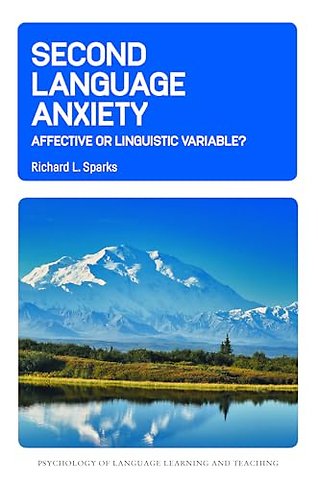
Second Language Anxiety
Affective or Linguistic Variable?
Gebonden EN 2025 9781800418776Samenvatting
This book traces and summarizes theoretical insights and empirical findings on the topic of whether or not anxiety for language learning could be a causal variable for individual differences in language learning. The author brings together three decades of research to show that first language (L1) skills and second language (L2) aptitude are confounding variables in studies of language anxiety and that learners’ levels of anxiety for L2 learning are strongly related to their levels of language achievement. These findings have suggested that language anxiety instruments reflect students’ (accurate) self-perceptions of their language skills and their levels of L1 achievement and L2 aptitude. The research presented in this book holds the potential to change the ways in which L2 educators and researchers think about language anxiety, how language anxiety is assessed, how investigations into language anxiety are conducted and how L2 teachers respond to anxiety in the classroom.
Specificaties
Lezersrecensies
Rubrieken
- advisering
- algemeen management
- coaching en trainen
- communicatie en media
- economie
- financieel management
- inkoop en logistiek
- internet en social media
- it-management / ict
- juridisch
- leiderschap
- marketing
- mens en maatschappij
- non-profit
- ondernemen
- organisatiekunde
- personal finance
- personeelsmanagement
- persoonlijke effectiviteit
- projectmanagement
- psychologie
- reclame en verkoop
- strategisch management
- verandermanagement
- werk en loopbaan