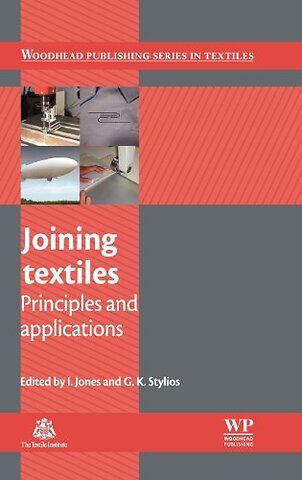
,

Joining Textiles

Principles and Applications

Gebonden Engels 2013 9781845696276
€ 271,00
Levertijd ongeveer 9 werkdagen
Gratis verzonden

Samenvatting

Understanding the techniques for joining fabrics together in a way that considers durability, strength, leak-tightness, comfort in wear and the aesthetics of the joints is critical to the production of successful, structurally secure fabric products. Joining textiles: Principles and applications is an authoritative guide to the key theories and methods used to join fabrics efficiently.Part one provides a clear overview of sewing technology. The mechanics of stitching, sewing and problems related to sewn textiles are discussed, along with mechanisms of sewing machines and intelligent sewing systems. Part two goes on to explore adhesive bonding of textiles, including principles, methods and applications, along with a review of bonding requirements in coating and laminating of textiles. Welding technologies are the focus of part three. Heat sealing, ultrasonic and dielectric textile welding are covered, as are laser seaming of fabrics and the properties and performance of welded or bonded seams. Finally, part four reviews applications of joining textiles such as seams in non-iron shirts and car seat coverings, joining of wearable electronic components and technical textiles, and the joining techniques involved in industrial and medical products including nonwoven materials.With its distinguished editors and international team of expert contributors, Joining textiles is an important reference work for textile product manufacturers, designers and technologists, fibre scientists, textile engineers and academics working in this area.

Specificaties

ISBN13:9781845696276
Taal:Engels
Bindwijze:Gebonden

Lezersrecensies

Wees de eerste die een lezersrecensie schrijft!

Inhoudsopgave

<p>Contributor contact details</p> <p>Woodhead Publishing Series in Textiles</p> <p>Introduction</p> <p>Chapter 1: Types of fabric and their joining requirements</p> <p>Abstract:</p> <p>1.1 Introduction</p> <p>1.2 The main types of natural fibre</p> <p>1.3 Synthetic fibres</p> <p>1.4 High performance fibres</p> <p>1.5 The process of creating fabrics from fibres</p> <p>1.6 Woven fabric structures</p> <p>1.7 Knitted fabric structures</p> <p>1.8 Non-woven fabrics</p> <p>1.9 Joining fabrics: seams and stitches</p> <p>1.10 Stitching in practice: the case of high performance fabrics</p> <p>1.11 Alternative methods of joining fabrics: welded seams</p> <p>1.12 Ultrasonic welding</p> <p>1.13 Conclusions</p> <p>1.14 Acknowledgements</p> <p>Part 1: Sewing technology</p> <p>Chapter 2: The mechanics of stitching</p> <p>Abstract:</p> <p>2.1 Introduction</p> <p>2.2 The principles of stitching</p> <p>2.3 Conclusion</p> <p>2.5 Appendix: nomenclature and notation</p> <p>Chapter 3: The sewing of textiles</p> <p>Abstract:</p> <p>3.1 Introduction</p> <p>3.2 Types of sewing machine</p> <p>3.3 Machine feeding systems</p> <p>3.4 Machine settings and sewing quality</p> <p>3.5 Needle size and point type</p> <p>3.6 Stitch classification and applications</p> <p>3.7 Seam classification and applications</p> <p>3.8 Sewing threads</p> <p>3.9 Seaming quality problems</p> <p>3.10 Seam pucker: causes and prevention</p> <p>3.11 Thread breakage: causes and prevention</p> <p>3.12 Needle breakage</p> <p>3.13 Slipped/missed stitching: causes and prevention</p> <p>3.14 Uneven seams: causes and prevention</p> <p>3.15 Comparing welded and sewn seams</p> <p>3.16 Future trends</p> <p>Chapter 4: Mechanisms of sewing machines</p> <p>Abstract:</p> <p>4.1 Introduction</p> <p>4.2 The evolution of the sewing machine</p> <p>4.3 Machine categorisation</p> <p>4.4 Integrated stitching unit (ISU)</p> <p>4.5 Types of motors used in sewing machines</p> <p>4.6 Three-thread overlock with a microprocessor</p> <p>4.7 Mechanised sewing machines</p> <p>4.8 Semi-automatic machines, automated workstations and transfer lines</p> <p>4.9 Advantages and limitations of machine automation</p> <p>4.10 Computer numerical control (CNC)</p> <p>4.11 Achieving fully automated apparel manufacture through the application of robotics</p> <p>4.12 Conclusion</p> <p>4.13 Sources of further information and advice</p> <p>Chapter 5: Problems relating to sewing</p> <p>Abstract:</p> <p>5.1 Introduction</p> <p>5.2 Seam elasticity</p> <p>5.3 Seam failure</p> <p>5.4 Seam problems related to material feeding</p> <p>5.5 Problems in stitch formation</p> <p>5.6 Seam pucker and other surface distortions</p> <p>5.7 Future trends</p> <p>5.8 Sources of further information and advice</p> <p>Chapter 6: The quality and performance of sewn seams</p> <p>Abstract:</p> <p>6.1 Introduction</p> <p>6.2 Seam strength</p> <p>6.3 Seam extensibility and recovery</p> <p>6.4 Seam puckering</p> <p>6.5 Seam slippage</p> <p>6.6 Drape and bending</p> <p>6.7 Seam grinning/gaping</p> <p>6.8 Barrier properties of seams</p> <p>6.9 Flame retardancy of seams</p> <p>6.10 Degradation/damage of seams</p> <p>6.11 Sources of further information and advice</p> <p>Chapter 7: Intelligent sewing systems for garment automation and robotics</p> <p>Abstract:</p> <p>7.1 Introduction</p> <p>7.2 Developments in the automation of sewing</p> <p>7.3 Operational principles of the intelligent sewability environment (ISE)</p> <p>7.4 Conclusions</p> <p>Part II: Adhesive bonding of textiles</p> <p>Chapter 8: Adhesive bonding of textiles: principles, types of adhesive and methods of use</p> <p>Abstract:</p> <p>8.1 Introduction to adhesives in the textile industry</p> <p>8.2 Reasons for the success and failure of adhesives</p> <p>8.3 Classification of adhesives used in textile applications</p> <p>8.4 Bonding processes</p> <p>8.5 Trends in adhesive types</p> <p>Chapter 9: Adhesive bonding of textiles: applications</p> <p>Abstract:</p> <p>9.1 Introduction: textiles and adhesive joining</p> <p>9.2 Adhesives and adhesive applications</p> <p>9.3 Properties achieved by adhesive joining</p> <p>9.4 Examples of adhesive use</p> <p>9.5 Future trends</p> <p>9.6 Acknowledgements</p> <p>Chapter 10: Bonding requirements in coating and laminating of textiles</p> <p>Abstract:</p> <p>10.1 Introduction</p> <p>10.2 Materials and adhesives in coating and laminating</p> <p>10.3 Coating process</p> <p>10.4 Laminating process</p> <p>10.5 Properties and applications of coated and laminated fabrics</p> <p>10.6 Conclusion</p> <p>Part III: Welding technologies</p> <p>Chapter 11: The use of heat sealing, hot air and hot wedge to join textile materials</p> <p>Abstract:</p> <p>11.1 Heat sealing of textiles: introduction</p> <p>11.2 Equipment for heat sealing</p> <p>11.3 Factors affecting the quality of heat sealing</p> <p>11.4 Applications of heat sealing in textiles</p> <p>11.5 Hot air wedge and hot wedge welding of textiles: introduction</p> <p>11.6 Equipment for hot air/wedge welding</p> <p>11.7 Factors affecting the quality of hot air/wedge welding</p> <p>11.8 Applications of hot air/wedge welding in textiles</p> <p>Chapter 12: Ultrasonic and dielectric welding of textiles</p> <p>Abstract:</p> <p>12.1 Ultrasonic welding: an introduction</p> <p>12.2 Equipment for ultrasonic welding</p> <p>12.3 Factors affecting the quality of ultrasonic welding</p> <p>12.4 Applications of ultrasonic welding in textiles</p> <p>12.5 Dielectric welding: an introduction</p> <p>12.6 Equipment for dielectric welding</p> <p>12.7 Factors affecting the quality of dielectric welding</p> <p>12.8 Applications of dielectric welding</p> <p>Chapter 13: Laser seaming of fabrics</p> <p>Abstract:</p> <p>13.1 Introduction</p> <p>13.2 The laser welding process</p> <p>13.3 The main processing parameters in laser welding and their effects</p> <p>13.4 Equipment in laser welding</p> <p>13.5 Textile materials that can be laser welded</p> <p>13.6 Joint designs in laser welding</p> <p>13.7 Monitoring and quality control in laser welding</p> <p>13.8 Comparison between stitched and laser welded seams</p> <p>13.9 Applications of laser welding</p> <p>13.10 Future trends</p> <p>Chapter 14: Properties and performance of welded or bonded seams</p> <p>Abstract:</p> <p>14.1 Introduction</p> <p>14.2 Performance properties of seams</p> <p>14.3 Quality evaluation of welded or bonded seams</p> <p>14.4 Conclusion</p> <p>Part IV: Applications of joining textiles</p> <p>Chapter 15: The appearance of seams in non-iron shirts</p> <p>Abstract:</p> <p>15.1 Introduction</p> <p>15.2 Wrinkle-free fabrics</p> <p>15.3 Non-iron shirts and seam pucker</p> <p>15.4 Interlinings as sewing aids</p> <p>15.5 The stitching of non-iron shirts</p> <p>15.6 Discussion and conclusion</p> <p>15.7 Acknowledgements</p> <p>15.8 Appendix: key terms and definitions</p> <p>Chapter 16: Seams in car seat coverings: properties and performance</p> <p>Abstract:</p> <p>16.1 Introduction</p> <p>16.2 Materials and machines for sewing car seat covers</p> <p>16.3 Influence of the seam on materials for making car seat covers</p> <p>16.4 Seaming problems in car seat covers and their solution</p> <p>16.5 Future trends</p> <p>16.6 Conclusions</p> <p>16.7 Acknowledgement</p> <p>Chapter 17: Joining of wearable electronic components</p> <p>Abstract:</p> <p>17.1 Introduction</p> <p>17.2 Conducting fibres</p> <p>17.3 Conducting yarns</p> <p>17.4 Fabrics and composites</p> <p>17.5 Connecting technologies</p> <p>17.6 Requirements of electronic interconnects</p> <p>17.7 Applications</p> <p>17.8 Future trends</p> <p>17.9 Sources of further information and advice</p> <p>17.10 Acknowledgements</p> <p>Chapter 18: Joining of technical textiles with stringent seam demands</p> <p>Abstract:</p> <p>18.1 Introduction</p> <p>18.2 Joining techniques for textiles with stringent seam demands</p> <p>18.3 Applications of stringent seams in technical textiles</p> <p>18.4 Future trends</p> <p>18.5 Sources of further information and advice</p> <p>18.6 Acknowledgement</p> <p>Chapter 19: Nonwoven materials and joining techniques</p> <p>Abstract:</p> <p>19.1 Introduction</p> <p>19.2 Principles of nonwovens</p> <p>19.3 Raw materials</p> <p>19.4 Web formation technology</p> <p>19.5 Web bonding technology</p> <p>19.6 Nonwoven fabric finishing</p> <p>19.7 Techniques for joining nonwoven materials</p> <p>19.8 Future trends in the nonwoven market</p> <p>19.9 Acknowledgements</p> <p>Chapter 20: Epilogue: joining textiles</p> <p>Index</p>

Managementboek Top 100

€ 271,00
Levertijd ongeveer 9 werkdagen
Gratis verzonden

Rubrieken

    Personen

      Trefwoorden

        Joining Textiles