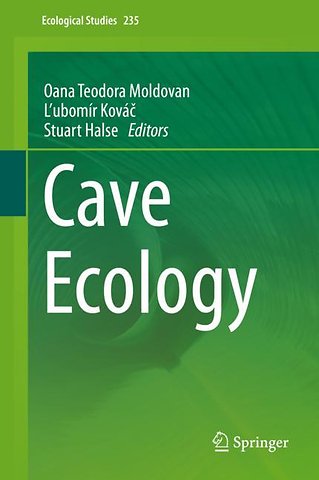
Cave Ecology
Gebonden Engels 2019 9783319988504Samenvatting
Cave organisms are the ‘monsters’ of the underground world and studying them invariably raises interesting questions about the ways evolution has equipped them to survive in permanent darkness and low-energy environments. Undertaking ecological studies in caves and other subterranean habitats is not only challenging because they are difficult to access, but also because the domain is so different from what we know from the surface, with no plants at the base of food chains and with a nearly constant microclimate year-round.
The research presented here answers key questions such as how a constant environment can produce the enormous biodiversity seen below ground, what adaptations and peculiarities allow subterranean organisms to thrive, and how they are affected by the constraints of their environment. This book is divided into six main parts, which address: the habitats of cave animals; their complex diversity; the environmental factors that support that diversity; individual case studies of cave ecosystems; and of the conservation challenges they face; all of which culminate in proposals for future research directions. Given its breadth of coverage, it offers an essential reference guide for graduate students and established researchers alike.
Specificaties
Lezersrecensies
Inhoudsopgave
Rubrieken
- advisering
- algemeen management
- coaching en trainen
- communicatie en media
- economie
- financieel management
- inkoop en logistiek
- internet en social media
- it-management / ict
- juridisch
- leiderschap
- marketing
- mens en maatschappij
- non-profit
- ondernemen
- organisatiekunde
- personal finance
- personeelsmanagement
- persoonlijke effectiviteit
- projectmanagement
- psychologie
- reclame en verkoop
- strategisch management
- verandermanagement
- werk en loopbaan