Samenvatting
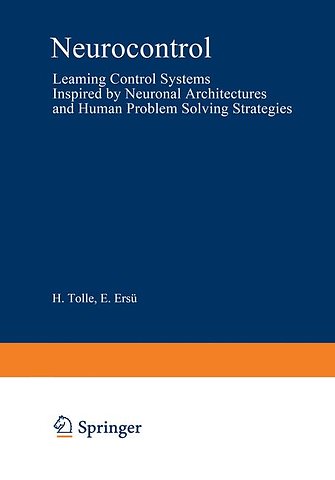
Since heavily non-linear and/or very complex processes still
pose a problem for automatic control, they can often be
handled easily by human operators. The book describes re-
sults from ten years of research on learning control loops,
which imitate these abilities. After discussing the diffe-
rencesto adaptive control some background on human informa-
tion processing and behaviour is put forward and some lear-
ning control loop structure related to these ideas is shown.
The ability to learn is due to memories, which are able to
interpolate for multi-dimensional input spaces between scat-
tered output values. A neuronally and mathematically inspi-
red memory lay out-are compared and it is shown that they
learn much faster thanbackpropagation neural networks,
which can also be used. For the learning control loop diffe-
rent architectures are given. Their usefulness is demonstra-
ted by simulation and results from applications to real pi-
lot plants. The book should be of interest for control engi-
neers as well as researchers in neural net applications
and/or artificial intelligence. The usual mathematical back-
ground of engineers is sufficient.
Specificaties
Lezersrecensies
Rubrieken
- advisering
- algemeen management
- coaching en trainen
- communicatie en media
- economie
- financieel management
- inkoop en logistiek
- internet en social media
- it-management / ict
- juridisch
- leiderschap
- marketing
- mens en maatschappij
- non-profit
- ondernemen
- organisatiekunde
- personal finance
- personeelsmanagement
- persoonlijke effectiviteit
- projectmanagement
- psychologie
- reclame en verkoop
- strategisch management
- verandermanagement
- werk en loopbaan