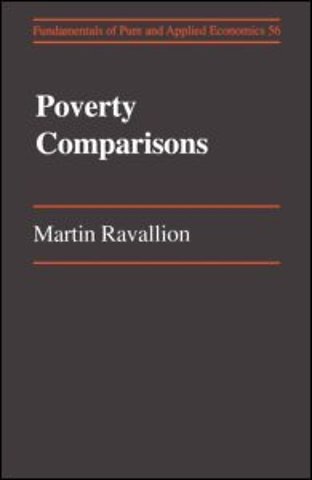
Poverty Comparisons
Paperback Engels 1994 1e druk 9783718654024Samenvatting
First published in 1994. Drawing on a personal network, an economist can still relatively easily stay well informed in the narrow field in which he works, but to keep up with the development of economics as a whole is a much more formidable challenge. Economics are confronted with difficulties associated with the rapid development of their discipline. There is a risk of ‘balkanization’ in economics, which may not be favorable to its development. Fundamentals of Pure and Applied Economics has been created to meet this problem. Poverty comparisons — such as assessments of whether poverty has increased, or where it is greatest — are typically clouded in conceptual and methodological uncertainties. How should individual4 well-being’ be assessed in deciding who is poor? Is a household survey a reliable guide? Where should the poverty line be drawn, and does the choice matter? What poverty measure should be used in aggregating data on individual well-being? Does that choice matter? This monograph surveys the issues that need to be considered in answering these questions.
Specificaties
Lezersrecensies



Rubrieken
- advisering
- algemeen management
- coaching en trainen
- communicatie en media
- economie
- financieel management
- inkoop en logistiek
- internet en social media
- it-management / ict
- juridisch
- leiderschap
- marketing
- mens en maatschappij
- non-profit
- ondernemen
- organisatiekunde
- personal finance
- personeelsmanagement
- persoonlijke effectiviteit
- projectmanagement
- psychologie
- reclame en verkoop
- strategisch management
- verandermanagement
- werk en loopbaan