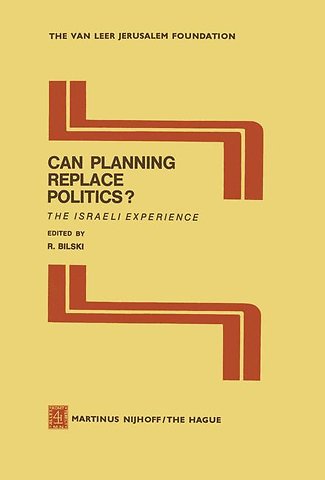
Can Planning Replace Politics?
The Israeli Experience
Paperback Engels 2011 9789400988590Samenvatting
Much hope has been placed in the potential of planning to solve social and economic problems. In the East ~nd the West, in devel oped and less-developed countries, planning has become widespread. It has been praised and ridiculed, used and misused, both as a catch word for a better future and as a scapegoat for bitter failure. Plan ning has been interpreted differently by every society, giving rise to a wide range of styles and approaches. Fascination with the phenom enon has yielded a variety of definitions of planning, each of them influenced by the actual problems facing the planners on the one hand, and by the imagination, ideology and aspirations of the theo rists on the other. However, the variety of approaches and definitions has almost obscured the phenomenon itself and blurred its specific meaning. This fact, coupled with disappointment with the practical achievements of plannings, has created much criticism of the social and political value of planning in the West. In this volume we do not intend to answer the question whether planning in Western countries has been successful, nor to suggest specific ways of improving it. We shall limit ourselves to presenting a case study of national planning in one country. The title of this book suggests that the crucial question regarding planning efforts in Israel and perhaps in other countries is the tension between images of planning processes (systematic, comprehensive, structured, etc. ) and political processes (improvised, fragmented, diffused, etc. ).
Specificaties
Lezersrecensies
Rubrieken
- advisering
- algemeen management
- coaching en trainen
- communicatie en media
- economie
- financieel management
- inkoop en logistiek
- internet en social media
- it-management / ict
- juridisch
- leiderschap
- marketing
- mens en maatschappij
- non-profit
- ondernemen
- organisatiekunde
- personal finance
- personeelsmanagement
- persoonlijke effectiviteit
- projectmanagement
- psychologie
- reclame en verkoop
- strategisch management
- verandermanagement
- werk en loopbaan