Samenvatting
How to use the toolkit
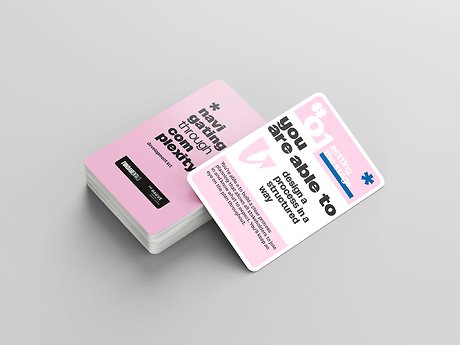
Use the kit for self, peer, or team evaluations. Simply rank the level of the skill described on the card from 1 to 5 (1 = novice, 5 = expert) and note this on the canvas at the corresponding number. This process highlights strengths and areas for improvement and collaboration in navigating complex transition challenges.
As self-evaluation, you can fill this in yourself. For peer-assessment ask stakeholders that have seen you work closely. For team-assessment it's relevant to look for complementary skills in the team; it's okay if the individual doesn't strongly cover all stages, but is it sufficiently covered in the team?
The four stages of navigating
The navigator compass shows four different phases a facilitator meets in transition challenges
Setting the stage: Focuses on creating the best physical and social environment to work in. Mastery in this phase ensures a great start to any collaboration.
Holding the space: These skills foster a sense of safety and value which are crucial for co-creation. They help build a collaborative mindset among participants.
Navigating the process: This phase is where most efforts go, involving guiding and steering a group of people through complex processes. Mastery here means knowing the right steps to take.
Making impact Aims to ensure positive influence with a lasting effect on the world by creating and safeguarding the urgency and relevance of the project purpose.
Specificaties
Lezersrecensies
Anderen kochten ook
 Daniël Wolfs€ 24,75
 Taco Oosterkamp€ 20,95
 Hans Vermaak€ 27,25
 Maaike Thiecke€ 24,99
 Chantalle Weemaes€ 22,95
 Maaike Thiecke€ 19,99
Rubrieken
- advisering
- algemeen management
- coaching en trainen
- communicatie en media
- economie
- financieel management
- inkoop en logistiek
- internet en social media
- it-management / ict
- juridisch
- leiderschap
- marketing
- mens en maatschappij
- non-profit
- ondernemen
- organisatiekunde
- personal finance
- personeelsmanagement
- persoonlijke effectiviteit
- projectmanagement
- psychologie
- reclame en verkoop
- strategisch management
- verandermanagement
- werk en loopbaan