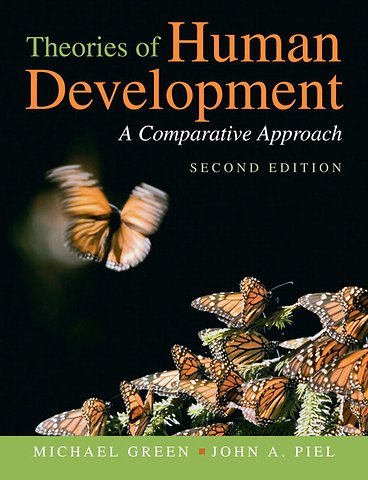
Theories of Human Development
A Comparative Approach
Paperback Engels 2009 2e druk 9780205665686Samenvatting
The authors have grouped the theories into three classical "families" which differ in their views relative to the prime motives underlying human nature. They show how theories are specific examples of more general points of view called paradigms. The theories chosen to represent the three paradigms (the Endogenous Paradigm, Exogenous Paradigm, and the Constructivist Paradigm) were selected because they met four criteria:
importance, as judged by academic and research psychologists
fertility, as judged by the amount of research the theory has generated
scope, as judged by the variety of phenomena the various theories explain
family resemblance, as judged by how well each theory represents its paradigm
The authors present the "paradigm case" in the lead chapter for each paradigm. This paradigm case is the "best example" for the paradigm. The authors explain why paradigm cases are important, and give them more detailed treatment than other theories in the same paradigm.
Specificaties
Lezersrecensies



Rubrieken
- advisering
- algemeen management
- coaching en trainen
- communicatie en media
- economie
- financieel management
- inkoop en logistiek
- internet en social media
- it-management / ict
- juridisch
- leiderschap
- marketing
- mens en maatschappij
- non-profit
- ondernemen
- organisatiekunde
- personal finance
- personeelsmanagement
- persoonlijke effectiviteit
- projectmanagement
- psychologie
- reclame en verkoop
- strategisch management
- verandermanagement
- werk en loopbaan