
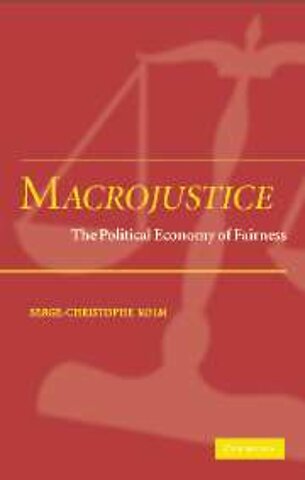
Macrojustice
The Political Economy of Fairness
Gebonden Engels 2004 9780521835039Samenvatting
The main features of the just society, as they would be chosen by the unanimous, impartial, and fully informed judgment of its members, present a remarkable and simple meaningful structure. In this society, individuals' freedom is fully respected, and overall redistribution amounts to an equal sharing of individuals' different earnings obtained by the same limited 'equalization labour'. The concept of equalization labour is a measure of the degree of community, solidarity, reciprocity, redistribution, and equalization of the society under consideration. It is determined by a number of methods presented in this study, which also emphasizes the rationality, meanings, properties, and ways of practical implementation of this optimum distribution. This result is compared with the various distributive principles found in practice and in political, philosophical, and economic thinking, with the conclusion that most have their proper specific scope of application. The analytical presentation of the social ethics of economics is particularly enlightening.
Specificaties
Lezersrecensies
Inhoudsopgave
Rubrieken
- advisering
- algemeen management
- coaching en trainen
- communicatie en media
- economie
- financieel management
- inkoop en logistiek
- internet en social media
- it-management / ict
- juridisch
- leiderschap
- marketing
- mens en maatschappij
- non-profit
- ondernemen
- organisatiekunde
- personal finance
- personeelsmanagement
- persoonlijke effectiviteit
- projectmanagement
- psychologie
- reclame en verkoop
- strategisch management
- verandermanagement
- werk en loopbaan