
,

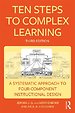
Ten Steps to Complex Learning

A Systematic Approach to Four-Component Instructional Design

Paperback Engels 2017 3e druk 9781138080805
Niet leverbaar.

Samenvatting

Ten Steps to Complex Learning presents a path from an educational problem to a solution in a way that students, practitioners, and researchers can understand and easily use. Students in the field of instructional design can use this book to broaden their knowledge of the design of training programs for complex learning. Practitioners can use this book as a reference guide to support their design of courses, curricula, or environments for complex learning.

Now fully revised to incorporate the most current research in the field, this third edition of Ten Steps to Complex Learning includes many references to recent research as well as two new chapters. One new chapter deals with the training of 21st-century skills in educational programs based on the Ten Steps. The other deals with the design of assessment programs that are fully aligned with the Ten Steps. In the closing chapter, new directions for the further development of the Ten Steps are discussed.

Specificaties

ISBN13:9781138080805
Taal:Engels
Bindwijze:paperback
Aantal pagina's:400
Uitgever:Routledge
Druk:3
Verschijningsdatum:20-9-2023

Lezersrecensies

Wees de eerste die een lezersrecensie schrijft!

Over Jeroen van Merrienboer

Jeroen van Merrienboer is full professsor of Learning and Instruction at Maastricht University and Research Director of the School of Health Professions Education (SHE). He specializes in instructional design for the health professions and most of his research is related to cognitive load theory or four-component instructional design (4C/ID). Jeroen published more than 350 journal articles and book chapters and he received numerous international awards and prizes for his research.

Andere boeken door Jeroen van Merrienboer

Paul Kirschner

Over Paul Kirschner

Paul Kirschner is emeritus hoogleraar Onderwijspsychologie aan de Open Universiteit, gasthoogleraar aan de Thomas More Hogeschool in België en eigenaar van kirschner-ED, een onderwijswetenschappelijk adviesbureau. 

Andere boeken door Paul Kirschner

Inhoudsopgave

About the Authors
Preface
Acknowledgements

1 A NEW APPROACH TO INSTRUCTION
1.1 Complex Learning
1.2 A Holistic Design Approach
1.3 Four Components and Ten Steps

2 FOUR BLUEPRINT COMPONENTS
2.1 Training Blueprints
2.2 Preventing Compartmentalization
2.3 Avoiding Fragmentation
2.4 Dealing with the Transfer Paradox
2.5 Individualized Instruction
2.6 Media for the Four Components
2.7 Summary

3 TEN STEPS
3.1 Ten Design Activities
3.2 System Dynamics
3.3 The Pebble-in-the-Pond: From Activities to Steps
3.4 Ten Steps within an ISD Context
3.5 Summary

4 STEP 1: DESIGN LEARNING TASKS
4.1 Real-Life Tasks
4.2 Real and Simulated Task Environments
4.3 Variability of Practice
4.4 Learner Support and Guidance
4.5 Built-in Task Support
4.6 Problem-Solving Guidance
4.7 Scaffolding Support and Guidance
4.8 Summary of Guidelines

5 STEP 2: DESIGN PERFORMANCE ASSESSMENTS
5.1 Skill Decomposition
5.2 Formulating Performance Objectives
5.3 Classifying Performance Objectives
5.4 Performance Assessments
5.5 Summary of Guidelines

6 STEP 3: SEQUENCE LEARNING TASKS
6.1 Whole-Task Sequencing of Learning Tasks
6.2 Task Classes and Learner Support
6.3 Part-Task Sequencing of Learning Tasks
6.4 Individualized Learning Trajectories
6.5 Summary of Guidelines

7 STEP 4: DESIGN SUPPORTIVE INFORMATION
7.1 Providing SAPs and Domain Models
7.2 Illustrating SAPs and Domain Models
7.3 Strategies for Presenting Supportive Information
7.4 Cognitive Feedback
7.5 Media for Supportive Information
7.6 Supportive Information in the Training Blueprint
7.7 Summary of Guidelines

8 STEP 5: ANALYZE COGNITIVE STRATEGIES
8.1 Specify SAPs
8.2 Analyzing Intuitive Cognitive Strategies
8.3 Using SAPs to Make Design Decisions
8.4 Summary of Guidelines
Afgekapt op 63 regels

Managementboek Top 100

Rubrieken

Producten

    Auteurs

      Trefwoorden

        Artikelen

          Ten Steps to Complex Learning