Op werkdagen voor 23:00 besteld, morgen in huis Gratis verzending vanaf €20
-
Inloggen

Uw winkelwagen

Naar winkelwagen Verder winkelen
Uitdagingen + oplossingen
Alle uitdagingen + oplossingen
  • Direct naar
    • Alle uitdagingen en oplossingen
    • Meest bekeken managementvragen
    • Recent gestelde vragen
    • Stel jouw managementvraag
    • Boeken als cadeau
  • Ontdek oplossingen per thema
    • Boekadviezen en geschenken
    • Digitalisering en technologie
    • Communicatie en onderhandeling
    • Compliance en regelgeving
    • alle thema’s
  • Voorbeelden
    • Boekcadeau voor promotie
    • AI toepassen op werk
    • Versterken interne communicatie
    • Voorkomen corruptie en onethisch gedrag
    • alle vragen
Managementboeken
Alle managementboeken
  • Direct naar
    • Boeken als cadeau
    • Managementboek TOP 100
    • AI-books
    • Managementuitdagingen
    • Auteur in de spotlight
    • Online Magazine
    • Binnenkort verwacht
    • Aanbiedingen
    • Trending trefwoorden
  • Rubrieken
    • Advisering
    • Algemeen management
    • Coaching en trainen
    • Communicatie en media
    • Economie
    • Financieel management
    • Inkoop en logistiek
    • Internet en social media
    • IT-management / ICT
    • Juridisch
    • Leiderschap
    • Marketing
    • Mens en maatschappij
    • Non-profit
    • Ondernemen
    • Organisatiekunde
    • Personal finance
    • Personeelsmanagement
    • Persoonlijke effectiviteit
    • Projectmanagement
    • Psychologie
    • Reclame en verkoop
    • Strategisch management
    • Verandermanagement
    • Werk en loopbaan
    • alle rubrieken
Overige boeken
Alle overige boeken
  • Direct naar
    • Bestseller 60
    • Fictie TOP 20
    • Non-fictie TOP 20
    • Spanning TOP 20
    • Jeugd TOP 10
    • Culinair TOP 10
    • Aanbiedingen
    • Boeken als cadeau
  • Rubrieken
    • Cadeauboeken
    • Computer en informatica
    • Economie
    • Filosofie
    • Flora en fauna
    • Geneeskunde
    • Geschiedenis
    • Gezondheid
    • Informatief / professioneel
    • Jeugd
    • Juridisch
    • Koken en eten
    • Kunst en cultuur
    • Literatuur en romans
    • Mens en maatschappij
    • Naslagwerken
    • Paramedisch
    • Psychologie
    • Reizen
    • Religie
    • Schoolboeken
    • Spiritualiteit
    • Sport, hobby, lifestyle
    • Thrillers en spanning
    • Wetenschap en techniek
    • Woordenboeken en taal
Interactief leren
Alle seminars & trainingen
  • Direct naar
    • Live events
    • Online training
    • AI-books
  • Online Magazine
    • Previews
    • Recensies
    • Interviews
    • Podcasts
    • Videos
  • Volg ons op
    • Spotify
    • YouTube
    • Instagram
    • Linkedin
Attenderingen
Aanbevelingen instellen
  • Algemeen
    • Recht op u af
    • Juridisch
    • Expertselectie juridisch
    • Series
    • Herdrukken
    • Wetenschappelijk
  • Aanbevolen per ministerie
    • Algemene Zaken
    • Binnenlandse Zaken en Koninkrijksrelaties
    • Buitenlandse Zaken
    • Defensie
    • Economische Zaken
    • Financiën
    • Infrastructuur en Waterstaat
    • Justitie en Veiligheid
    • Landbouw, Visserij, Voedselzekerheid en Natuur
    • Onderwijs, Cultuur en Wetenschap
    • Nationale Politie
    • Sociale Zaken en Werkgelegenheid
    • Volksgezondheid, Welzijn en Sport
Abonnementen
Abonnementencatalogus
  • Algemeen
    • Uw abonnementen
    • Verlengen / opzeggen
    • Openstaande claims
    • Bibliografische wijzigingen
    • Abonnementshouders
    • Afleveradressen
    • Referenties
    • Notities
  • Aanbevolen per ministerie
    • Algemene Zaken
    • Binnenlandse Zaken en Koninkrijksrelaties
    • Buitenlandse Zaken
    • Defensie
    • Economische Zaken
    • Financiën
    • Infrastructuur en Waterstaat
    • Justitie en Veiligheid
    • Landbouw, Visserij, Voedselzekerheid en Natuur
    • Onderwijs, Cultuur en Wetenschap
    • Nationale Politie
    • Sociale Zaken en Werkgelegenheid
    • Volksgezondheid, Welzijn en Sport
Boekseries
Boekseriecatalogus
  • Algemeen
    • Uw serieabonnementen
    • Geadresseerden
    • Abonnementshouders
    • Afleveradressen
    • Referenties
    • Notities
  • Aanbevolen per ministerie
    • Algemene Zaken
    • Binnenlandse Zaken en Koninkrijksrelaties
    • Buitenlandse Zaken
    • Defensie
    • Economische Zaken
    • Financiën
    • Infrastructuur en Waterstaat
    • Justitie en Veiligheid
    • Landbouw, Visserij, Voedselzekerheid en Natuur
    • Onderwijs, Cultuur en Wetenschap
    • Nationale Politie
    • Sociale Zaken en Werkgelegenheid
    • Volksgezondheid, Welzijn en Sport
Nu lezen
Online Magazine
  • Direct naar
    • Recensies
    • Interviews
    • Previews
    • Opinie
    • Actueel
    • Podcasts
    • Videos
  • Lees over
    • Algemeen management
    • Coachen en trainen
    • Leiderschap
    • Marketing
    • Organisatiekunde
    • Strategisch management
    • Verandermanagement
    • meer onderwerpen
  • Recente artikelen
Meer
  • Meer
    010-4731397
    Klantenservice
    Mijn account
    Mijn bestellingen
    010-4731397
    Boeken Juridisch Juvenile Delinquency and Rehabilitation
    Juvenile Delinquency and Rehabilitation
    Juvenile Delinquency and Rehabilitation
    Juvenile Delinquency and Rehabilitation
    Colinda Serie

    Colinda M.B. Serie holds a Master’s degree in ‘Forensic Psychology’ and in ‘Psychology & Law’, both obtained ‘cum laude’ in 2014 at Maastricht University (NL). In 2022 she obtained a double doctorate degree in Criminology and Psychology from the Catholic University Leuven (BE) and Maastricht University (NL).

    Meer over Colinda Serie
    Colinda Serie

    Juvenile Delinquency and Rehabilitation

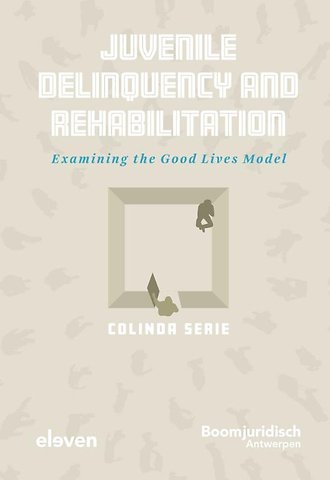
    Examining the Good Lives Model

    Gebonden Engels 2023 1e druk 9789462364257
    € 118,50
    In winkelwagen
    Levertijd ± 6 werkdagen
    Gratis verzonden

    Samenvatting

    The Good Lives Model is an upcoming theoretical rehabilitation framework that is used increasingly in juvenile offender rehabilitation. This book provides in-depth knowledge about the Good Lives Model, its underlying theories, and how it differs from traditional rehabilitation methods. Furthermore it helps to gain a better understanding of the underlying causes of criminal behavior in juveniles, and the challenges they face in reintegrating into society. It combines state-of-the art theoretical literature reviews with both qualitative and quantitative scientific research methods to comprehensively assess the applicability of the Good Lives Model with adolescents.

    Juvenile Delinquency and Rehabilitation is a valuable book for professionals and researchers working in or studying the field of juvenile justice and youth care.

    Trefwoorden

    rehabilitatiepsychologiejeugdcriminaliteitwelzijnrecidivegeestelijke gezondheidcriminologiejeugdzorggeestelijke gezondheidcriminologiejeugdzorg
    rehabilitatiejeugdcriminaliteitpsychologiewelzijnrecidivegeestelijke gezondheidjeugdzorgcriminologiegeestelijke gezondheidjeugdzorgcriminologie

    Specificaties

    ISBN13:9789462364257
    Taal:Engels
    Bindwijze:gebonden
    Aantal pagina's:425
    Uitgever:Eleven International Publishing
    Druk:1
    Verschijningsdatum:2-6-2023
    Hoofdrubriek:Juridisch
    Jongbloed:Strafrecht - Jeugdstrafrecht
    Thema:
    JKVQ1 Rehabilitatie van daders
    JKVQ2 Jeugdige daders
    LNFQ Jeugdstrafrecht

    Lezersrecensies

    Wees de eerste die een lezersrecensie schrijft!
    Schrijf een recensie
    Lees ons recensiebeleid
    Uw waardering
    ?
    Log in om uw waardering te geven
    Klik om uw waardering te geven

    Over Colinda Serie

    Colinda M.B. Serie holds a Master’s degree in ‘Forensic Psychology’ and in ‘Psychology & Law’, both obtained ‘cum laude’ in 2014 at Maastricht University (NL). In 2022 she obtained a double doctorate degree in Criminology and Psychology from the Catholic University Leuven (BE) and Maastricht University (NL). She now works in closed residential youth care and a small-scale juvenile justice institution as a treatment coordinator.

    Andere boeken door Colinda Serie

    Meer over Colinda Serie

    Inhoudsopgave

    Preface xiv
    Abbreviations xvii

    1 Introduction 1
    1.1 Reducing Risk or Increasing Well-being? 1
    1.2 A Risk-focused Approach: The Risk Need Responsivity Model 3
    1.3 A Strengths-based Approach: The Good Lives Model of Offender Rehabilitation 6
    1.4 Aim 9
    1.5 Overview 10

    2 The Risk Need Responsivity Model vs. The Good Lives Model 13
    Similarities and Differences
    2.1 Similarities and Differences Between the Two Rehabilitation Models 13
    2.1.1 Offender Rehabilitation: What Works According to Whom? 13
    2.1.2 Goods to Pursue and/or Risks to Avoid? 15
    2.1.3 Explaining Criminal Conduct: Two Sides of the Same Coin? 20
    2.2 Bridging the Gap 22
    2.2.1 The Potential Bridge Between Risk-focused and Welfare-focused Rehabilitation Approaches 22
    2.2.2 The Potential Additional Value of the GLM: Treatment Motivation and Engagement 25
    2.3 Moving Forward: To an Integrative Approach in (Juvenile) Offender Rehabilitation 28

    3 Theoretical and Empirical Background of GLM’s First Etiological Assumption 31
    Associations Between Primary Goods and Well-being
    3.1 What is a Good Life? 31
    3.1.1 Well-being Approaches 32
    3.1.2 The Good Life According to the GLM 34
    3.1.3 Goal-directed Human Nature 36
    3.2 The Development of the GLM Primary Goods 37
    3.3 Theories Underlying the GLM Primary Goods 39
    3.3.1 Self-Determination Theory (SDT) 39
    3.3.2 Psychological Theories 40
    3.3.3 Philosophical Theories 41
    3.4 Good Lives: Social, Cultural and Personal Differences 43
    3.4.1 Secondary Goods 45
    3.5 Empirical Evidence Supporting the GLM’s Primary Goods 46
    3.5.1 Life 47
    3.5.2 Knowledge 48
    3.5.3 Excellence in Work 48
    3.5.4 Excellence in Play 49
    3.5.5 Excellence in Agency 49
    3.5.6 Inner Peace 50
    3.5.7 Relatedness 51
    3.5.8 Community 51
    3.5.9 Spirituality 52
    3.5.10 Creativity 52
    3.5.11 Pleasure 52
    3.6 Possible Problems 53
    3.6.1 Lack of Capacities and Scope 53
    3.6.2 Inappropriate Means and Lack of Coherence 55
    3.7 Conclusion 57

    4 Different Phase, Different Needs? 59
    Associations Between Primary Goods and Overall Subjective Well-Being in Adolescents: A Systematic Multi-Level Meta-analysis
    4.1 Method 60
    4.1.1 Included and Excluded Well-being Measures 60
    4.1.2 Included and Excluded Primary Goods Proxy-measures 61
    4.1.3 Search Strategy and Selection 61
    4.1.4 Data-analysis 65
    4.2 Results 67
    4.2.1 Primary Goods in Relation to Adolescents’ Well-being 68
    4.2.2 Primary Goods Under-represented in the Research Literature 70
    4.3 Discussion 72
    4.3.1 Psychological Needs: Relatedness, Competence and Autonomy 72
    4.3.2 Emotional Needs 74
    4.3.3 Basic Needs 75
    4.3.4 Spiritual Needs 76
    4.3.5 Curiosity and Expressive Needs 77
    4.3.6 Pleasure and Happiness: A Paradox? 77
    4.4 Limitations and Remaining Questions 78
    4.5 Conclusion 81

    5 Theoretical and Empirical Background of GLM’s Second Etiological Assumption 83
    Associations Between Primary Goods, Well-Being, and Juvenile Delinquency
    5.1 Pathways to Delinquency According to the GLM 83
    5.2 Need and Goal Frustration 84
    5.2.1 Strain Theory 85
    5.2.2 Self-Determination Theory 87
    5.3 Combining Primary Goods and Risk Factors to Explain Juvenile Delinquency 89
    5.4 The Antisocial and Criminal Pursuit of Primary Goods 91
    5.4.1 Life 92
    5.4.2 Knowledge 93
    5.4.3 Excellence in Work 94
    5.4.4 Excellence in Play 95
    5.4.5 Excellence in Agency 96
    5.4.6 Inner Peace 98
    5.4.7 Relatedness 99
    5.4.8 Community 101
    5.4.9 Spirituality 102
    5.4.10 Creativity 103
    5.4.11 Pleasure 104
    5.5 Adolescent Well-being and Delinquency 106
    5.6 Conclusion 107

    6 Examining Direct and Indirect Pathways to Juvenile Delinquency in the General Population 109
    Testing the Associations Between Primary Goods, Well-Being, and Delinquency in Adolescents from the General Population
    6.1 Method 111
    6.1.1 Sampling Procedure 111
    6.1.2 Measures 112
    6.1.3 Statistical Analyses 117
    6.2 Results 118
    6.2.1 Sample Characteristics 118
    6.2.2 Descriptive Statistics 119
    6.2.3 Relationship Between Well-Being and Delinquency 122
    6.2.4 Direct and Indirect Pathways Between Primary goods, Well-Being, and Delinquency 124
    6.3 Discussion 130
    6.3.1 The Relationship Between Well-being and Adolescent Delinquency 131
    6.3.2 The Role of Primary Goods in Adolescents’ Well-Being and Delinquency 131
    6.3.3 Relatedness: Family, Peers and Community 132
    6.3.4 Competence: Excellence in Work and Life 134
    6.3.5 Autonomy: Excellence in Agency 134
    6.3.6 Inner Peace 135
    6.3.7 Spirituality 136
    6.3.8 Less Important Goods 137
    6.4 Conclusion 138
    6.5 Limitations and Remaining Questions 138

    7 Examining Direct and Indirect Pathways to Juvenile Delinquency in Detained Adolescents 141
    Testing the Associations Between Primary Goods, Well-Being, Mental Health Problems, Criminogenic Risk and Delinquency in Detained Adolescent Boys
    7.1 Method 143
    7.1.1 Setting and Sampling Procedure 143
    7.1.2 Study Procedure 145
    7.1.3 Measures 146
    7.1.4 Statistical Analyses 151
    7.1.5 Power Analysis 152
    7.2 Results 153
    7.2.1 Sample Characteristics 153
    7.2.2 Descriptive Statistics 154
    7.2.3 Relationship Between Well-Being and Delinquency 158
    7.2.4 Direct and Indirect Pathways Between Primary Goods, Well-Being and Delinquency 158
    7.2.5 Examining the Role of Obstacles in Explaining Well-Being and Delinquency 162
    7.3 Discussion 167
    7.3.1 The Relationship Between Well-Being and Adolescent Delinquency 167
    7.3.2 The Role of Primary Goods in Detained Adolescents’ Well-Being and Delinquency 168
    7.3.3 Life: Basic Physical Needs 168
    7.3.4 Relatedness: Family and (Fun with) Friends 170
    7.3.5 Inner Peace: Mental Health 171
    7.3.6 Obstacles: Criminogenic Risk Factors and Mental Health Problems 172
    7.3.7 Less Important Goods(?) 172
    7.4 Conclusion 173
    7.5 Limitations and Remaining Questions 173

    8 Examining the Self-Perceived Pathways to Juvenile Delinquency in Detained Adolescents 175
    Self-Perceived Views on Primary Goods, Well-Being and Delinquency in Detained Adolescent Boys
    8.1 Method 176
    8.1.1 Study Procedure 176
    8.1.2 Qualitative Analyses 177
    8.2 Results 178
    8.2.1 Sample Description 178
    8.2.2 The Importance of Primary Goods According to Detained Adolescents 179
    8.2.3 Secondary Goods in the Pursuit of Primary Goods 195
    8.2.4 Delinquency and the Role of (Problems in) Primary Goods Achievement Explained by Adolescents 199
    8.3 Discussion 209
    8.3.1 The Role of Primary Goods in Adolescent Well-Being 209
    8.3.2 Problems in Primary Goods Achievement: Criminogenic Risk Factors as Obstacles 212
    8.3.3 Problems in Primary Goods Achievement: Lack of Scope and Coherence 213
    8.3.4 Problems in Primary Goods Achievement: Inappropriate Means 214
    8.4 Conclusion 216
    8.5 Limitations and Remaining Questions 217

    9 Theoretical and Empirical Background of the Pathways to Sustainable Desistance 219
    Associations Between Primary Goods, Well-Being, Treatment Motivation and Recidivism
    9.1 Achieving Sustainable Desistance 220
    9.1.1 Desistance Theories 221
    9.1.2 Prosocial Identity Development 223
    9.2 The Importance of Treatment Motivation and Engagement for Successful Rehabilitation 223
    9.3 Enhancing Treatment Motivation and Engagement 225
    9.3.1 Multifactor Offender Readiness Model 225
    9.3.2 Stages of Change Model 227
    9.3.3 Motivational Interviewing 228
    9.4 Effective Treatment Goals for (Juvenile) Offender Rehabilitation 229
    9.4.1 Well-Being and Quality of Life 229
    9.4.2 Psychological Needs: Self-Determination Theory 231
    9.4.3 Relatedness: Therapeutic Alliance 232
    9.4.4 Competence: Self-Efficacy and Internal Locus of Control 233
    9.4.5 Autonomy: Pursuing Personally Relevant Goals 234
    9.4.6 Primary Goods Attainment in Adult Offenders 235
    9.4.7 Primary Goods Attainment in Young Offenders 237
    9.5 Conclusion 238

    10 Examining the Pathways to Desistance in Detained Adolescents 239
    Testing the Associations between Primary Goods, Well-Being, Mental Health Problems, Treatment Motivation and Recidivism Risk during Detention
    10.1 Method 241
    10.1.1 Setting and Sampling Procedure 241
    10.1.2 Study Procedure 243
    10.1.3 Measures 244
    10.1.4 Statistical Analyses 247
    10.2 Results 249
    10.2.1 Sample Characteristics 249
    10.2.2 Descriptive Statistics 250
    10.2.3 Cross-Sectional Associations at T2 during Detention 255
    10.2.4 Longitudinal Relationships between T1 and T2 258
    10.3 Discussion 261
    10.3.1 The Role of Primary Goods, Well-Being and Treatment Motivation in Recidivism Risk Reduction 262
    10.3.2 The Role of Mental Health Problems during Detention 263
    10.4 Conclusion 264
    10.5 Limitations and Remaining Questions 265

    11 General Discussion: The GLM Applied to Adolescent Offenders 269
    Conclusions, Recommendations and Practical Implications
    11.1 The GLM’ First Etiological Assumption: Primary Goods and Adolescents’ Well-Being 269
    11.2 The GLM’s Second Etiological Assumption: Explaining Adolescent Delinquency 272
    11.3 The GLM’s Practical Assumptions: Effects on Treatment Motivation and Recidivism (Risk) 276
    11.4 Study Limitations and Research Recommendations 277
    11.5 Practical Recommendations 280
    11.5.1 Complying with the Risk Need Responsivity Principles 280
    11.5.2 Forensic Case Formulation 281
    11.5.3 Primary Goods Assessment 282
    11.5.4 Good Lives Plan 284
    11.5.5 Specific Recommendations for Juvenile Offenders 285
    11.6 Important Intervention Goals for Adolescent Offenders 288
    11.6.1 Family and Peer Relationships 288
    11.6.2 School and Work 289
    11.6.3 Leisure Activities and Having Fun 290
    11.6.4 Substance (Ab)use 291
    11.6.5 Mental Health and Overall Well-Being 291
    11.6.6 Prosocial Identity and Agency 292
    11.7 Effective Individualized Interventions 293
    11.7.1 Residential Interventions as a Last Resort 294
    11.7.2 Community-based GLM-Compatible Interventions 295
    11.7.3 General Effective Components 296
    11.8 Conclusion 297

    References 299
    Afgekapt op 60 regels

    Anderen kochten ook

    • Rehabilitation
      Rehabilitation
      Tony Ward
      € 63,63
    • Critical Restorative Justice
      Critical Restorative Justice
      Ivo Aertsen
      € 159,83
    • Mediation in strafzaken
      Mediation in strafzaken
      Janny Dierx
      € 60,19
    • Justitiële interventies
      Justitiële interventies
      Ido Weijers
      € 59,50
    • Jeugdcriminologie
      Jeugdcriminologie
      Ido Weijers
      € 69,90
    • Jeugdstrafrecht
      Jeugdstrafrecht
      Ido Weijers
      € 71,50

    Managementboek Top 100

    Bekijk de volledige Managementboek Top 100
    € 118,50
    Levertijd ongeveer 6 werkdagen
    Gratis verzonden

    Rubrieken

    • advisering
    • algemeen management
    • coaching en trainen
    • communicatie en media
    • economie
    • financieel management
    • inkoop en logistiek
    • internet en social media
    • it-management / ict
    • juridisch
    • leiderschap
    • marketing
    • mens en maatschappij
    • non-profit
    • ondernemen
    • organisatiekunde
    • personal finance
    • personeelsmanagement
    • persoonlijke effectiviteit
    • projectmanagement
    • psychologie
    • reclame en verkoop
    • strategisch management
    • verandermanagement
    • werk en loopbaan
    Uw cookie-instellingen
    Deze website maakt gebruik van verschillende soorten cookies. Sommige cookies worden geplaatst door diensten van derden die op onze pagina's worden weergegeven. Om deze externe content te kunnen tonen is nodig dat u toestemming geeft voor het zetten van persoonlijke en marketingcookies. U kunt uw toestemming op elk moment wijzigen of intrekken. In onze cookieverklaring vindt u meer informatie.

    Functionele cookies
    Deze zijn noodzakelijk voor de werking van de website, zonder deze cookies kan de website niet naar behoren werken.

    Persoonlijke en marketingcookies
    Wij gebruiken cookies voor statistieken om bij te houden en rapportages te krijgen over hoe bezoekers de website gebruiken. Zo kunnen wij onze website verbeteren. Marketingcookies worden gebruikt om bezoekers te volgen wanneer ze verschillende websites bezoeken. Hun doel is advertenties weergeven die zijn toegesneden op en relevant zijn voor de individuele gebruiker.
    Op werkdagen voor 23:00 besteld, morgen in huis Gratis verzending vanaf €20

    Klantenservice

    Over ons Contact Voorwaarden Bestellen en retourneren Lezen en luisteren Voor auteurs Recensiebeleid Partnerprogramma

    Zakelijk

    Zakelijke diensten Partnerprogramma Cadeaubonnen

    Altijd op de hoogte

    Schrijf u in voor onze nieuwsbrief en blijf up-to-date met relevante interviews en recensies, inspirerende events en de beste acties.
    PRETTIG KENNIS MAKEN
    Thuiswinkel waarborg Algemene voorwaarden Colofon Privacy Cookies Cookie instellingen Toegankelijkheidsverklaring Service & Contact Over ons
    © 2026 Mainpress BV

    Producten

      Auteurs

        Trefwoorden

          Artikelen

            Juvenile Delinquency and Rehabilitation

            Juvenile Delinquency and Rehabilitation
            Colinda Serie
            /
            loader
            Recensiebeleid
            AI-book

            Wat is een AI-book?

            Een AI-book is niet een boek dat geschreven is door AI maar een boek dat verrijkt is met AI. Het maakt de inhoud van een boek interactief via WhatsApp, zodat je ermee kunt chatten. Zie het als een razend slimme assistent die het boek perfect begrijpt en er alles uit onthouden heeft. Jij kunt deze assistent alles vragen. Vraag bijvoorbeeld hoe je iets kunt toepassen op jouw persoonlijke situatie, om een korte samenvatting, of wat de belangrijkste inzichten zijn. AI-books zijn alleen te gebruiken via WhatsApp, je hoeft er geen aparte app voor te installeren.
            Meer informatie over AI-books

            ?

            Geef uw beoordeling

            Juvenile Delinquency and Rehabilitation

            Verwijder uw beoordeling